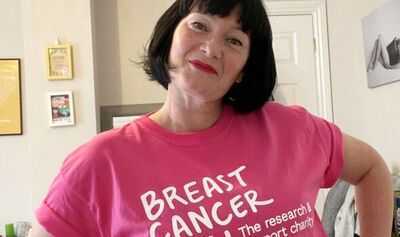
A lump is probably the most well-known sign of breast cancer - often discovered in the shower or while performing a quick self-examination. But for Becky Toseland, the first worrying symptom that appeared in April 2021, a few months before she was due to get married, was slightly less obvious. The teacher, from Norwich, noticed an area of thickening tissue at the top of her right breast. She initially hoped it might just be a muscle she had not noticed before.
When it did not disappear, she saw her GP in July and was fast-tracked for tests. Becky, 51, remembers: "Although I was relieved I was being checked out, I was also petrified. Just days after our wedding, I was in hospital having a mammogram, ultrasound and biopsy. Deep down, I think I already knew. When the results came back, we were told I had invasive lobular breast cancer. I'd never heard of it but started my research and soon learned that, unlike many other breast cancers, it doesn't appear as an obvious lump. It shows up as a subtle thickening."
Everyone has heard of breast cancer but specific types are often less familiar; Becky admits she "thought it was just breast cancer, and that was that".
Lobular accounts for around 15 in 100 breast cancer cases. It starts in the milk-producing glands (or lobules) and spreads to the surrounding breast tissue. These tumour cells grow more like a spider's web or the branches of a tree, spreading out rather than forming a solid lump and making the cancer harder to see on scans.
More than 8,000 women are diagnosed with lobular breast cancer each year in the UK. Sharing the news with her two teenage children - Jack, 18, and Maddy, 20 - was "the hardest thing I have ever had to do", Becky says. "Even now, thinking back to that moment makes me upset, and I know it's something that will stay with me for a very long time."
She quickly underwent a lumpectomy and sentinel lymph node removal, but the margins were not clear, meaning tumour cells were found near the edge of the removed tissue and there was a risk some cancer may have been left behind.
Given the choice between another lumpectomy or a single mastectomy to remove the entire breast, Becky chose the latter, plus DIEP breast reconstruction. She smiles: "I now have a new breast made from my tummy. Medical science is truly amazing!"
Pioneered in the 1990s, DIEP involves taking a flap of the patient's tissue from the lower abdomen to reconstruct the breast. Becky chose it to avoid needing further surgery to replace an implant down the line, and because she liked the idea that her new breast would be "a part of me".
It took her three months to recover from the gruelling operation in January 2022. Four years on, she is "just so happy that I decided to do that particular surgery". Becky adds: "I also had my other breast reduced at the same time so I've got all these scars. To begin with I thought, I look horrendous, I just look like Frankenstein. But I've got used to them and they make me proud, when I'm looking at them. I'm so pleased with the outcome."
Becky says her surgeons were amazing and she is thrilled to now have no evidence of disease - annual mammograms have been clear and she is soon moving to a three-year scan schedule.
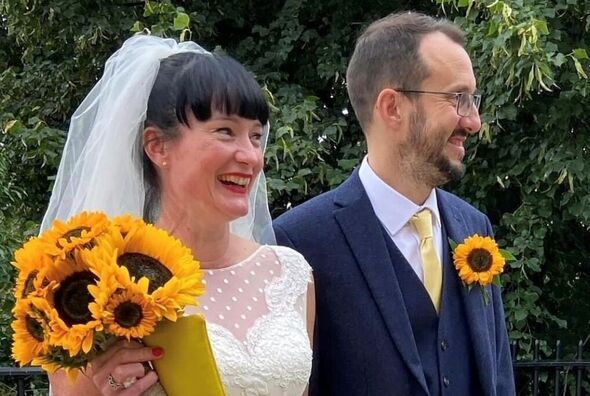
However, she was surprised to find that the treatment regime for lobular breast cancer was essentially the same as those for other types. Lobular breast cancer was first described in 1941. Eight decades later, how could such a unique cancer not have tailored drugs and therapies?
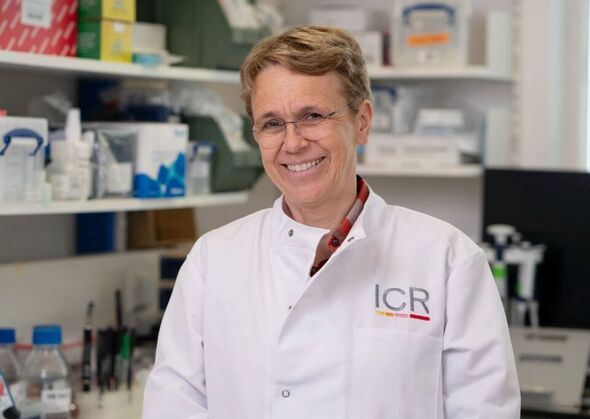
Professor Cathrin Brisken, an expert in endocrine control mechanisms at the Institute of Cancer Research in London, says lobular breast cancer has been somewhat "neglected" in clinical studies for two main reasons.
One is that it is difficult to see on scans. "If you can't image a tumour properly, you can't include it in a clinical trial, because you need to know how big it is before and after treatment," she explains.
It has also proven difficult to study in the laboratory. When tumours are analysed in mouse models, this typically involves tweaking the rodents' DNA to make cells grow uncontrollably in a way that mimics a specific disease. But this is not a perfect replica because, Prof Brisken says, "the mouse is not a human being - there are many similarities but also many differences".
Another option is to graft human cancer cells onto mice, typically by injecting them under the skin. This has not worked well in studies of hormone-sensitive breast cancers and the tumour cells often do not grow well.
In recent years, Prof Brisken and her colleagues have taken a slightly different approach. She says: "We put the tumour cells inside the milk ducts of mice. That allowed them to find the environment they are used to, and to grow. And that allows us to study them."
With funding from the charity Breast Cancer Now, the team used this method to grow lobular tumours in mice from samples donated by patients. They then investigated whether an existing drug for a rare blood cancer called myelofibrosis could be repurposed.
The drug is called a LOX inhibitor. LOX is an enzyme that creates cross-links between collagen molecules. It plays a crucial role in the growth of many cancers.
Prof Brisken's team found that blocking the action of LOX slowed tumour growth and spread. The mice tolerated the drug well, showing minimal side effects. The team will also test whether tumours with high activity in certain genes responded better, to ultimately help doctors predict which patients will benefit from the treatment.
The research is at an early stage but this method of repurposing a drug that is already in clinical trials for another type of cancer could accelerate the approval process. Studies with human patients will be needed; the team are now applying for funding to launch a phase two clinical trial with 91 patients.
The NHS advises people to check their breasts around once a month for any changes that could be a sign of cancer. You can do this by looking at your breasts or chest in a mirror to look for visible changes, starting with your arms by your side and then raising them.
You should also feel around each breast or side of your chest in a circular motion all the way up to your collarbone and under each armpit. Use a mix of light and firmer pressure. Do not press so hard it hurts. Then feel around and over each nipple.
Possible signs of breast cancer include a lump or swelling in the breast, upper chest or armpit, a change to the skin such as puckering or dimpling, and a change in colour.
A nipple change (such as it becoming inverted), rash, unusual discharge or changes to the size and shape of the breast could also indicate that something is wrong.
Breasts can change for many reasons including menopause, pregnancy, puberty, while breastfeeding and during stages of the menstrual cycle. If you spot anything new or unusual, get it checked out by a GP.
It is a welcome step towards finding specific treatments. Researchers and laboratories have started looking more seriously at lobular breast cancer in recent years, Prof Brisken says. "We have a whole community now that's come together, and there are conferences, and so this issue has really been put on the map.
"It was neglected, now there is interest and these efforts are being made - and it looks like it can pay off. You always have to be careful, because you don't want to give false hope, but things are moving and we have come a long way."
Prof Brisken, who is also an associate professor at the Swiss Federal Institute of Technology Lausanne, adds: "These things take time. But from a researcher's perspective, where everything takes so long, it's exciting to see that there might be a practical outcome in my lifetime."
Breast Cancer Now has also launched a dedicated programme to deliver much-needed breakthroughs for lobular breast cancer. Simon Vincent, the charity's chief scientific officer, said: "These exciting findings have the potential to bring a new type of treatment to people with invasive lobular breast cancer, one that targets its weaknesses.
"This is an important development as currently the lack of any drugs that specifically target lobular breast cancer mean it is treated in much the same way as other types of breast cancer.
"It comes at an exciting time for us as we kickstart the Lobular Initiative, our ambitious new five-year research programme exploring this challenging type of breast cancer. In its first year alone, we're investing £1 million into this historically underfunded area, bringing together world-class experts from across the Breast Cancer Now Toby Robins Research Centre at the Institute of Cancer Research, London, to build further understanding of this form of the disease and how best to diagnose and treat it."
For Becky, the research brings hope that, in the future, patients like her could be offered a treatment more tailored to their specific disease. She says: "It's utterly exciting because I feel like I've just been put on 'the breast cancer medicine'. But it's not ductal [breast cancer] and there are so many differences, so why is the treatment not different?
"I'm glad I'm having some treatment, but it is so exciting to know it could soon be geared for this particular type of cancer! I'm looking forward to seeing how that progresses."