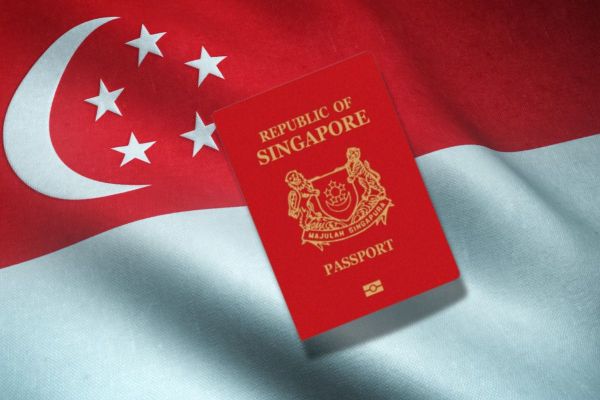
Singapore is quietly opening the door wider for foreign talent as it looks to balance a shrinking workforce and an ageing population. The government plans to approve 25,000 to 30,000 new citizens each year, while also granting around 40,000 Permanent Residence (PR) approvals annually over the next five years.
The move aims to support the economy as birth rates stay low and the working-age population shrinks. In 2025, Singapore granted about 25,000 citizenships, raising the population by around 0.7 per cent.
For skilled professionals, this points to better long-term job opportunities in one of Asia’s most competitive markets.
Singapore has long relied on global talent to support sectors such as finance, technology, healthcare, logistics, and engineering. But the country is now facing two major challenges:
This means fewer workers are entering the labour market. To maintain economic growth, Singapore is carefully adjusting immigration levels.
By approving more permanent residents and citizens, the government hopes to:
The approach remains selective. Applicants are assessed based on education, skills, work experience, salary, and ability to contribute to the economy.
Singapore offers Permanent Residence (PR) through different schemes depending on the applicant’s background.
Common eligible applicants include:
Authorities typically review education, salary, industry demand, and long-term contribution potential
The process is online and relatively straightforward.
Confirm that you qualify under one of the PR schemes, such as skilled worker, family sponsorship, or investor route.
Common documents include a passport copy, employment details, salary proof, education certificates, and family documents if applying with dependents.
Applications are submitted through Singapore’s immigration portal. All documents must be uploaded digitally.
Processing times vary, usually taking several months depending on the profile and demand.
If approved, applicants receive PR status and can begin working and living in Singapore without needing a separate work visa.
Getting a Singapore PR offers long-term stability and flexibility, especially for professionals planning to build a career in Asia. Here are the main advantages:
PR holders can work in Singapore without being tied to a single employer or work permit. This makes job changes easier and supports career growth.
PR holders may become eligible to apply for citizenship after meeting residency requirements, usually after a few years of living and working in Singapore.
Spouses and children can live in Singapore. Children can study in local schools, and family members may also work depending on eligibility.
PR holders can access subsidised treatment at government hospitals and clinics, reducing healthcare costs.
Employers contribute to the Central Provident Fund (CPF), a national savings system that helps with retirement, housing, healthcare, and financial security.
PR holders can travel in and out of Singapore freely using a valid Re-Entry Permit (REP).
Singapore continues to position itself as a global hub for skilled professionals. The planned increase in PR approvals suggests the country wants to remain competitive while carefully managing population growth.
For foreign workers with strong qualifications and relevant experience, 2026 could offer better chances of securing long-term residency in one of Asia’s most stable economies.
Those already working in Singapore may find this a good time to review their eligibility and prepare documents early.
Follow and connect with us on Facebook, Twitter, LinkedIn, Instagram and Google News for the latest travel news and updates!