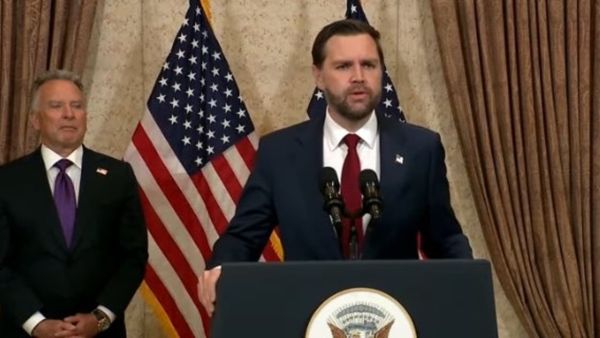
Tension between America and Iran has heated up once again. US Vice President JD Vance has launched a scathing attack on Iran, accusing it of spreading 'economic terrorism'. Vance alleges that Iran is deliberately blocking the movement of ships in important sea routes like the Strait of Hormuz. This statement has come at a time when America has imposed a naval blockade of Iranian ports after talks between the two countries failed.
In an interview with Fox News, Vance clearly warned that if Iran continued to interfere in global trade routes, Washington would respond strongly. "If the Iranians engage in economic terrorism, we will also ensure that none of their ships get out," he said. It is clear from this that America is ready to respond in a tit-for-tat manner.
This blockade is being considered a major step after long talks between the two countries remained inconclusive. Vance acknowledged that "a lot of progress" had been made during the talks, but disagreements remained on some key issues. He placed the blame squarely on Tehran for any further disturbances. He stressed that the US had made its terms clear on which there would be no compromise. "The ball is now in Iran's court," Vance said, adding that Washington had made its red lines clear.
The US's main demands include control over Iran's enriched uranium and a strong inspection system to ensure that Tehran is not developing nuclear weapons. According to Vance, "There are two things ... on which the President has said that we will not show any leniency."
The Strait of Hormuz is one of the world's most important energy routes. A large part of the world's oil supply passes through here. Any disruption in this area has a direct impact on the global energy market and economic stability. The purpose of the American blockade is to prevent Iran from using this route to exert strategic or economic pressure. Vance's statement also reflects Washington's concern that Iran's actions could destabilize international trade and energy supplies. By calling Iran's actions 'economic terrorism', America is indicating that it can increase the pressure further if necessary.
Tension is already high following military actions and failed diplomacy, so there is a danger of the situation worsening further. This blockade and the stern warnings from the US leadership are preparing the ground for a protracted geopolitical confrontation, the consequences of which could affect the entire world.