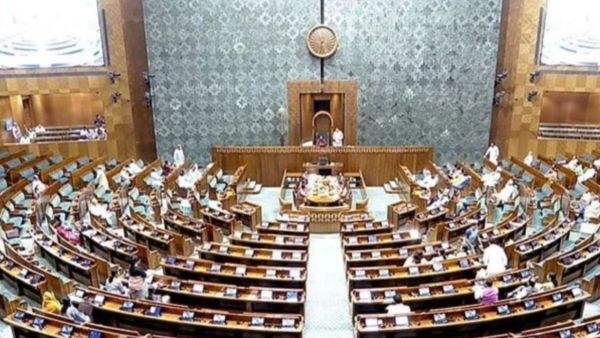
The Central Government has taken an important step towards changing the electoral structure of the country. The Union Territories Laws (Amendment) Bill, 2026 has been introduced in the Lok Sabha, which will have a direct impact on the politics of Delhi, Jammu and Kashmir and Puducherry.
The government says that after recent changes in the Constitution, the old laws no longer fit the current needs, so it became necessary to update them.
The biggest focus of this bill is on three things:
Now the seats will not be determined on the basis of old data, but on the basis of new census. For this, an independent commission will be formed, which will decide how many seats there should be in which area and what their boundaries should be.
There are currently 70 assembly seats in Delhi. According to the new proposal, this number has now been reduced to “at least 70”. This means that with the increase in population in the coming time, the number of seats can also be increased. Apart from this, the boundaries of electoral constituencies in Delhi will be decided afresh, so that the rapidly growing population can get proper representation.
Major changes are also proposed in Jammu and Kashmir. Here the minimum number of assembly seats has been reduced to 114. However, 24 seats for areas occupied by Pakistan will remain vacant as before. Other changes will be implemented only after the new demarcation, so that the existing system is not suddenly affected.
A minimum of 30 seats have been fixed in the Puducherry Assembly. Along with this, there is a proposal to increase the number of nominated members to 5, out of which 2 will be women. This change will also come into effect after the completion of the demarcation process.
An important part of this bill is the reservation for women. According to the Constitution, one-third of the seats in the Assembly and Lok Sabha will be reserved for women. But this reservation will be implemented only when the new census and demarcation process is completed. That means this change will not be implemented immediately, but in the coming time.
Through this bill, the government has proposed to abolish many old provisions, which have now become irrelevant according to time. Through this, an attempt has been made to make the law simple and clear, so that the electoral process can be more transparent and systematic.
After the implementation of this Bill:
However, all these changes will not be implemented simultaneously. These will be implemented in a phased manner after the new census and demarcation process is completed.
This bill is not just a technical change but is being considered a big step towards modernizing the electoral system of the country. Now the eye is on when this bill is passed and what changes will be seen in the politics of the states after its implementation.