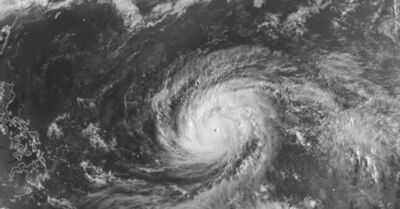
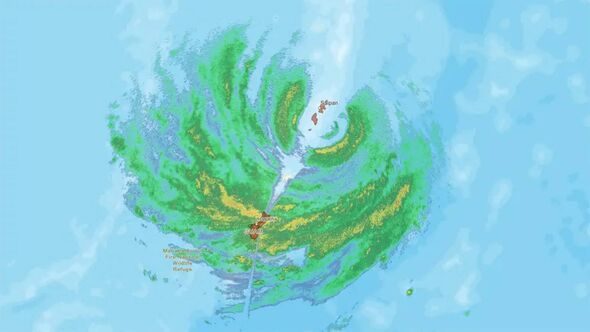
A Category 5 cyclone named Super Typhoon Sinlaku is presently hurtling directly towards U.S. territory in the Pacific Ocean, posing a threat of lasting damage and power outages for inhabitants.
With sustained winds reaching up to 173mph, this enormous typhoon has emerged as the most powerful storm of the Pacific's tropical storm season. The Northern Mariana Islands, encompassing Saipan, Tinian, and Rota, along with the island of Guam, lie directly in its trajectory.
The super typhoon, anticipated to strike the islands on Tuesday evening, has already left 1,500 tourists stranded and could trigger blackouts, flooding, and extensive wind damage. A typhoon is a rotating storm system, identical to a hurricane or cyclone, differentiated solely by where it forms over warm tropical waters.
A Category 5 storm, the most severe tropical cyclone, features winds surpassing 157 mph. Typhoon Yutu, the previous Category 5 storm to menace US territory, struck the Northern Mariana Islands in 2018, resulting in years of economic harm.
The National Weather Service cautioned, "Super Typhoon Sinlaku will bring destructive winds, widespread heavy rain/flooding, thunderstorms, and coastal impacts to the Marianas Islands into Wednesday."
They also issued warnings of tropical storm-like conditions across Guam, an unincorporated territory. The governor's office confirmed on Tuesday that flights to and from the island have been cancelled, preventing approximately 1,500 visitors from returning home.
Super Typhoon Sinlaku, bringing powerful winds and torrential rain, is expected to continue its onslaught for approximately 24 more hours. The typhoon will ultimately weaken, but the resulting power cuts and flood recovery efforts could cause disruption for weeks or months.
President Trump authorised emergency disaster declarations for the US territories of Guam and the Northern Mariana Islands on Sunday. These declarations enable agencies such as FEMA to deliver aid through supplies and recovery operations. Meanwhile, US military personnel on Guam have been instructed to shelter in place.
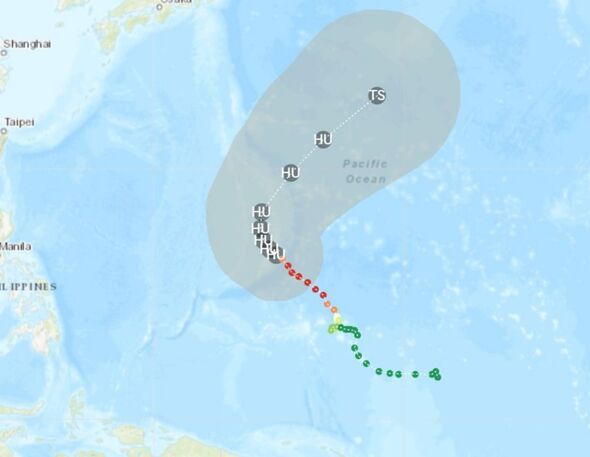
The Northern Mariana Islands are preparing for considerably more severe damage, as Sinlaku is predicted to hit the territory directly within the next 24 hours.
"It's going to be a very long night," Aydlett said, according to the Pacific Daily News. "Many of you up there in the CNMI probably have a sleepless night, as it's going to be very loud, a lot of action going on, and unfortunately, a lot of damage."
The US commonwealth, predominantly the island of Saipan, has a population of roughly 47,000 people. An estimated 400 tourists are also believed to be stranded in the territory.
Typhoon season in the Pacific runs for most of the calendar year, spanning from mid-February through to early December.
The official beginning of hurricane season in the Atlantic is fast approaching, on 1 June.
AccuWeather has issued a warning that up to five tropical cyclones are forecast to directly impact the US mainland in 2026.