
Listen to this article in summarized format
Loading...
××
Subscribe to

Unlock AI Briefing and Premium Content
New Year Offer 24 Hours Left
Subscribe NowAlready a member? Sign In
What's Included
- Exclusive Stories
- Daily ePaper Access
- Smart Market Tools
- Curated Investment Ideas
- Ad-lite Experience
Subscription

India's wholesale price inflation (WPI) accelerated to over a three-year high of 3.88% in March from 2.13% in February, as per government data released on Wednesday.
The positive rate of inflation in March, 2026 is primarily due to increase in prices of crude petroleum & natural gas, other manufacturing, non-food articles, manufacture of basic metals and food articles etc.
A Reuters poll of economists had projected WPI based inflation, which has not been rebased, to quicken to an annual 3.04%.
The increase was led by primary articles, where inflation nearly doubled to 6.36% from 3.27%, indicating firming raw material prices. Fuel and power prices also moved back into positive territory at 1.05%, compared with a contraction of 3.78% in the previous month, signalling easing cost pressures in energy.
Manufactured products saw a modest rise to 3.39% from 2.92%, reflecting gradual pass-through of input costs, while the food index remained steady at 1.85%, suggesting stable food price trends during the month.
India’s retail inflation climbed to 3.4% year-on-year in March from 3.21% in February, government data showed on Monday, as geopolitical tensions and supply-side pressures from the Middle East began to weigh on prices.
ALSO READ | India’s March retail inflation quickens to 3.4% as US war on Iran disrupts global trade flows
Pulses, however, saw some easing in deflation, with prices contracting at -5.17% against -5.92% earlier. Among vegetables, the fall in prices intensified, with potato declining further to -27.94% from -27.42% and onion dropping sharply to -42.11% from -40.95%. In contrast, milk inflation softened to 2.62% from 3.00%, indicating some moderation in price pressures in the dairy segment.
Tensions escalated after the US imposed a naval blockade on Iranian ports, unsettling energy markets and intensifying regional hostilities. The move has put pressure on the Strait of Hormuz, a critical route for global oil shipments. Washington said the restrictions would target vessels linked to Iranian maritime activity while still allowing transit to non-Iranian ports to reduce wider disruption.
Tehran, however, rejected the pressure and warned of retaliation, further deepening market uncertainty.
“The fundamentals of the Indian economy are on a stronger footing, providing it with greater resilience to withstand shocks now than in the past. The economy is confronted with a supply shock. It is prudent to wait and watch the changing circumstances and the evolving growth-inflation outlook,” Reserve Bank of India Guv Sanjay Malhotra had said.
The central bank’s rate setting panel has projected CPI inflation at 4.6% for FY27, with quarterly estimates of 4.0% in Q1, 4.4% in Q2, 5.2% in Q3, and easing to 4.7% in Q4.
Core inflation is projected at 4.4%. The central bank also noted this is the first time it has provided such a detailed quarterly breakdown, reflecting increased focus on transparency and stakeholder inputs.
Since the last policy review, the RBI has said global uncertainty has increased. While inflation remains broadly contained, upside risks persist, including potential second-round effects if geopolitical pressures continue to build.
The positive rate of inflation in March, 2026 is primarily due to increase in prices of crude petroleum & natural gas, other manufacturing, non-food articles, manufacture of basic metals and food articles etc.
A Reuters poll of economists had projected WPI based inflation, which has not been rebased, to quicken to an annual 3.04%.
The increase was led by primary articles, where inflation nearly doubled to 6.36% from 3.27%, indicating firming raw material prices. Fuel and power prices also moved back into positive territory at 1.05%, compared with a contraction of 3.78% in the previous month, signalling easing cost pressures in energy.
Manufactured products saw a modest rise to 3.39% from 2.92%, reflecting gradual pass-through of input costs, while the food index remained steady at 1.85%, suggesting stable food price trends during the month.
India’s retail inflation climbed to 3.4% year-on-year in March from 3.21% in February, government data showed on Monday, as geopolitical tensions and supply-side pressures from the Middle East began to weigh on prices.
ALSO READ | India’s March retail inflation quickens to 3.4% as US war on Iran disrupts global trade flows
Kitchen staples
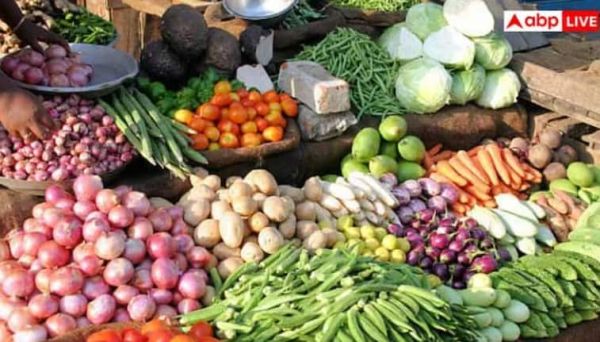
Vegetable prices increased 1.45% year-on-year in March, as compared to a 4.73% year-on-year increase a month ago. Cereals inflation remained in contraction but widened slightly to -2.51% from -2.44% in February, with wheat also seeing a deeper decline at -4.60% compared with -4.43%.Pulses, however, saw some easing in deflation, with prices contracting at -5.17% against -5.92% earlier. Among vegetables, the fall in prices intensified, with potato declining further to -27.94% from -27.42% and onion dropping sharply to -42.11% from -40.95%. In contrast, milk inflation softened to 2.62% from 3.00%, indicating some moderation in price pressures in the dairy segment.
Middle East war jitters
The latest inflation reading comes against the backdrop of heightened geopolitical uncertainty involving Iran, Israel and the United States, raising concerns over global oil supply disruptions.Tensions escalated after the US imposed a naval blockade on Iranian ports, unsettling energy markets and intensifying regional hostilities. The move has put pressure on the Strait of Hormuz, a critical route for global oil shipments. Washington said the restrictions would target vessels linked to Iranian maritime activity while still allowing transit to non-Iranian ports to reduce wider disruption.
Tehran, however, rejected the pressure and warned of retaliation, further deepening market uncertainty.
RBI MPC on inflation
At its April Monetary Policy Committee meeting, the Reserve Bank of India noted that while India’s macroeconomic fundamentals remain strong, external shocks could intensify if global tensions persist or expand.“The fundamentals of the Indian economy are on a stronger footing, providing it with greater resilience to withstand shocks now than in the past. The economy is confronted with a supply shock. It is prudent to wait and watch the changing circumstances and the evolving growth-inflation outlook,” Reserve Bank of India Guv Sanjay Malhotra had said.
The central bank’s rate setting panel has projected CPI inflation at 4.6% for FY27, with quarterly estimates of 4.0% in Q1, 4.4% in Q2, 5.2% in Q3, and easing to 4.7% in Q4.
Core inflation is projected at 4.4%. The central bank also noted this is the first time it has provided such a detailed quarterly breakdown, reflecting increased focus on transparency and stakeholder inputs.
Since the last policy review, the RBI has said global uncertainty has increased. While inflation remains broadly contained, upside risks persist, including potential second-round effects if geopolitical pressures continue to build.