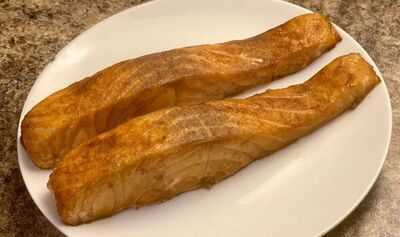
Salmon is a nutritious and wonderfully versatile protein that lends itself to a variety of delicious cooking methods. Whether you bake it, pan-fry it, or cook it in an air fryer, each technique delivers a wholesome meal while drawing out distinct flavours and textures. My preferred method for cooking salmon has always been the air fryer, yet I was keen to discover whether pan-frying or baking might yield superior results.
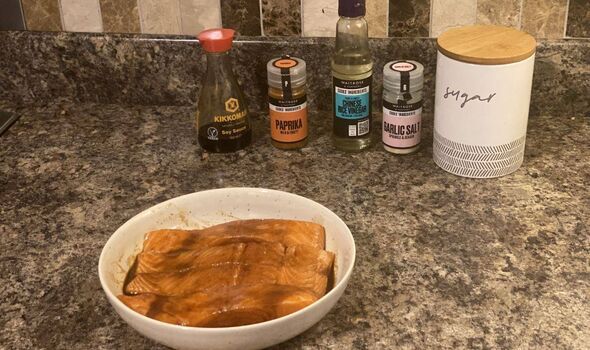
All three trials were carried out using identically sized skinless salmon fillets, which had been patted dry and left to marinate for one hour in the same glaze. The glaze itself comprised sugar, soy sauce, white vinegar, paprika and garlic granules. When assessing each method, I had several criteria in mind. First and foremost, I was after that succulent, moist texture. Yet a perfectly flaky, evenly cooked fillet alone wasn't sufficient - I was also seeking flavour and simplicity, with a technique demanding minimal time, effort, or culinary skill.
When I'm not reaching for my air fryer to cook salmon, the oven is invariably my next port of call.
For this approach, I began by preheating my oven to 140C. Avoid setting the temperature too high, as the fish will shed all its moisture before it has finished cooking.
I then lined my baking tray with parchment paper to prevent the fish from sticking, while also ensuring the salmon cooked evenly throughout. Given that I was working with skinless fillets, there was a greater risk of the fish adhering to the tray. I placed the salmon into the oven and inspected it after 15 minutes, though it required an additional five minutes to finish cooking.
The salmon fillets emerged from the oven with an appealing colour. Upon tasting, it proved flavourful and moist. The sole drawback I encountered with this approach was the cooking duration, although it wasn't excessively lengthy.
In the panThis was likely the most challenging cooking technique of all, as I'd never prepared salmon in a frying pan previously.
Despite incorporating a little oil and utilising a stainless steel pan, while cooking the fillet, I observed that the salmon rapidly began to adhere and started burning on one side.
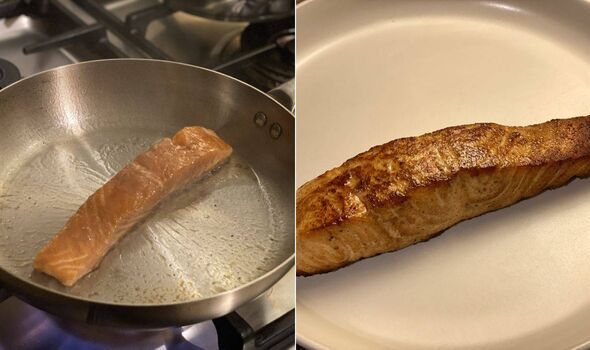
Following 12 minutes of pan-frying the salmon, six minutes per side, it was complete.
While it possessed a pleasant seared crust, it proved rather dry, nowhere close to the moistness of the oven-baked salmon. Should you choose this approach, I'd recommend monitoring the temperature carefully, as it can burn rapidly.
Air fryerFor this technique, preheating the appliance wasn't necessary; I simply inserted the fillet and configured it to 180C for seven minutes.
I find that preparing salmon can occasionally feel daunting, but it never does when I'm utilising an air fryer.
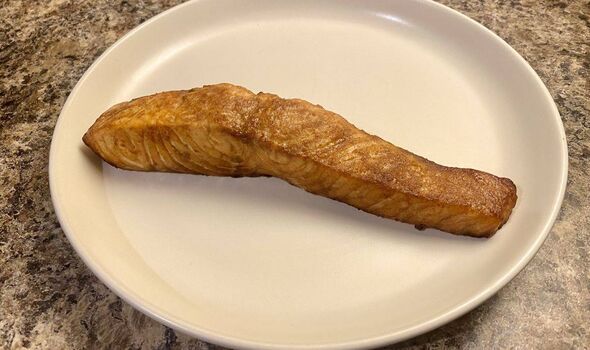
Once the timer finished, the salmon appeared golden and perfectly cooked. The fish crisped up beautifully and remained moist and slightly more succulent than the oven-baked fish.
The air fryer employs circulating hot air to prepare the salmon rapidly and uniformly while sealing in moisture and producing a delightful outer texture.