The ongoing conflict involving Iran is significantly altering global trade patterns, prompting Gulf nations to seek alternatives to the Strait of Hormuz, historically regarded as a vital energy passage. A new trade route centered around Saudi Arabia's NEOM is emerging as a practical alternative, providing a pathway that mitigates the geopolitical risks associated with Hormuz. This development indicates a fundamental change in the organization of regional logistics and energy distribution.
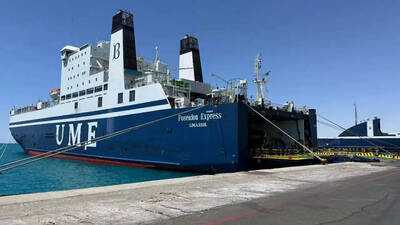
At the heart of this transition is a multimodal corridor that links Europe with Gulf Cooperation Council (GCC) markets via Egypt and NEOM. In this framework, goods from Europe are transported to Egyptian ports, then moved across the Red Sea to NEOM, and subsequently delivered by road to nations like the UAE, Kuwait, Iraq, and Oman. This hybrid maritime-land route is already operational and is being promoted as a quicker and more reliable option compared to conventional shipping routes.
The corridor has been established through collaboration among logistics companies, including Pan Marine and DFDS, along with regional partners, facilitating seamless freight movement across both maritime and land segments. Unlike traditional container shipping, this route accommodates truck-based cargo directly from Europe to Gulf markets, significantly simplifying transit processes. This adaptability is crucial for time-sensitive products such as fast-moving consumer goods (FMCG) and essential supplies.
The route builds on previous pilot initiatives connecting Egypt’s Safaga port with NEOM and northern Saudi Arabia, which demonstrated notable reductions in transit times. Importers from countries such as Italy, the UK, Germany, and Poland are already leveraging this corridor for access to the GCC market. The swift uptake indicates that supply chains are adapting in real-time to geopolitical challenges.
The move away from Hormuz is not just a tactical decision; it reflects a deeper loss of confidence in the long-term reliability of this waterway. The strait, which accounts for about 20% of global oil shipments during peacetime, has repeatedly proven to be a geopolitical bottleneck susceptible to disruption. The current conflict has heightened fears that even short-term instability can lead to immediate global economic repercussions.
Industry evaluations suggest that Gulf countries are now seriously considering alternative pipelines and transport routes to lessen their reliance on Hormuz. Existing infrastructure, such as Saudi Arabia’s East-West pipeline, which connects inland oil fields to the Red Sea, is being recognized as a strategic asset. Discussions are also in progress regarding broader networks that integrate pipelines, railways, and ports to establish multiple export routes beyond a single maritime chokepoint.
The changing trade landscape also aligns with larger initiatives like the India-Middle East-Europe Economic Corridor (IMEC), which aims to unify ports, rail, and energy infrastructure throughout the region. Supported by various global stakeholders, this project is gaining renewed focus as nations strive for resilient supply chains amid conflict-driven uncertainties. However, its success will hinge on political cooperation among key regional players.
Israeli Prime Minister Benjamin Netanyahu has also emphasized the need to reduce dependence on Hormuz, asserting that long-term stability necessitates redirecting energy flows westward. Concurrently, US President Donald Trump has urged global stakeholders to secure and manage the strait, highlighting the escalating strategic competition surrounding this waterway. Collectively, these developments indicate that the Iran conflict may have initiated not just a temporary disruption but a lasting transformation of global trade routes.