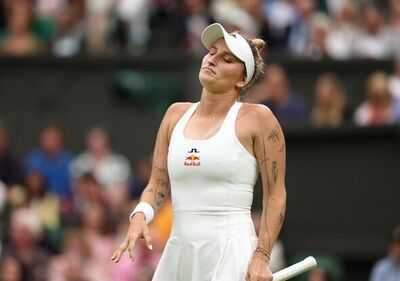
The International Tennis Integrity Agency (ITIA) has confirmed that 2023 Wimbledon champion Marketa Vondrousova has been charged with a doping offence relating to a missed test. On Friday, the former world No. 6 took to Instagram to share a statement on a "doping control incident" in which she refused to take a test when a doping control officer came to her home in the evening, outside of her one-hour whereabouts slot. Vondrousova claims this officer did not "identify themselves".
Following Vondrousova's statement, the ITIA confirmed that she had been charged with refusing a test. This charge does not carry an automatic provisional suspension. Vondrousova, however, has not played a singles match since January as she continues to battle a shoulder injury. She played a doubles match during a Billie Jean King Cup tie over the weekend.
An ITIA spokesperson told Express Sport: "We are aware of the player's comments. We can confirm that an investigation is underway and the player has been charged with refusing a test. At this stage, we are not able to comment any further on the specifics."
Vondrousova has been charged under Article 2.3 of the tennis anti-doping programme, relating to "a Player evading Sample collection; or refusing or failing to submit to Sample collection without compelling justification after notification by a duly authorised Person."
On Friday, the Tokyo Olympic silver medallist wrote: "It is very tough for me to talk about this, but I want to be transparent with you about my mental health. The recent doping control incident happened because I reached a breaking point after months of physical and mental stress," the 2023 Wimbledon winner wrote.
"For a long time, I've been dealing with injury, constant pressure, and ongoing sleep issues that left me feeling exhausted and fragile. It slowly wore me down more than I probably realised at the time. And on top of that, years of hateful messages and threats have affected how safe I feel in my own space.
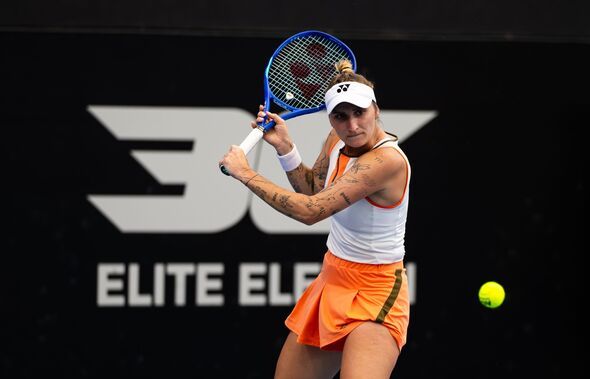
"When someone rang my door late at night without properly identifying themselves or following protocol - I reacted as a person who felt scared. In that moment, it was about feeling safe, not about avoiding anything.
"Experts confirmed I suffered an Acute Stress Reaction (F43.0) and Generalised Anxiety Disorder (F41.1). In that moment, fear clouded my judgement and I just could not process the situation rationally. After what happened to Petra [Kvitova, who was injured in a knife attack in 2016], we don't take strangers at our door lightly.
"I'm trying to slowly find my way back - both on and off the court. Tennis has always been my world, but right now I'm also focusing on healing and getting through this in the best way I can. I'm still working to clear my name, but at the same time I need to take care of myself. Thank you to my boyfriend, my family, and everyone who has stood by me - it means more than I can explain. For now, I'm taking a bit of time to breathe and recover."
In a separate Instagram story in December, Vondrousova shared a photo of the doping control offer at her door and wrote: "Every day, we are required to be home for one specific hour for doping control. I respect that rule - every single day. Tonight, however, a tester arrived at 8.15pm and told me that my declared time doesn't matter and that I must be tested right now.
"When I pointed out that it's outside my testing window and a serious intrusion into my privacy, I was told: 'This is the life of a professional athlete'. Is it normal for doping officers to sit in our living rooms at night waiting for us to pee? This is not about avoiding testing - it's about respect. Respect for the rules that we follow, and for the personal life that we're entitled to after a long day of training and competition. Rules should apply to everyone, even to those enforcing them."
In 2013, former ATP No. 12 Viktor Troicki was banned for 18 months when he failed to provide a blood sample during an in-competition test at the Monte Carlo Masters. He said he felt unwell and asked to be excused from giving a blood sample, but provided a urine sample. This incident occurred when anti-doping protocols in tennis were handled by the International Tennis Federation (ITF).
His ban was later reduced to 12 months following an appeal to the Court of Arbitration for Sport (CAS). CAS said Troicki was not at "significant fault" and there was no suggestion he was trying to evade the detection of a prohibited substance in his system.
Express Sport has reached out to Marketa Vondrousova's legal team
EXPRESS SPORT ON FB! Get all the best sports news and much more on our Facebook page