
Listen to this article in summarized format
Loading...
××
Subscribe to

Unlock AI Briefing and Premium Content
New Year Offer 24 Hours Left
Subscribe NowAlready a member? Sign In
What's Included
- Exclusive Stories
- Daily ePaper Access
- Smart Market Tools
- Curated Investment Ideas
- Ad-lite Experience
Subscription

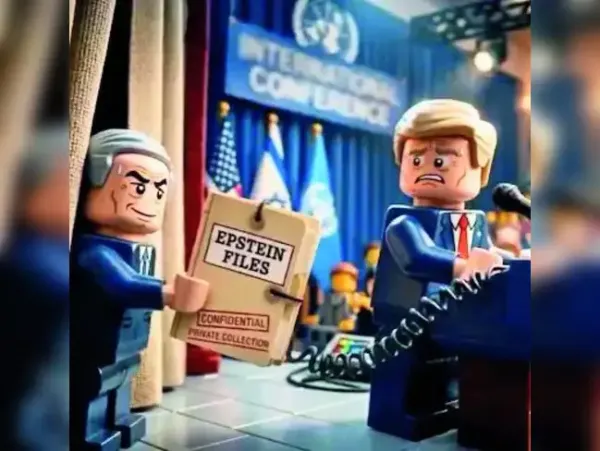
Iran's AI-generated propaganda video clips of Lego-like figures lampooning members of the Trump regime have gone viral. This offers a delicious paradox: a regime famed for censorship now inadvertently moonlighting as a global brand ambassador for Denmark's most cheerful plastic bricks. Tehran and Billund, where the Lego Group is headquartered, might have more in common than either would admit.
Also Read: AI fakes, recycled clips flood Israel-US-Iran conflict narrative; 14 social media posts debunked
When Iranian state-linked media began churning out images of those hyper-kinetic miniature soldiers and politicians, blocky missiles, and pastel battlefields, the internet did what it does best: it laughed, shared and memed. In the process, Lego aesthetics has gained fresh global reach. For the company, this is an unexpected windfall - and with Trump lusting after Greenland before he got distracted with Iran, ironic, too. The company thrives on cultural ubiquity, from Hollywood tie-ins to architectural sets. Iran's clips have now introduced Lego's visual grammar to audiences who may never otherwise have encountered it. The juxtaposition of Lego's childlike innocence with Iran's stern messaging creates a surreal spectacle. In marketing terms, this is priceless: a reminder that when a brand is so iconic, it can survive - even thrive - when misappropriated.
Iran, too, gains something from this odd symbiosis. Its cultural exports are limited, its image abroad is severe. By adopting Lego-like imagery, the Islamic government shows that it's not all Sith - it can turn ideology into play. This softens its image abroad, not matter how appropriately. In this, it has - again, ironically - followed the master of the game: America. For Lego, the risk is reputational but the reward is cultural dominance. For Iran, the risk is being seen less fearful, with the reward of visibility. In the strange alchemy of modern media, propaganda becomes parody, and parody becomes marketing. Perhaps the ayatollahs and Danish toy executives should sit down together - with a box of bricks between them. After all, nothing builds bridges quite like Lego. Well, apart from Hollywood perhaps.
Also Read: AI fakes, recycled clips flood Israel-US-Iran conflict narrative; 14 social media posts debunked
When Iranian state-linked media began churning out images of those hyper-kinetic miniature soldiers and politicians, blocky missiles, and pastel battlefields, the internet did what it does best: it laughed, shared and memed. In the process, Lego aesthetics has gained fresh global reach. For the company, this is an unexpected windfall - and with Trump lusting after Greenland before he got distracted with Iran, ironic, too. The company thrives on cultural ubiquity, from Hollywood tie-ins to architectural sets. Iran's clips have now introduced Lego's visual grammar to audiences who may never otherwise have encountered it. The juxtaposition of Lego's childlike innocence with Iran's stern messaging creates a surreal spectacle. In marketing terms, this is priceless: a reminder that when a brand is so iconic, it can survive - even thrive - when misappropriated.
Iran, too, gains something from this odd symbiosis. Its cultural exports are limited, its image abroad is severe. By adopting Lego-like imagery, the Islamic government shows that it's not all Sith - it can turn ideology into play. This softens its image abroad, not matter how appropriately. In this, it has - again, ironically - followed the master of the game: America. For Lego, the risk is reputational but the reward is cultural dominance. For Iran, the risk is being seen less fearful, with the reward of visibility. In the strange alchemy of modern media, propaganda becomes parody, and parody becomes marketing. Perhaps the ayatollahs and Danish toy executives should sit down together - with a box of bricks between them. After all, nothing builds bridges quite like Lego. Well, apart from Hollywood perhaps.