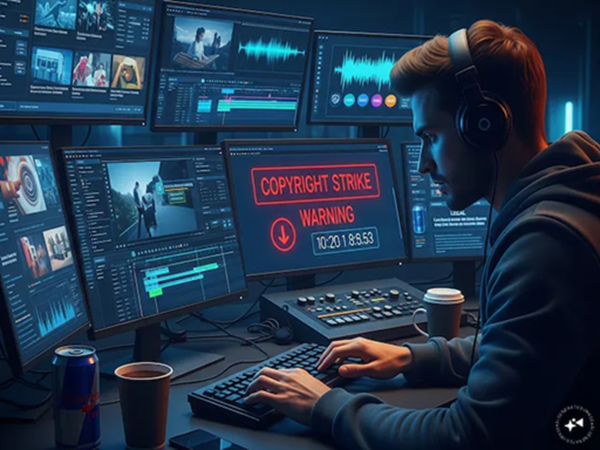
In today's world, creating videos on YouTube and Instagram has become a full-time career for millions of people. However, many creators make a critical mistake that can jeopardize their entire channel. This mistake is the use of copyrighted music. If you use a song without permission, you could receive a "Copyright Strike."
When you use a song, piece of music, or audio created by someone else without a license or permission, the Content ID system detects it immediately. This leads to two possible consequences: first, a "Copyright Claim," where the revenue generated by your video is diverted to the original owner; and second—the most dangerous outcome—a "Copyright Strike." If your channel accumulates three strikes within 90 days, YouTube will permanently delete your channel.
How to Use Free and Legal Music?
The safest way to avoid copyright issues is to use "royalty-free" music. Here are some excellent and legal methods:
1. YouTube Audio Library: This is YouTube's own treasure trove. By visiting your "YouTube Studio," you can access thousands of free tracks and sound effects. The music found here is completely safe to use and will never result in a copyright strike. Just keep in mind that for some tracks, you may be required to provide "attribution"—that is, credit—in your video's description.
2. Creative Commons: Numerous websites on the internet offer music under a Creative Commons license. You can obtain free music from platforms such as Bensound or Pixabay. However, be sure to read the specific license terms before using any track.
3. NoCopyrightSounds (NCS): YouTube hosts several channels—such as "NoCopyrightSounds"—that offer free music to creators. To use this music, you simply need to include a link to their specific track in your video's description.
Guidelines for Instagram Creators
When creating "Reels" on Instagram, always utilize the platform's built-in in-app music library. If you add external music to your video using a separate editing app before uploading, Instagram may mute your video or remove it from the platform.
Don't Forget to Give Credit
Even if the music is royalty-free, it is good practice to include the artist's name and a link to the source in the video's description box. This protects you from potential legal complications in the future.
Disclaimer: This content has been sourced and edited from News18 Hindi. While we have made modifications for clarity and presentation, the original content belongs to its respective authors and website. We do not claim ownership of the content.