



Listen to this article in summarized format
Loading...
××
Subscribe to

Unlock AI Briefing and Premium Content
New Year Offer 24 Hours Left
Subscribe NowAlready a member? Sign In
What's Included
- Exclusive Stories
- Daily ePaper Access
- Smart Market Tools
- Curated Investment Ideas
- Ad-lite Experience
Subscription

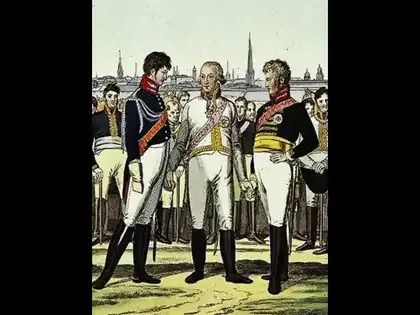
Recently, while going through the depressing news about war in West Asia, my eye was drawn to a vacation photo on my desk, the principal significance of which was the 'Tree of the Three Emperors', in the garden of Hotel Jean Moet, the former residence of wine merchant Jean-Remy Moet of Moet & Chandon fame, at Epernay, France. Under that still-standing pagoda tree, the Russian, Prussian and Austrian monarchs had apparently sipped champagne after defeating Napoleon in 1814.
In some ineffable way, I felt that history was repeating itself more than 200 years later, in two critically different ways. The first concerns how the illicit war of aggression launched by the US and Israel is publicly deplored - either as aimless overkill because diplomatic pressure might have sufficed to extract unfair concessions from Iran in February, and in which diplomatic compromise may have worked during the ceasefire. Or, as one for which the US was miserably unprepared.
This is like putting a hastily cobbled-together cart before the horse, tantamount to concluding that Napoleon should have first attempted to convince the Russians not to violate his Continental System - his grand embargo meant to financially ruin Britain, in the economic vice of which the tsar's dominions were bleeding profusely. And only when this failed could he have justifiably attempted - after adequately preparing for the Russian winter - his invasion of 1812.
In the end, it was Napoleon's hubris that proved to be his undoing, not climate. He preferred to rely on his own leadership at the head of a vast army, while diminishing the power of ordnance, choosing shorter range cannon against expert advice. The other celebrated historical details - the ubiquitous scorched earth, fruitless occupation of Moscow, unbearable cold, and the Grande Armee's humiliating retreat - were only natural corollaries.
The second concerns the absolute lack of moral clarity that attends this conflict. The perpetrators, by first pretending to contain a nuclear threat, and then attempting regime change, have massacred thousands of civilians and damaged public infrastructure, in Iran and Lebanon. Iran's impressive defence, in crippling US military infrastructure in Gulf states, punishing Israel for its indiscriminate bombing campaigns and shutting down the Strait of Hormuz, have elicited a mix of shock and grudging admiration even from its opponents, a distraction that overlooks the undeniable extent of war crimes.
Napoleon's invasion, on the other hand, was acknowledged by all to be unlawful, unprovoked and, in its scale of death and misery, unconscionable. Thus, when it triggered a concerted response by Russian, Prussian and even his own father-in-law's Austrian armies, resulting in the French emperor being chased back to Paris and then to exile in Elba, his loyalists recoiled in horror, but France only demurred in mild outrage.
Much credit for this goes to Tsar Alexander I, whose conduct was a model of restraint. Not only did he direct the advancing Russian columns to desist from looting, but he also forbade them from destroying France's civilian infrastructure. By focusing on dismantling the Napoleonic regime but sparing the people, he hoped to force a long-term peace, however opportunistically, by demanding a standard of ethical behaviour.
Of course, any comparison between Napoleon and Trump is as odious as one between an acknowledged genius and an intellectual amoeba. And contrasting the aims and scope of Code Napoleon with Zionism - whose adherents, according to linguist Victor Klemperer, son of an East Prussian rabbi, 'with their nosing after blood, their ancient cultural roots, and partly canting, partly obtuse, winding back of the world, are altogether a match for the National Socialists' - would be an insult to France's greatest leader.
By focusing on military installations, and only targeting civilian infrastructure in retaliation or for deterrence, however, Iran's effective reaction is akin to the tsar's calibrated response. Only the Gulf states, complicit in abetting US objectives, would disagree. Nevertheless, the rest of the world should acknowledge whose is the more egregious sin, demand reparations for Iran, justice for Israeli and American war crimes, and reestablish the UN - or an alternative - charter that protects sovereignty of nations, prevents future wars, and reaffirms human rights.
Then, when this war ends, some new leaders could once again raise a toast to peace and stability In Epernay or elsewhere.
In some ineffable way, I felt that history was repeating itself more than 200 years later, in two critically different ways. The first concerns how the illicit war of aggression launched by the US and Israel is publicly deplored - either as aimless overkill because diplomatic pressure might have sufficed to extract unfair concessions from Iran in February, and in which diplomatic compromise may have worked during the ceasefire. Or, as one for which the US was miserably unprepared.
This is like putting a hastily cobbled-together cart before the horse, tantamount to concluding that Napoleon should have first attempted to convince the Russians not to violate his Continental System - his grand embargo meant to financially ruin Britain, in the economic vice of which the tsar's dominions were bleeding profusely. And only when this failed could he have justifiably attempted - after adequately preparing for the Russian winter - his invasion of 1812.
In the end, it was Napoleon's hubris that proved to be his undoing, not climate. He preferred to rely on his own leadership at the head of a vast army, while diminishing the power of ordnance, choosing shorter range cannon against expert advice. The other celebrated historical details - the ubiquitous scorched earth, fruitless occupation of Moscow, unbearable cold, and the Grande Armee's humiliating retreat - were only natural corollaries.
The second concerns the absolute lack of moral clarity that attends this conflict. The perpetrators, by first pretending to contain a nuclear threat, and then attempting regime change, have massacred thousands of civilians and damaged public infrastructure, in Iran and Lebanon. Iran's impressive defence, in crippling US military infrastructure in Gulf states, punishing Israel for its indiscriminate bombing campaigns and shutting down the Strait of Hormuz, have elicited a mix of shock and grudging admiration even from its opponents, a distraction that overlooks the undeniable extent of war crimes.
Napoleon's invasion, on the other hand, was acknowledged by all to be unlawful, unprovoked and, in its scale of death and misery, unconscionable. Thus, when it triggered a concerted response by Russian, Prussian and even his own father-in-law's Austrian armies, resulting in the French emperor being chased back to Paris and then to exile in Elba, his loyalists recoiled in horror, but France only demurred in mild outrage.
Much credit for this goes to Tsar Alexander I, whose conduct was a model of restraint. Not only did he direct the advancing Russian columns to desist from looting, but he also forbade them from destroying France's civilian infrastructure. By focusing on dismantling the Napoleonic regime but sparing the people, he hoped to force a long-term peace, however opportunistically, by demanding a standard of ethical behaviour.
Of course, any comparison between Napoleon and Trump is as odious as one between an acknowledged genius and an intellectual amoeba. And contrasting the aims and scope of Code Napoleon with Zionism - whose adherents, according to linguist Victor Klemperer, son of an East Prussian rabbi, 'with their nosing after blood, their ancient cultural roots, and partly canting, partly obtuse, winding back of the world, are altogether a match for the National Socialists' - would be an insult to France's greatest leader.
By focusing on military installations, and only targeting civilian infrastructure in retaliation or for deterrence, however, Iran's effective reaction is akin to the tsar's calibrated response. Only the Gulf states, complicit in abetting US objectives, would disagree. Nevertheless, the rest of the world should acknowledge whose is the more egregious sin, demand reparations for Iran, justice for Israeli and American war crimes, and reestablish the UN - or an alternative - charter that protects sovereignty of nations, prevents future wars, and reaffirms human rights.
Then, when this war ends, some new leaders could once again raise a toast to peace and stability In Epernay or elsewhere.
(Disclaimer: The opinions expressed in this column are that of the writer. The facts and opinions expressed here do not reflect the views of www.economictimes.com.)




Ateesh Tankha
The writer is founder-CEO, ALSOWISE Content Solutions