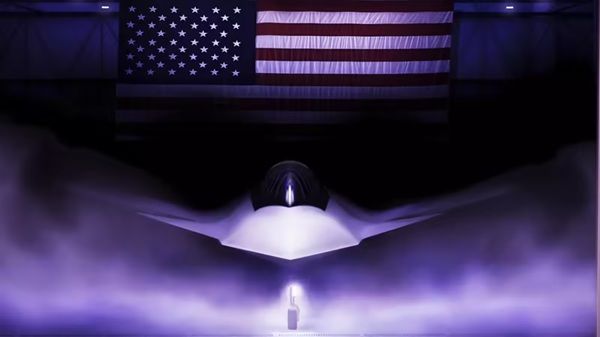
New Delhi. Defense technology is changing rapidly in the world and in this race, maximum focus is now being placed on sixth generation fighter jets. In this direction, America has taken a big decision to develop its new advanced fighter jet Boeing F-47, which is being considered as a game changer of future air war. This aircraft is being said to be the next and more advanced version of the F-22 Raptor, which will include cutting-edge technologies like Artificial Intelligence, all-angle stealth and adaptive engines.
New model of future war
The F-47 is being designed not just as a fighter jet but in the role of a “digital quarterback”. That means it will not fight alone, but will control the entire air war together with drones and network systems. The system will also include unmanned drones such as Collaborative Combat Aircraft (CCA), which will support the F-47 with sensors, weapons and electronic warfare capabilities. This will make even a small number of aircraft more powerful.
The price shocked the senses
There is also a big discussion about the price of F-47. According to estimates, its per unit cost could be around $300 million (about Rs 3000 crore). This price is almost three times more than the current F-35 Lightning II. In comparison, for the price of this one aircraft, about 4 to 5 fighter aircraft of India’s HAL Tejas can be purchased.
Heavy investment and pressure on the project
Billions of dollars are being spent on the engineering and development of this project. The US Air Force has described it as an important part of its future strategy and has also demanded additional funding for it in the 2027 budget. However, experts are worried that this project may also fall prey to budget cuts, as happened with the earlier F-22 program.
Important step in global military competition
The US sees this project as a response to the growing military competition in the Asia-Pacific region and China’s sixth-generation fighter jet development. In this way, F-47 is not just a new aircraft but is being considered as a platform that will determine the direction of future network-centric air warfare.