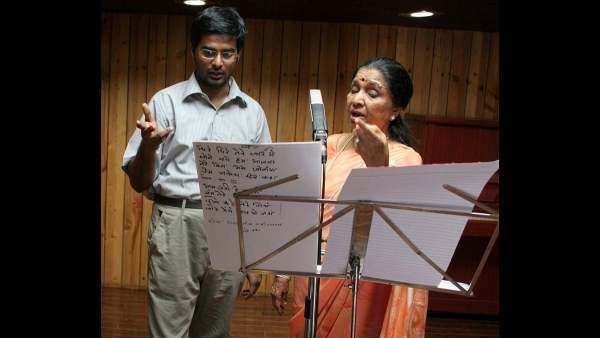
Filmmaker S Ramachandran reflects on his creative journey with Asha Bhosle, recalling her fearless experimentation, on-set warmth, and rare ability to blend global ambition with deep human grace
The lens of a camera often acts as a shield, a glass barrier between the director and the subject. But when that subject is Asha Bhosle, the glass doesn’t just shatter; it dissolves into a warm, aromatic invitation to join her world. Looking back at the frames we composed together over thirty-five years, it isn't the technical perfection or the chart-topping success that hits me hardest—it is the silence of her absence and the vibrant noise of the memories she left behind. To the world, she was the Queen of Indipop and a playback phenomenon; to me, she was my first muse, a collaborator who possessed the rare alchemy of being a global titan with zero ego.
My journey with Ashatai began as a rookie journalist, but it evolved into a creative partnership that defined my career as a filmmaker. Directing her was never just about "lights, camera, action." It was an education in grace. I remember the ambitious days of the album for the music company MAUJ. We were bringing together worlds that rarely collided: the gritty charm of Sanjay Dutt, the lightning-fast pace of Australian pacer Brett Lee, and the ethereal screen presence of Urmila Matondkar.
The logistics were a nightmare, but Ashatai was the anchor. I remember the exact moment on set when the choreography needed to happen. There I was, a young director, standing just out of frame, "shadowing" the dance steps for her. I wasn't just directing; I was moving with her, beat for beat. To see a legend who had worked with the likes of O.P. Nayyar and R.D. Burman look to me for her cues—to mirror my movements with such earnest trust—was the ultimate badge of honor. We were in sync, not just in movement, but in spirit.
The Architect of a Global Vision