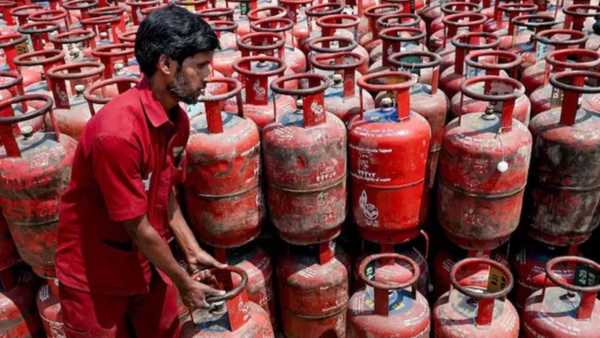
There was a huge decline of 13 percent in the consumption of cooking gas (LPG) in India in March. The biggest reason for this is the Middle East tension. Due to which there were interruptions in supply, which affected the availability of gas for both domestic kitchen and commercial users. LPG consumption in March was 2.379 million tonnes, which was 12.8 percent less than the consumption of 2.729 million tonnes at the same time last year. India imports about 60 percent of its LPG requirement, most of which comes through the Strait of Hormuz.
This route was almost closed after the attacks on Iran by America and Israel and the retaliation by Tehran. Due to disruption in supply from Saudi Arabia and UAE, the government has cut the supply of LPG to commercial establishments and industries like hotels, so that the gas remains available for domestic kitchens.
According to the Oil Ministry's Petroleum Planning and Analysis Cell (PPAC), the number of LPG cylinders sold to domestic households declined by 8.1 per cent in March to 2.219 million tonnes, while the number of cylinders sold to non-domestic users declined by nearly 48 per cent. A huge decline of 75.5 per cent was recorded in bulk LPG sales. PPAC data showed that there has been a decline in consumption, while the government claimed that the supply of LPG is normal and all the demands of domestic users are being met. To meet this shortfall, the government directed refineries to divert feedstock used for petrochemical production to increase LPG production. According to PPAC data, the move increased domestic LPG production to 1.4 million tonnes in March from 1.1 million tonnes a year ago.
Due to this effort, LPG production in the entire financial year 2025-26 (April 2025 to March 2026) increased to 13.1 million tonnes, compared to 12.8 million tonnes in the previous two financial years. Even if the month of March is considered an exception, LPG consumption increased by 6 percent in the financial year ending March 2026 and reached 33.212 million tonnes. There has been a continuous increase in LPG consumption in recent years. The main reason for this is the efforts of the government under which clean alternatives are being promoted in place of wood and other polluting fuels. Due to the closure of airspace and grounding of flights in many Gulf countries due to the war, there was almost no increase in jet fuel or ATF consumption in March. It stood at 807,000 tonnes, whereas a year ago its sales were 801,000 tonnes.
Apart from these two fuels affected by the war, a significant increase was seen in the sales of petrol and diesel. Petrol sales increased by 7.6 percent to 3.78 million tonnes, while diesel consumption increased by 8.1 percent to 8.727 million tonnes. For the full fiscal year, ATF sales increased by 2 percent to 9.161 million tonnes, while petrol consumption increased by 6.5 percent to 42.586 million tonnes. Diesel consumption increased by 3.6 percent to 94.705 million tonnes. Industrial fuels naphtha and fuel oil recorded a decline of 9.9 per cent and 1.4 per cent respectively, while consumption of road bitumen was projected to increase by 3 per cent to 8.84 million tonnes in 2025-26.