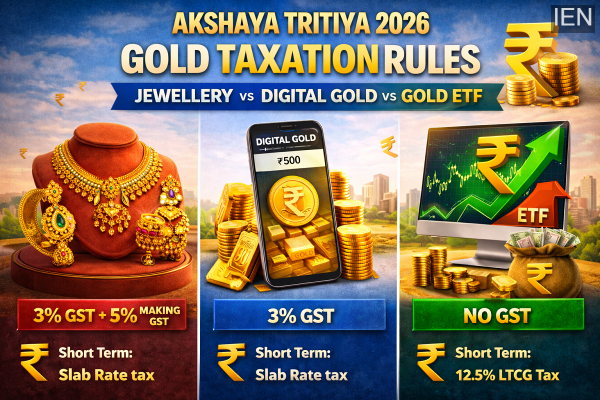
Planning to buy gold this Akshaya Tritiya? While the day is considered highly auspicious for investments, understanding tax rules on gold is equally important before making a purchase. Whether you choose jewellery, digital gold, ETFs, or bonds—each option comes with a different tax structure that can directly impact your returns.
Here’s a complete breakdown of gold taxation rules in India for 2026.
If you buy gold in physical form such as jewellery or coins from a store, it is treated as a capital asset.
📌 Key Point: Making charges and GST paid during purchase are not fully recoverable during resale, reducing your net profit.
Digital gold has become popular due to its ease of access and low investment requirement. You can start investing with small amounts via apps and online platforms.
⚠️ However, unlike regulated instruments, digital gold is not governed by bodies like the Reserve Bank of India or Securities and Exchange Board of India, which makes due diligence important.
Gold Exchange-Traded Funds (ETFs) are treated as listed securities, offering a more tax-efficient structure.
Gold mutual funds (which invest in ETFs) are slightly different:
📌 Advantage: No GST, no making charges, and better liquidity compared to physical gold.
SGBs were earlier considered the most tax-efficient gold investment, but rules have been updated from April 1, 2026.
According to tax experts, understanding taxation is crucial to maximize returns from gold investments.
Gold remains a popular investment choice, especially during Akshaya Tritiya. But the real returns depend not just on price movement—but also on taxes.
Making an informed choice can help you strike the right balance between tradition and smart investing.
This article is for informational purposes only. Tax laws are subject to change. Please consult a certified financial advisor before making any investment decisions.