We move through routines, opinions, and inherited beliefs so easily that we rarely pause to ask why we think the way we do. Yet the habit of questioning, of examining our assumptions, is what sharpens awareness and deepens understanding. Today’s quote argues that without reflection, we drift through life half-awake.
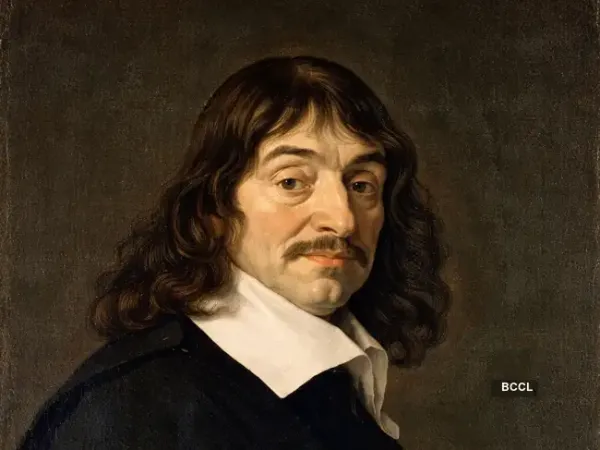
René Descartes (1596–1650) was a French philosopher, mathematician, and scientist often called the “father of modern philosophy.” Educated at a Jesuit college, he sought certainty in knowledge by doubting everything that could be doubted. This method led to his famous conclusion, Cogito, ergo sum (“I think, therefore I am”).
Descartes made foundational contributions to mathematics by developing analytic geometry, linking algebra with geometry through the Cartesian coordinate system. His philosophical works, including Meditations on First Philosophy and Discourse on the Method, reshaped Western thought by emphasizing reason and systematic skepticism.
Living much of his life in the Dutch Republic for intellectual freedom, he explored optics, physics, and the nature of mind and body. Descartes’ insistence on rational inquiry laid the groundwork for the Enlightenment and modern scientific thinking.
“To live without philosophizing is in truth the same as keeping the eyes closed without attempting to open them.”
Descartes suggests that philosophizing is not an abstract academic exercise but a way of truly seeing. Without questioning beliefs, examining evidence, and reflecting on experience, a person accepts life passively.
“Keeping the eyes closed” symbolizes intellectual laziness, moving through existence guided by habit and assumption rather than understanding. Philosophizing, in this sense, means cultivating awareness, curiosity, and critical thought.
It helps individuals distinguish truth from illusion and develop independent judgment. The quote invites us to open our mental eyes, to think deliberately about what we know, why we know it, and how we live.
Who was René Descartes
René Descartes (1596–1650) was a French philosopher, mathematician, and scientist often called the “father of modern philosophy.” Educated at a Jesuit college, he sought certainty in knowledge by doubting everything that could be doubted. This method led to his famous conclusion, Cogito, ergo sum (“I think, therefore I am”).
Descartes made foundational contributions to mathematics by developing analytic geometry, linking algebra with geometry through the Cartesian coordinate system. His philosophical works, including Meditations on First Philosophy and Discourse on the Method, reshaped Western thought by emphasizing reason and systematic skepticism.
Living much of his life in the Dutch Republic for intellectual freedom, he explored optics, physics, and the nature of mind and body. Descartes’ insistence on rational inquiry laid the groundwork for the Enlightenment and modern scientific thinking.
Quote of the day
“To live without philosophizing is in truth the same as keeping the eyes closed without attempting to open them.”
Meaning of the quote
Descartes suggests that philosophizing is not an abstract academic exercise but a way of truly seeing. Without questioning beliefs, examining evidence, and reflecting on experience, a person accepts life passively.
“Keeping the eyes closed” symbolizes intellectual laziness, moving through existence guided by habit and assumption rather than understanding. Philosophizing, in this sense, means cultivating awareness, curiosity, and critical thought.
It helps individuals distinguish truth from illusion and develop independent judgment. The quote invites us to open our mental eyes, to think deliberately about what we know, why we know it, and how we live.
More quotes by René Descartes
- “I think; therefore I am.”
- “It is not enough to have a good mind; the main thing is to use it well.”
- “Divide each difficulty into as many parts as is feasible and necessary to resolve it.”
- “Conquer yourself rather than the world.”
- “Doubt is the origin of wisdom.”