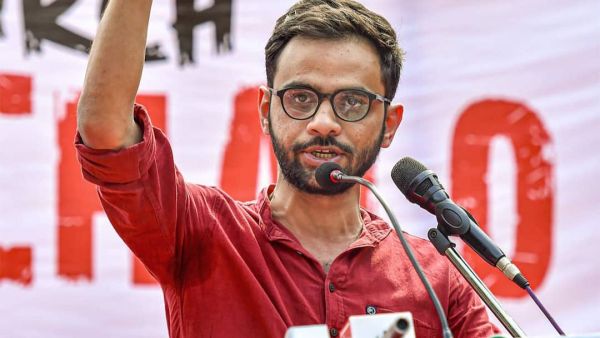
The Supreme Court of India has dismissed former Jawaharlal Nehru University student Umar Khalid’s review petition challenging the denial of bail in the 2020 Delhi riots conspiracy case.
“Prayer for oral hearing in the review petition is rejected… Having gone through the review petition and also the documents enclosed, we do not find any good ground and reason to review the judgment dated 05.01.2026. Accordingly, the review petition is dismissed,” said a bench of justices Aravind Kumar and NV Anjaria in its April 16 order, which was released on Monday.
The development comes days after senior advocate Kapil Sibal, appearing for Khalid, had requested that the review petition be heard in open court instead of being decided in chambers.
“I wanted to make a mention about a review petition… it is listed on Wednesday. My request is…if you could have it in an open court,” Sibal submitted on April 13.
Responding at the time, justice Kumar said, “We will look into the paper, and if required, we will call it.”
Review petitions are ordinarily decided in chambers without oral arguments, a course the court followed in this case.
Khalid had filed the review petition against the Supreme Court’s January 5 judgment, which denied him bail under the stringent provisions of the Unlawful Activities (Prevention) Act.
In that ruling, the bench held that the material on record disclosed a prima facie case against Khalid and co-accused Sharjeel Imam, attributing to them a “central and formative role” in the alleged conspiracy.
The court observed that their involvement extended to “planning, mobilisation and strategic direction,” placing them on a different footing from other accused.
Rejecting the plea for bail, the court ruled that prolonged incarceration alone could not justify release in cases governed by the UAPA.
“In prosecutions implicating the sovereignty, integrity or security of the State, delay cannot operate as a trump card,” the judgment said.
The court emphasised that bail decisions must be based on a case-specific assessment of the allegations and whether the statutory threshold has been crossed.
Khalid has been in custody since September 13, 2020, while Imam has been incarcerated since January 28, 2020.
The case relates to an alleged conspiracy behind the communal violence in northeast Delhi in February 2020, which left 53 people dead and hundreds injured.
While denying bail to Khalid and Imam, the court had granted relief to five co-accused, Gulfisha Fatima, Meeran Haider, Shifa-ur-Rehman, Mohd Saleem Khan and Shadab Ahmed, holding that the allegations against them were of a “subsidiary or facilitative nature”.
The bench clarified that criminal law does not mandate identical outcomes for all accused arising from the same facts, stating that Khalid and Imam stood “qualitatively on a different footing”.
The January 5 order also restricted Khalid and Imam from renewing their bail pleas until either protected witnesses are examined or one year is completed, whichever is earlier.
The bail pleas arose from a September 2025 order of the Delhi High Court, which refused bail to nine accused and described Khalid and Imam as the “intellectual architects” of the violence.
The accused had argued before the top court that they were exercising their constitutional right to protest and had no role in fomenting violence. They also contended that prolonged incarceration amounted to punishment without trial.
The Supreme Court rejected the argument that extended custody alone warranted bail, holding that under the UAPA, such considerations cannot override the statutory bar where a prima facie case exists.
It also dismissed claims of prosecutorial delay, noting that the record did not support an overarching portrayal of a “dormant trial” or “unjustified delay” sufficient to override the statutory embargo under Section 43(D)(5) of the UAPA.