New Delhi: The geopolitical tensions in West Asia pose risks to India's trade and macroeconomic stability by widening the current account deficit (CAD), exerting pressure on the exchange rate, NITI Aayog said on Monday.
The Aayog in it's quaterly 'Trade Watch Oct-Dec (Q3) FY 2025-26' report further said that geopolitical instability in West Asia has slowed the India-Gulf Cooperation Council (GCC) Free Trade Agreement (FTA), affecting trade diversification and market access.
Also Read: India’s core sector growth contracts 0.4% in March 2026 to lowest level since August 2024
The war in West Asia broke out on February 28 when the US and Israel launched strikes on Iran, and the latter retaliated.
Releasing the report, NITI Aayog Vice Chairman Suman Bery said, "Let us be clear that FTAs are not a one-way street, nor should they be, which is to say that in the way that we are seeing them as a tool for market access, others are seeing it as a tool for market access too."
Bery highlighted that India's merchandise trade has been resilient in tough environment, and despite many of the apprehensions services trade has also been particularly strong in a very confusing year 2025.
"For trade economists, imports matter much more than exports.
"It is imports that force you to be competitive, so we should welcome the imports as much as we welcome the market access," he emphasised.
The NITI Aayog VC noted that over the last 20 years, India has grown at an average of 6 per cent, underscoring its macroeconomic stability.
The report suggested that India's gems and jewellery sector should shift from mid-value to high-value exports; promote design-led manufacturing, cluster R&D, and GI-branded products targeting lightweight, fashion, and men's jewellery.
"India's gems and jewellery sector should strengthen trade facilitation and raw material access - align FTAs, streamline duty drawback/refunds, expand IIBX access, and improve raw material supply to cut input costs and boost MSME margins," it suggested.
The report also pitched for expanding financial access and reduce cost of capital - enable collateral-free lending, credit guarantees, interest subvention, export factoring, and supply chain finance to ease liquidity and scale MSMEs.
It also called for improving ease of doing business and data systems - simplify customs/DGFT procedures, streamline re-import/export processes, and create separate G&J datasets for evidence-based policy and monitoring.
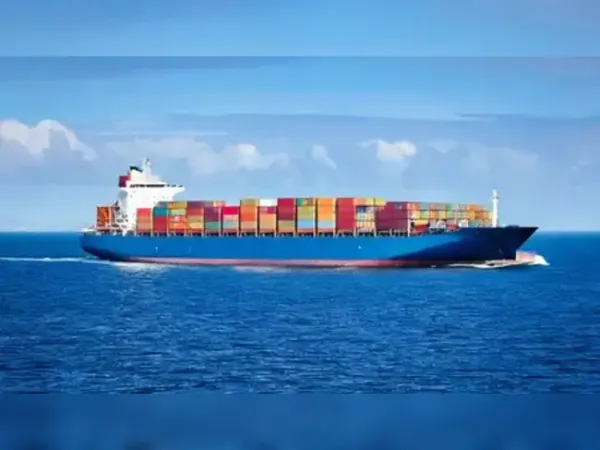
India's total merchandise and services trade grew steadily during April-December FY'26, rising by about 5.3 per cent year-on-year to USD 1.37 trillion.
Also Read: India growth resilient, markets near correction: HDFC Securities
FTA partners have emerged as a key driver of India's trade integration in value chains, with their share in total trade increasing, reflecting deeper economic linkages and expanding market access under trade agreements.
According to the report, India remains a key global player in the gems and jewellery sector (HS 71), particularly in worked diamonds.
India's gems and jewellery trade (including raw gold) is highly concentrated. The US, the UAE and Hong Kong account for about 73 per cent of exports, while the UAE, Switzerland and Hong Kong supply over 60 per cent of imports, it said.
The Aayog in it's quaterly 'Trade Watch Oct-Dec (Q3) FY 2025-26' report further said that geopolitical instability in West Asia has slowed the India-Gulf Cooperation Council (GCC) Free Trade Agreement (FTA), affecting trade diversification and market access.
Also Read: India’s core sector growth contracts 0.4% in March 2026 to lowest level since August 2024
The war in West Asia broke out on February 28 when the US and Israel launched strikes on Iran, and the latter retaliated.
Releasing the report, NITI Aayog Vice Chairman Suman Bery said, "Let us be clear that FTAs are not a one-way street, nor should they be, which is to say that in the way that we are seeing them as a tool for market access, others are seeing it as a tool for market access too."
Bery highlighted that India's merchandise trade has been resilient in tough environment, and despite many of the apprehensions services trade has also been particularly strong in a very confusing year 2025.
"For trade economists, imports matter much more than exports.
"It is imports that force you to be competitive, so we should welcome the imports as much as we welcome the market access," he emphasised.
The NITI Aayog VC noted that over the last 20 years, India has grown at an average of 6 per cent, underscoring its macroeconomic stability.
The report suggested that India's gems and jewellery sector should shift from mid-value to high-value exports; promote design-led manufacturing, cluster R&D, and GI-branded products targeting lightweight, fashion, and men's jewellery.
"India's gems and jewellery sector should strengthen trade facilitation and raw material access - align FTAs, streamline duty drawback/refunds, expand IIBX access, and improve raw material supply to cut input costs and boost MSME margins," it suggested.
The report also pitched for expanding financial access and reduce cost of capital - enable collateral-free lending, credit guarantees, interest subvention, export factoring, and supply chain finance to ease liquidity and scale MSMEs.
It also called for improving ease of doing business and data systems - simplify customs/DGFT procedures, streamline re-import/export processes, and create separate G&J datasets for evidence-based policy and monitoring.
India's total merchandise and services trade grew steadily during April-December FY'26, rising by about 5.3 per cent year-on-year to USD 1.37 trillion.
Also Read: India growth resilient, markets near correction: HDFC Securities
FTA partners have emerged as a key driver of India's trade integration in value chains, with their share in total trade increasing, reflecting deeper economic linkages and expanding market access under trade agreements.
According to the report, India remains a key global player in the gems and jewellery sector (HS 71), particularly in worked diamonds.
India's gems and jewellery trade (including raw gold) is highly concentrated. The US, the UAE and Hong Kong account for about 73 per cent of exports, while the UAE, Switzerland and Hong Kong supply over 60 per cent of imports, it said.