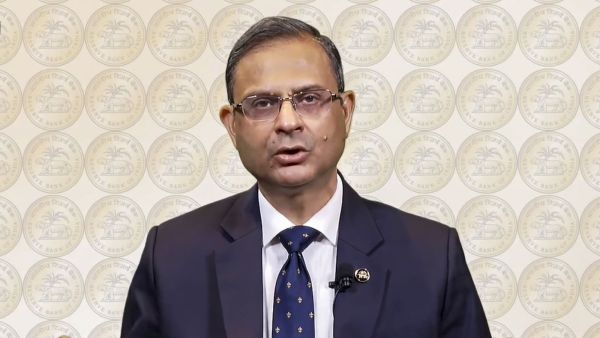
Mumbai: The current crisis in West Asia significantly impacts India, as the region accounts for approximately one-sixth of the country’s exports, half of its crude oil imports, and nearly two-fifths of the inward remittances, Reserve Bank of India (RBI) Governor Sanjay Malhotra said.
During his address at Princeton University on April 18, 2026, the governor highlighted that the Indian economy has demonstrated resilient growth over the past decade, supported by robust policy frameworks, financial stability, and sound fiscal policies.
He noted that, in response to the ongoing crisis, India is increasing its domestic production of oil and gas. “Sources of imports are being diversified. While there is no shortage of oil, given the reserves maintained by us, there is some rationing of gas for industrial purposes,” he said.

Malhotra emphasised that while oil marketing companies and the government have absorbed some of the price pressures in oil, a portion of the pressures on gas prices has been passed on to consumers.
He pointed out that India has achieved an average growth rate of 6.1 per cent annually over the last decade, compared to the global economy’s growth rate of 3.2 per cent. In contrast, India’s closest peers, such as China and Indonesia, grew by 5.6 per cent and 4.2 per cent, respectively.
The resilience of the Indian economy, he asserted, results from the robust policy frameworks and strong, credible institutions developed over time.
“Coming to the present crisis, it particularly impacts us as West Asia contributes about one-sixth of our exports, one-fifth of our imports, half of our crude oil imports, two-fifths of our fertilisers imports and almost two-fifths of our inward remittances,” he said in the speech.
Malhotra emphasised that the appropriate monetary policy response to such a supply shock is to look beyond the first-round effects, provided they do not lead to longer-term second-round dynamics.
“Second-round effects are the real concern. They can materialise if the supply chain disruptions continue for long. Then, what began as a supply shock can become embedded in the general price level. Preventing this entrenchment is where monetary policy has a primary role to play — through its influence on inflation expectations rather than through blunt demand compression,” he added.
Malhotra remarked that in uncertain times such as this, it is important to be agile and nimble, maintaining a broad policy stance and avoiding making firm commitments to the future path of policy. He added that in such circumstances, the RBI’s broad approach has been to be even more data dependent and to continuously reassess the balance of risks.
“We are therefore in wait-and-watch mode now. Moreover, we have been maintaining a neutral stance for the last few policy cycles. It preserves the flexibility to respond as the inflation-growth dynamics evolve,” he said.
Moreover, Malhotra mentioned that fiscal consolidation has progressed steadily in recent years, with improved efficiency in tax collection and better quality of expenditure.
He noted that the government has complemented monetary policy actions with supply-side measures to mitigate price pressures over the years.