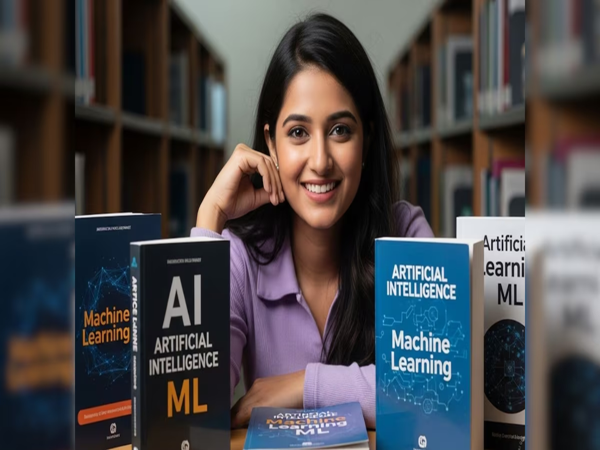
AI vs. Machine Learning: Future Scope. In today's digital world, terms like Artificial Intelligence (AI) and Machine Learning (ML) have become an integral part of everyday conversation. Whether it’s Netflix recommending movies you might like or the conversations you have with Alexa, this very "magical" technology is at work behind it all. Simply put, AI is the magical robot capable of doing anything; however, the learning capability residing *within* that robot is what constitutes Machine Learning. Without Machine Learning, AI is merely an empty shell.
A question often arises: which of these two skills will prove to be more valuable for a career? Should we focus on the broader vision of AI, or delve into the intricacies of ML? The truth is that these are not distinct entities, but rather two sides of the same coin. However, the needs of companies are evolving rapidly. Merely writing code is no longer sufficient; it has become essential to build machines capable of adapting to changing circumstances. Read on to discover which of these—AI or ML—is the more crucial skill for *you* to acquire.
AI vs. ML: Who Leads the Race for the Future?
If you are currently a student in school or college, you are likely concerned about your future career path. Students of the modern era are already studying alongside AI. Consequently, they will inevitably need to utilize both AI and ML—Artificial Intelligence and Machine Learning—in their professional careers as well. Find out which of these two skills will prove to be more essential and beneficial for your career prospects.
Artificial Intelligence (AI): The "Brain" That Knows It All
Artificial Intelligence is a vast and expansive field. Its primary objective is to make machines "smart." When we speak of AI, we encompass various sub-fields such as Robotics, Natural Language Processing (NLP), and Computer Vision. In the future, possessing AI skills will entail more than just programming; it will require understanding *how* to leverage technology to solve real-world human problems.
Machine Learning (ML): The Art of Learning
Machine Learning is a specific subset of AI. Its entire focus and emphasis lie on data. ML Engineers create algorithms that identify patterns and make predictions by analyzing data. In the future, data itself is being hailed as the "New Oil." Consequently, the demand for individuals who possess the ability to interpret data and use it to train machines will never diminish.
**Whose skills will be in highest demand in the future?**
A glance at current trends reveals that Machine Learning is the foundational skill upon which the entire field of AI rests. However, the future belongs to Generative AI (such as ChatGPT). Therefore, in the times to come, "AI Integration"—that is, knowing how to effectively utilize and customize various AI tools—will emerge as the most valuable skill. Companies will be seeking individuals who are not merely capable of building ML models, but who also know how to leverage them to drive business value.
**AI or ML: Which skill should you learn?**
If you are just starting, it is advisable to begin with Machine Learning, as it provides you with a strong technical foundation. However, if your ambition lies in pursuing a leadership role, you must possess a comprehensive understanding of AI's broader impact as well as its ethical dimensions. In the future, "AI-plus" skills will prove invaluable—specifically, the ability to seamlessly integrate AI into your existing domain of expertise (such as finance or healthcare).
Without Machine Learning, AI remains incomplete; conversely, without AI, Machine Learning is merely a branch of mathematics. Ultimately, the skills that will truly matter in the future are those that enable you to become an effective problem-solver.
Disclaimer: This content has been sourced and edited from News18 Hindi. While we have made modifications for clarity and presentation, the original content belongs to its respective authors and website. We do not claim ownership of the content.