Melthundu in Tamil Nadu
What began as a simple piece of cloth worn over the shoulder as a gesture of respect among Tamil men has, over time, evolved into a layered symbol of identity, protest and political branding in Tamil Nadu.
The melthundu—from Tamil “mel” (upper) and “thundu” (cloth)—was at one point restricted for certain communities under caste norms. It was later reclaimed as a symbol of dignity and equality, and today is re-emerging in party colours and designs in the run-up to the 2026 elections.
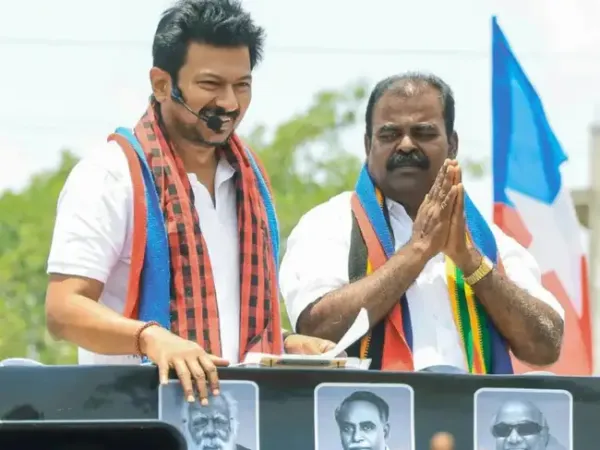
Leaders across parties, including DMK chief M K Stalin and AIADMK leader Edappadi K Palaniswami, have recently been seen wearing chequered thundus in party colours, marking a shift from earlier striped versions.
Also Read: New chapter in Tamil Nadu's revolving-door politics as Vijay's TVK complicates DMK-AIADMK math
The political journey of the cloth dates back to 1924, during a nadaswaram performance attended by social reformer Periyar E V Ramasamy, when caste-based restrictions on wearing shoulder cloths were highlighted. In response, Periyar is credited with popularising the practice of draping shawls over people’s shoulders at public events as a symbol of equality, turning the melthundu into a visual rejection of caste hierarchy.
“Periyar turned the thundu into a symbol of equality. It became a way of saying, ‘You are my fellow human being’,” Tamil writer Olivannan G said.
Over time, Dravidian politics incorporated the cloth into public identity and stagecraft. DMK founder C N Annadurai was known for his long white shawl, while former chief minister M Karunanidhi later adopted a yellow shawl, which became part of his signature look. MDMK leader Vaiko is associated with a black thundu linked to protest symbolism around Tamil Eelam.
“Clothing is one of the key political tools in Dravidian politics. Veshti-shirt and melthundu became markers of Tamil male identity,” political anthropologist Nisar Kannangara said, adding that national leaders also use the cloth in Tamil Nadu campaigns to connect with local sentiment.
In cinema, too, the thundu found political expression. Actor M G Ramachandran reportedly used it in films such as Idhayakkani as part of his political messaging, often in contrast to his own trademark sunglasses-and-hat image.
However, scholars note that distinctions have also emerged within parties, where simpler cloths are often associated with cadres while richer versions are reserved for senior leaders, subtly recreating hierarchies within a symbol meant to erase them.
After years of fading visibility, the melthundu has returned to political prominence ahead of the 2026 polls, now increasingly used as a branding tool with party-specific colours and patterns rather than purely ideological symbolism.
Also Read: Arvind Kejriwal warns Tamil Nadu voters against NDA, says it would undo Stalin's good work
In Karnataka, ‘political fixer’s’ uniform: A 2000 Asian Survey paper by James Manor described the “towel over armpit” as a marker of small-time political fixers in Karnataka—informal intermediaries between villages and government offices, often influential in elections across southern states.
When Prabhakaran refused the thundu: A 2011 Sanglap article by Swarnavel Eswaran Pillai noted Western pressure on LTTE leader Velupillai Prabhakaran to shift from guerrilla fatigues to a suit or traditional veshti-thundu for a more “acceptable” political image, which he refused.
MGR shawl controversy: In 2020, a Puducherry statue of M G Ramachandran was draped in a saffron shawl, triggering protests over alleged “saffronisation”. CCTV later showed it was placed by a woman as a gesture of respect, without political intent.
(With inputs from TOI)
The melthundu—from Tamil “mel” (upper) and “thundu” (cloth)—was at one point restricted for certain communities under caste norms. It was later reclaimed as a symbol of dignity and equality, and today is re-emerging in party colours and designs in the run-up to the 2026 elections.
Leaders across parties, including DMK chief M K Stalin and AIADMK leader Edappadi K Palaniswami, have recently been seen wearing chequered thundus in party colours, marking a shift from earlier striped versions.
Also Read: New chapter in Tamil Nadu's revolving-door politics as Vijay's TVK complicates DMK-AIADMK math
The political journey of the cloth dates back to 1924, during a nadaswaram performance attended by social reformer Periyar E V Ramasamy, when caste-based restrictions on wearing shoulder cloths were highlighted. In response, Periyar is credited with popularising the practice of draping shawls over people’s shoulders at public events as a symbol of equality, turning the melthundu into a visual rejection of caste hierarchy.
“Periyar turned the thundu into a symbol of equality. It became a way of saying, ‘You are my fellow human being’,” Tamil writer Olivannan G said.
Over time, Dravidian politics incorporated the cloth into public identity and stagecraft. DMK founder C N Annadurai was known for his long white shawl, while former chief minister M Karunanidhi later adopted a yellow shawl, which became part of his signature look. MDMK leader Vaiko is associated with a black thundu linked to protest symbolism around Tamil Eelam.
“Clothing is one of the key political tools in Dravidian politics. Veshti-shirt and melthundu became markers of Tamil male identity,” political anthropologist Nisar Kannangara said, adding that national leaders also use the cloth in Tamil Nadu campaigns to connect with local sentiment.
In cinema, too, the thundu found political expression. Actor M G Ramachandran reportedly used it in films such as Idhayakkani as part of his political messaging, often in contrast to his own trademark sunglasses-and-hat image.
However, scholars note that distinctions have also emerged within parties, where simpler cloths are often associated with cadres while richer versions are reserved for senior leaders, subtly recreating hierarchies within a symbol meant to erase them.
After years of fading visibility, the melthundu has returned to political prominence ahead of the 2026 polls, now increasingly used as a branding tool with party-specific colours and patterns rather than purely ideological symbolism.
Also Read: Arvind Kejriwal warns Tamil Nadu voters against NDA, says it would undo Stalin's good work
A history of symbolism and politics
White to yellow: In 1989, on returning to power, DMK leader M Karunanidhi was presented a yellow shawl by PMK founder S Ramadoss, linked to the Vanniyar flag and a 20% reservation demand. He wore it for decades as part of his trademark style, alongside his dark glasses, later offering varied explanations including a reference to Buddha’s yellow angavastram.In Karnataka, ‘political fixer’s’ uniform: A 2000 Asian Survey paper by James Manor described the “towel over armpit” as a marker of small-time political fixers in Karnataka—informal intermediaries between villages and government offices, often influential in elections across southern states.
When Prabhakaran refused the thundu: A 2011 Sanglap article by Swarnavel Eswaran Pillai noted Western pressure on LTTE leader Velupillai Prabhakaran to shift from guerrilla fatigues to a suit or traditional veshti-thundu for a more “acceptable” political image, which he refused.
MGR shawl controversy: In 2020, a Puducherry statue of M G Ramachandran was draped in a saffron shawl, triggering protests over alleged “saffronisation”. CCTV later showed it was placed by a woman as a gesture of respect, without political intent.
(With inputs from TOI)