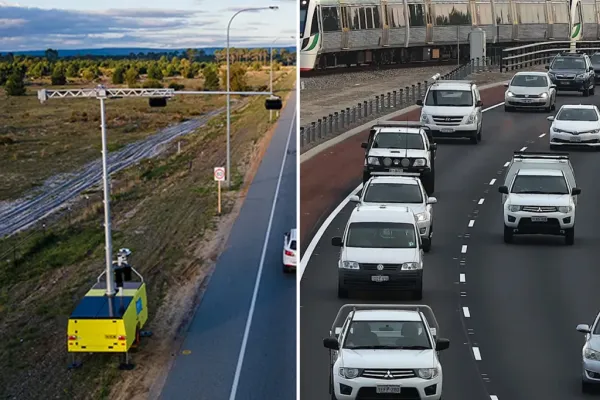
Over $1 million worth of fines issued by AI road safety cameras in Western Australia has been withdrawn less than six months after the cameras were introduced. The AI technology used by the cameras has been able to detect mobile phone usage and seatbelt infractions. Since October last year, when the fines started being issued, the issue has become controversial among the population.
The government has said that there are many violations detected by the camera. Over 53,000 seatbelt violations have been reported in this short period of time. Over 2,000 fines to these violations have been withdrawn, costing over $1.1 million.
Some people have found it hard to deal with the situation. Elli Figomnari, a disability support worker, was fined four times in relation to seatbelt infractions committed by her passenger, who happened to be her neurodivergent client. The fines came up to $2,200, and she ended up getting 16 demerit points, putting her license at stake.
However, she managed to appeal the fines, with three of them being withdrawn, though it took more time than she was promised.
The postponement created more pressure for her. She said the ordeal was consuming all of her energy and causing her stress. Even though certain fines were stripped back, she remained affected by the impact of the first fine, which had cost her demerit points.
Furthermore, she expressed how this whole event has changed her perspective at work. Being a single mother, she finds herself under financial stress. Her confidence is shaken, and now she finds herself questioning whether she should continue within the industry.
This woman’s story brings another point to the surface. Many believe that fines imposed based on the behaviour of passengers may be an unfair practice, particularly in cases involving kids or those with special needs. In Figomnari’s opinion, such cases need a second look.
Nevertheless, according to the Road Safety Minister Reece Whitby, there is no problem with the system itself. The low number of withdrawn fines proves that it is functioning properly. Only 4% of seatbelt offences have been revoked.
It is also worth mentioning that about 60 per cent of appeals filed have been successful. This means that when valid concerns arise, the drivers get treated fairly enough.
According to Whitby, some fines were waived where drivers have been caught several times in a row. It means that they might have been unaware of the technology. Therefore, the government decided to waive the penalties, treating people fairly enough.
He considers such camera systems to contribute to road safety positively. Unlike previous technologies, they could be used to track the driver’s behavior inside the vehicle. As a result, their performance is better.
The critics oppose the view. For instance, Perth citizen, Ross Taylor, describes the situation as being outrageous. He considers that the government was acting too quickly while launching a program. Some problems had not been fixed yet when the fines started coming out.
The rules were unfair as far as he was concerned. Drivers and passengers had to be penalized differently. What is more, the government ignored a golden opportunity for educating citizens.
First of all, according to Mr Koulouris, at an early stage, the authorities could have provided warnings instead of imposing fines on drivers.
Moreover, Mr Koulouris is also concerned with revenue from the fines collected. He believes that the authorities’ strict enforcement could be based on money gained from fines, not just on ensuring safety.
This was denied by Mr Whitby. The latter explained that the objective of the new system is the reduction of the death toll and accidents, and the authorities consider that the cameras help achieve their aims.
Mr Whitby added that there are further plans to implement even more cameras.
In his turn, opposition leader Basil Zempilas shared views on the matter. He supported traffic safety measures and believes in justice within the process.
According to him, there were issues during the first eight months when there were no fines, and the authorities had enough time to resolve all these problems.
It means that now when cameras started to impose fines, these issues are still not sorted out.
Basil believes in the effectiveness of deterring measures, but penalties should correspond to offences.
This controversy is bound to go on as the number of drivers who encounter the system increases. The proponents argue that the technology has saved lives while opponents claim that improvements are needed in the process.
For the time being, the figures paint an ambiguous picture. Numerous violations have been recorded. Several penalties have been enforced. However, a significant number of cases have been dropped.