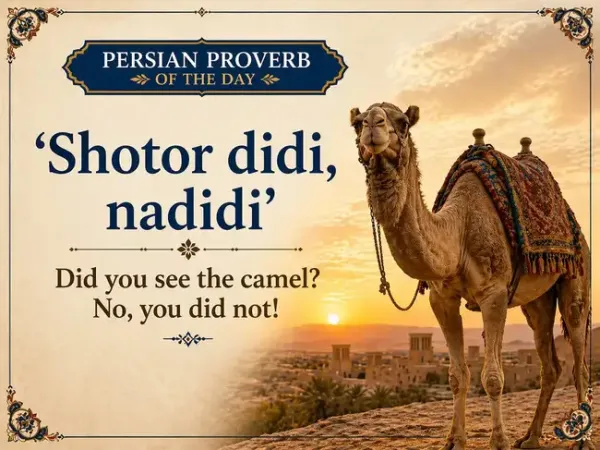
The popular Persian saying "Shotor didi, nadidi" - which translates to "Did you see the camel? No, you did not!" - is a simple yet powerful proverb used in everyday conversations. In Persian culture, proverbs often carry deep wisdom in just a few words, and this one is no exception. The image of a camel is important here. A camel is large, obvious, and impossible to miss. So when someone claims they didn’t see it, the statement immediately feels absurd. That’s exactly the point. This proverb uses humor and exaggeration to highlight a very human behavior - pretending not to notice something that is clearly there.
PERSIAN PROVERB OF THE DAY
"Shotor didi, nadidi" - Did you see the Camel? No, you did not!
WHAT THIS PROVERB MEANS
At its core, this proverb speaks about denial, avoidance, and selective blindness. It describes situations where a person chooses to ignore the truth, even when it is obvious. Sometimes people do this to avoid responsibility, conflict, or uncomfortable conversations. The proverb doesn’t always carry a harsh tone. In some cases, it can also suggest a form of intentional silence - choosing not to 'see' something in order to maintain peace or avoid unnecessary trouble. This dual meaning makes it both practical and relatable. It reflects how people balance honesty with social harmony in real life.
WHY IT STILL MATTERS TODAY
Even in today’s fast-paced, modern world, this proverb remains highly relevant. In the age of social media and constant information, people often encounter truths they would rather ignore. Whether it’s misinformation, ethical issues, or personal challenges, the temptation to 'not see the camel' is stronger than ever. This proverb reminds us to reflect on our choices. It encourages awareness and honesty, while also recognizing that sometimes silence can be strategic.
PERSIAN PROVERB OF THE DAY
"Shotor didi, nadidi" - Did you see the Camel? No, you did not!
WHAT THIS PROVERB MEANS
At its core, this proverb speaks about denial, avoidance, and selective blindness. It describes situations where a person chooses to ignore the truth, even when it is obvious. Sometimes people do this to avoid responsibility, conflict, or uncomfortable conversations. The proverb doesn’t always carry a harsh tone. In some cases, it can also suggest a form of intentional silence - choosing not to 'see' something in order to maintain peace or avoid unnecessary trouble. This dual meaning makes it both practical and relatable. It reflects how people balance honesty with social harmony in real life.
WHY IT STILL MATTERS TODAY
Even in today’s fast-paced, modern world, this proverb remains highly relevant. In the age of social media and constant information, people often encounter truths they would rather ignore. Whether it’s misinformation, ethical issues, or personal challenges, the temptation to 'not see the camel' is stronger than ever. This proverb reminds us to reflect on our choices. It encourages awareness and honesty, while also recognizing that sometimes silence can be strategic.