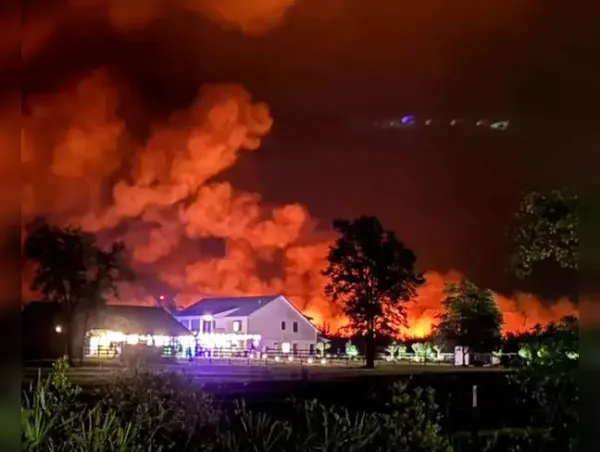
The United States may see fewer wildfires in 2026, but experts warn the ones that do ignite could be far more intense, burning larger areas and intensifying risks across the country. According to AccuWeather’s Wildfire forecast for 2026, between 65,000 and 80,000 wildfires are expected across the US in 2026. This is slightly lower than the 77,850 fires reported in 2025 and close to the historical average of 68,707.
However, the total area burned is projected to be significantly higher. Forecasts estimate 5.5 million to 8 million acres could burn this year, exceeding the 5,131,474 acres recorded in 2025 and aligning with the historical average of 7 million acres.
Experts say this shift signals a worrying trend: fewer fires but more intense and widespread damage.
AccuWeather warns that wildfires in 2026 are more likely to grow rapidly and spread uncontrollably.
“With fewer fires but more acres burned predicted, ‘it means that the wildfires that do occur could become large, scorching extensive areas before being contained or extinguished,’ the outlet explains.
The combination of drought, heat, and dry vegetation is a major concern. “Expanding drought, combined with heat, wind, and dry vegetation, is a dangerous combination,” said Paul Pastelok, Lead Long-Range Expert.
He added that the season could resemble 2020, when fast-moving fires overwhelmed containment efforts. “We expect hundreds of thousands, if not millions, more acres to burn this year,” Pastelok added.
The effects of wildfires are not limited to burn zones. Strong winds can carry smoke over vast distances, impacting air quality far beyond fire-prone regions.
Hazy skies and poor air quality could affect areas hundreds or even thousands of miles away. In some cases, smoke may even lower daytime temperatures slightly by blocking sunlight.
The wildfire outlook is equally concerning north of the border. Canada is expected to see 11 to 15 million acres burned in 2026, well above its historical average of 5.7 million acres.
States in the western US are expected to face the greatest threat. California is likely to see rising fire danger through summer, particularly in interior and low-elevation areas where vegetation dries out quickly.
Between 500,000 and 750,000 acres are expected to burn in California alone in 2026, compared to its historical average of 1 million acres.
As per the report, the most persistent and widespread wildfire risk in 2026 is expected to stretch across the Southwest, Rockies, Great Basin, and parts of the Northwest. This includes areas from Arizona and New Mexico through Utah, Nevada, Idaho, and western Montana.
In the Plains, wildfire activity is expected to stay elevated, particularly across western parts of Texas, Oklahoma, Kansas, and eastern Colorado. Periods of strong winds and low humidity could further intensify fire conditions in these areas.
By contrast, regions farther east are likely to see relatively lower wildfire risk. More frequent summer storms and higher humidity levels are expected to limit the spread and intensity of fires, preventing them from becoming as widespread.
An AccuWeather climate study released in January highlights long-term concerns of this trend. Rising temperatures, declining humidity, and reduced precipitation across the contiguous US are creating conditions more favorable for wildfires.
However, the total area burned is projected to be significantly higher. Forecasts estimate 5.5 million to 8 million acres could burn this year, exceeding the 5,131,474 acres recorded in 2025 and aligning with the historical average of 7 million acres.
Experts say this shift signals a worrying trend: fewer fires but more intense and widespread damage.
Why fewer fires could mean more destruction
AccuWeather warns that wildfires in 2026 are more likely to grow rapidly and spread uncontrollably.
“With fewer fires but more acres burned predicted, ‘it means that the wildfires that do occur could become large, scorching extensive areas before being contained or extinguished,’ the outlet explains.
The combination of drought, heat, and dry vegetation is a major concern. “Expanding drought, combined with heat, wind, and dry vegetation, is a dangerous combination,” said Paul Pastelok, Lead Long-Range Expert.
He added that the season could resemble 2020, when fast-moving fires overwhelmed containment efforts. “We expect hundreds of thousands, if not millions, more acres to burn this year,” Pastelok added.
Smoke impact could stretch across the continent
The effects of wildfires are not limited to burn zones. Strong winds can carry smoke over vast distances, impacting air quality far beyond fire-prone regions.
Hazy skies and poor air quality could affect areas hundreds or even thousands of miles away. In some cases, smoke may even lower daytime temperatures slightly by blocking sunlight.
The wildfire outlook is equally concerning north of the border. Canada is expected to see 11 to 15 million acres burned in 2026, well above its historical average of 5.7 million acres.
Which area will be affected?
States in the western US are expected to face the greatest threat. California is likely to see rising fire danger through summer, particularly in interior and low-elevation areas where vegetation dries out quickly.
Between 500,000 and 750,000 acres are expected to burn in California alone in 2026, compared to its historical average of 1 million acres.
As per the report, the most persistent and widespread wildfire risk in 2026 is expected to stretch across the Southwest, Rockies, Great Basin, and parts of the Northwest. This includes areas from Arizona and New Mexico through Utah, Nevada, Idaho, and western Montana.
In the Plains, wildfire activity is expected to stay elevated, particularly across western parts of Texas, Oklahoma, Kansas, and eastern Colorado. Periods of strong winds and low humidity could further intensify fire conditions in these areas.
By contrast, regions farther east are likely to see relatively lower wildfire risk. More frequent summer storms and higher humidity levels are expected to limit the spread and intensity of fires, preventing them from becoming as widespread.
An AccuWeather climate study released in January highlights long-term concerns of this trend. Rising temperatures, declining humidity, and reduced precipitation across the contiguous US are creating conditions more favorable for wildfires.