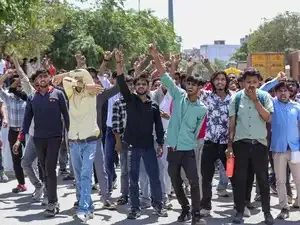
The violent protests by factory workers in Noida on April 13, 2026, should not be dismissed as an isolated breakdown of law and order. They are, in fact, the visible symptoms of a deeper malaise — hidden inflationary pressures that, over the years, have eroded purchasing power and accumulated into a quiet but pervasive discontent.
Liberalisation and industrialisation since the 1990s have undoubtedly transformed India’s economic landscape. Millions of jobs were created, and large-scale migration to urban centres became the defining feature of this growth. For the first generation of migrant families in urban and semi-urban India, even modest incomes brought hope — incremental improvements in living standards, access to consumer goods, and a hope for upward mobility. However, as families expanded and aspirations grew, that optimism has steadily dimmed. Wage growth has remained modest, while the cost of a dignified life has multiplied.
This divergence lies at the heart of what may be termed “hidden inflation”. It is not always visible in official data, but it is deeply felt in everyday life. The Consumer Price Index (CPI), which tracks the cost of a representative basket of goods and services, struggles to fully capture these pressures. For the working class, the most burdensome expenses often lie outside or at the margins of this basket.
Private school fees, for instance, have risen sharply and often arbitrarily, reflecting both demand pressures and regulatory gaps. Healthcare costs remain volatile and unpredictable, capable of pushing families into sudden financial distress. Even routine household consumption has become more expensive, sometimes accompanied by a subtle decline in quality or quantity. These are not marginal concerns—they are central to the middle classes’ lived experience, shaping their sense of economic and social security.
A critical yet under-discussed factor is the reliance on outsourcing and contract labour. Workers face precarious conditions, lower pay for similar work, and exclusion from benefits enjoyed by the regular workforce. Poor enforcement of minimum wages deepens vulnerability, while inequity fuels resentment more than deprivation.
Another dimension of hidden inflation lies in the sharp rise of asset prices. Real estate, equities, and other financial assets have witnessed substantial appreciation due to a lack of comprehensive industrialisation. While this benefits a relatively small segment of investors and asset owners, it widens inequality and reinforces a sense of exclusion among the middle class. Crucially, such asset inflation is not reflected in conventional inflation indices, yet it profoundly shapes the economic environment in which workers live.
The social context further sharpens these tensions. Visible disparities in income and consumption — particularly the stark contrast between executives’ very high salaries and workers' meagre wages — create resentment. Comparative consumerism and the conspicuous display of wealth in urban settings intensify a sense of despair. It amplifies perceptions of injustice.
Declining purchasing power weakens consumption and industrial demand. In response, firms cut costs by shrinking product sizes or compromising quality, even adulterating essential goods. Though regulations exist, uneven enforcement allows such practices to persist, further eroding consumer welfare and trust.
These dynamics create a vicious cycle: falling real incomes reduce demand; weakened demand burdens producers; producers cut costs in ways that undermine quality; and consumers, already strained, bear the burden. At the household level, this often leads to rising indebtedness as families borrow to cover the gap between income and essential expenses. Household debt as a share of GDP has climbed steadily—from around 26% in 2015 to 41–43% by 2024–2025.
The Government of Uttar Pradesh's response — revising minimum wages to Rs 13,690 for unskilled workers, Rs 15,059 for semi-skilled workers, and Rs 16,868 for skilled workers — is a necessary but limited intervention. It raises a fundamental question: can these wages support a family of four with dignity in an urban setting? For many, they fall short of what may reasonably be considered a living wage.
Economist Joseph Stiglitz has long warned that unchecked liberalisation can generate deep inequalities and an economic order that appears increasingly unjust. The unrest in Noida lends weight to this concern. When large segments of the workforce feel excluded from the gains of growth, social cohesion weakens, and economic progress itself becomes fragile.
Violence and destruction of property cannot be condoned; they must be addressed firmly. Yet a response that fails to address the underlying factors risks ignoring the problem's structural roots. The challenge is not merely to restore order but to restore balance.
Public policy must also address the drivers of hidden inflation. Greater regulation and transparency in education and healthcare costs, stronger enforcement of labour laws, and measures to curb exploitative practices in outsourcing are critical. Without such interventions, the gap between measured inflation and lived reality will continue to widen.
Importantly, India does not need to look beyond its own experience for a solution. The Tata Group, even in the pre-Independence period, demonstrated an alternative model — one that treated employee welfare as a form of capital investment. Long before statutory mandates, it introduced the eight-hour workday and shared the burden of education, healthcare benefits, maternity provisions, and community facilities. This approach recognised that a stable and productive workforce is built on dignity and security, not merely wages.
The present moment calls for a similar reorientation. Appeals by political leadership for wage increases are a beginning, but they must evolve into a broader national conversation on inclusive growth. Industry leaders, policymakers, and civil society must collectively rethink the metrics of success — moving beyond narrow profit considerations to a more balanced, stakeholder-driven approach.
Gyaneshwar Kumar Singh, the Director General of the Indian Institute of Corporate Affairs, a veteran in corporate governance, has observed that the Government of India is pushing hard for the industry to move from shareholder interest to stakeholder well-being. The welfare and dignity of workers lie at the core of a healthy economy. Unless the Indian industry really recognises this, the corporate sector risks remaining fragile and socially unsustainable.
Dr. Bhaskar is a former Ambassador and Economist
Liberalisation and industrialisation since the 1990s have undoubtedly transformed India’s economic landscape. Millions of jobs were created, and large-scale migration to urban centres became the defining feature of this growth. For the first generation of migrant families in urban and semi-urban India, even modest incomes brought hope — incremental improvements in living standards, access to consumer goods, and a hope for upward mobility. However, as families expanded and aspirations grew, that optimism has steadily dimmed. Wage growth has remained modest, while the cost of a dignified life has multiplied.
This divergence lies at the heart of what may be termed “hidden inflation”. It is not always visible in official data, but it is deeply felt in everyday life. The Consumer Price Index (CPI), which tracks the cost of a representative basket of goods and services, struggles to fully capture these pressures. For the working class, the most burdensome expenses often lie outside or at the margins of this basket.
Private school fees, for instance, have risen sharply and often arbitrarily, reflecting both demand pressures and regulatory gaps. Healthcare costs remain volatile and unpredictable, capable of pushing families into sudden financial distress. Even routine household consumption has become more expensive, sometimes accompanied by a subtle decline in quality or quantity. These are not marginal concerns—they are central to the middle classes’ lived experience, shaping their sense of economic and social security.
A critical yet under-discussed factor is the reliance on outsourcing and contract labour. Workers face precarious conditions, lower pay for similar work, and exclusion from benefits enjoyed by the regular workforce. Poor enforcement of minimum wages deepens vulnerability, while inequity fuels resentment more than deprivation.
Another dimension of hidden inflation lies in the sharp rise of asset prices. Real estate, equities, and other financial assets have witnessed substantial appreciation due to a lack of comprehensive industrialisation. While this benefits a relatively small segment of investors and asset owners, it widens inequality and reinforces a sense of exclusion among the middle class. Crucially, such asset inflation is not reflected in conventional inflation indices, yet it profoundly shapes the economic environment in which workers live.
The social context further sharpens these tensions. Visible disparities in income and consumption — particularly the stark contrast between executives’ very high salaries and workers' meagre wages — create resentment. Comparative consumerism and the conspicuous display of wealth in urban settings intensify a sense of despair. It amplifies perceptions of injustice.
Declining purchasing power weakens consumption and industrial demand. In response, firms cut costs by shrinking product sizes or compromising quality, even adulterating essential goods. Though regulations exist, uneven enforcement allows such practices to persist, further eroding consumer welfare and trust.
These dynamics create a vicious cycle: falling real incomes reduce demand; weakened demand burdens producers; producers cut costs in ways that undermine quality; and consumers, already strained, bear the burden. At the household level, this often leads to rising indebtedness as families borrow to cover the gap between income and essential expenses. Household debt as a share of GDP has climbed steadily—from around 26% in 2015 to 41–43% by 2024–2025.
The Government of Uttar Pradesh's response — revising minimum wages to Rs 13,690 for unskilled workers, Rs 15,059 for semi-skilled workers, and Rs 16,868 for skilled workers — is a necessary but limited intervention. It raises a fundamental question: can these wages support a family of four with dignity in an urban setting? For many, they fall short of what may reasonably be considered a living wage.
Economist Joseph Stiglitz has long warned that unchecked liberalisation can generate deep inequalities and an economic order that appears increasingly unjust. The unrest in Noida lends weight to this concern. When large segments of the workforce feel excluded from the gains of growth, social cohesion weakens, and economic progress itself becomes fragile.
Violence and destruction of property cannot be condoned; they must be addressed firmly. Yet a response that fails to address the underlying factors risks ignoring the problem's structural roots. The challenge is not merely to restore order but to restore balance.
What is the solution?
What, then, is the way forward? First of all, the concept of minimum wages has to be renamed as Minimum Living wages. Incremental wage revisions, while necessary, are insufficient. There is a need for a broader rethinking of the relationship between industry and labour. Workers must be recognised not merely as cost centres but as stakeholders and contributors to value creation. Moving beyond statutory minimum wages towards genuine living wages — that account for education, healthcare, and urban living costs — is essential.Public policy must also address the drivers of hidden inflation. Greater regulation and transparency in education and healthcare costs, stronger enforcement of labour laws, and measures to curb exploitative practices in outsourcing are critical. Without such interventions, the gap between measured inflation and lived reality will continue to widen.
Importantly, India does not need to look beyond its own experience for a solution. The Tata Group, even in the pre-Independence period, demonstrated an alternative model — one that treated employee welfare as a form of capital investment. Long before statutory mandates, it introduced the eight-hour workday and shared the burden of education, healthcare benefits, maternity provisions, and community facilities. This approach recognised that a stable and productive workforce is built on dignity and security, not merely wages.
The present moment calls for a similar reorientation. Appeals by political leadership for wage increases are a beginning, but they must evolve into a broader national conversation on inclusive growth. Industry leaders, policymakers, and civil society must collectively rethink the metrics of success — moving beyond narrow profit considerations to a more balanced, stakeholder-driven approach.
Gyaneshwar Kumar Singh, the Director General of the Indian Institute of Corporate Affairs, a veteran in corporate governance, has observed that the Government of India is pushing hard for the industry to move from shareholder interest to stakeholder well-being. The welfare and dignity of workers lie at the core of a healthy economy. Unless the Indian industry really recognises this, the corporate sector risks remaining fragile and socially unsustainable.
Dr. Bhaskar is a former Ambassador and Economist
(Disclaimer: The opinions expressed in this column are that of the writer. The facts and opinions expressed here do not reflect the views of www.economictimes.com.)