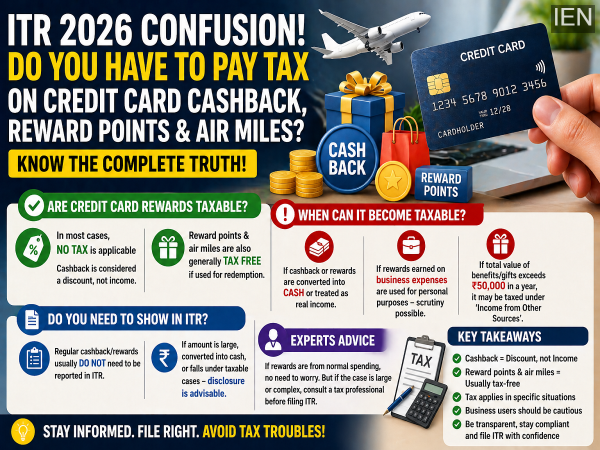
As the ITR filing season for 2026 approaches, many taxpayers are grappling with a common question—are credit card rewards like cashback, reward points, and air miles taxable? With the increasing use of digital payments and credit cards, these benefits have become a regular part of everyday spending. However, the tax treatment of such rewards is often misunderstood.
Let’s break down the facts in a simple and clear manner so you can file your ITR without confusion.
When you use a credit card for transactions, banks often offer incentives such as:
These benefits can be redeemed for shopping discounts, travel bookings, or even converted into vouchers or cash equivalents in some cases.
In most situations, credit card cashback and rewards are NOT taxable.
Tax experts generally consider these benefits as a discount or rebate on your spending, not as income. Since you receive them as part of a transaction and not as an independent earning, they are usually not taxed.
For example:
If you spend ₹10,000 and receive ₹500 cashback, it is treated as a reduced cost of purchase—not income.
While most rewards are tax-free, there are certain situations where tax may apply:
1. Conversion into Cash
If reward points or benefits are converted directly into cash or bank credit beyond typical cashback structures, they may be treated as income.
2. Business-Related Transactions
If rewards are earned on business expenses but used for personal purposes, the tax department may scrutinize such cases.
3. High-Value Benefits (Above ₹50,000)
If rewards or benefits are received in a form similar to gifts and their total value exceeds ₹50,000 in a financial year, they may be taxed under “Income from Other Sources.”
In general:
Being transparent helps avoid future notices or scrutiny.
The confusion around credit card rewards and taxation largely stems from a lack of clarity in interpretation. While most benefits are tax-exempt, exceptions do exist.
If your rewards are linked to regular spending, you don’t need to worry. But for complex or high-value cases, it’s always better to stay informed and cautious while filing your ITR.
A little awareness today can save you from tax troubles tomorrow.