112
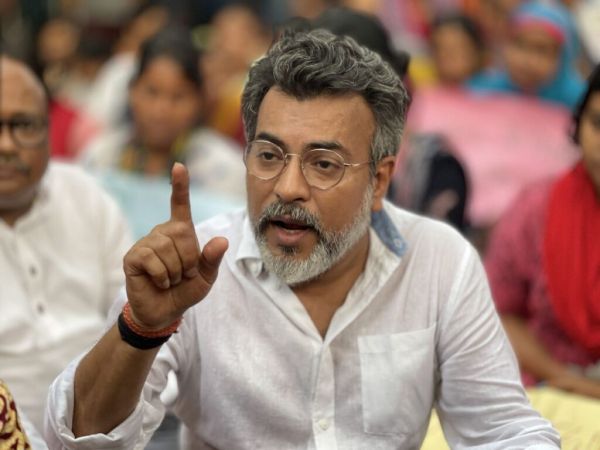
Kolkata: In an exclusive interaction with Read, actor-turned-politician Rudranil Ghosh, now contesting as a BJP candidate from his hometown Shibpur, spoke on a range of issues. He explained why he believes the BJP will come to power in West Bengal, citing what he described as prolonged corruption and misgovernance under the Trinamool Congress.
Q. Shibpur has traditionally seen strong competition. What makes you confident that voters will choose you over established local leaders?
A. For the past 15 years, basic civic infrastructure in Shibpur and across Howrah has steadily deteriorated. Illegal sale of water bodies, uncollected garbage, rat infestations, and poor traffic management have made daily life difficult. During the monsoon, severe waterlogging often up to knee level disrupts normal life and leads to rising cases of dengue, malaria, and skin infections. The widely shared viral video on Instagram reflects the grim ground reality residents face. Despite being older than Kolkata, Howrah is in much worse condition. With the Howrah Municipal Corporation largely inactive since 2018 and many wards without councillors, a clear governance vacuum has emerged. Across political lines, people are suffering, and this prolonged neglect is increasingly being seen as a failure of governance—one that may influence voters to seek change.
You Might Be Interested In
Q. How do you think the BJP’s focus on alleged scams under the TMC is resonating with voters on the ground?
A. There are several concerns, including alleged job scams, irregularities in ration distribution, and problems in housing schemes. Funds intended for poor families under central programs are reportedly not reaching them fairly, with claims that beneficiaries are asked to pay Rs 20,000–Rs 30,000 to access these benefits. This has fueled widespread frustration, as many feel these issues remain unaddressed and unresolved, leading to growing public anger.
Q. How do you view the issue of women’s safety, especially as the BJP is centering its campaign around it?
A. women’s safety is a serious issue for me. I feel the situation on the ground is deeply worrying. When statements are made advising women not to step out after a certain time, I see it as an acknowledgment of insecurity rather than a solution. In my view, the responsibility of the administration is to ensure that women feel safe at all hours, not to restrict their movement. As a citizen, I find this troubling. Women should have the freedom to live, work, and move without fear. When that confidence is missing, it reflects a larger failure of governance and law enforcement.
Q. What role do you see industries and small businesses playing in transforming the local economy?
A. From my experience, the biggest issue in Bengal is the decline of industries and lack of jobs. Many factories have shut down or moved out, forcing people—especially educated youth—to leave the state in search of opportunities. Even those who stay often earn just Rs 10,000–Rs 15,000, which isn’t enough for a stable life. I feel this has created a serious economic gap—fewer industries mean fewer jobs and less revenue. At the same time, despite many vacant government posts, deserving candidates have struggled due to alleged irregularities. In my view, Bengal urgently needs industrial revival, transparent job creation, and better support for youth and women. Basic infrastructure like drainage, clean water, and protection of water bodies also needs attention. Overall, people are frustrated but still hopeful—they want opportunities, safety, and a system that works fairly.
Q. TMC is accusing BJP and said if they come in power in bangal they will ban fish and meat hear?
A. I believe claims that Bengalis will be stopped from eating fish are misleading and meant to create fear— fish is an integral part of our culture. The real issue is that many people can’t afford it anymore due to economic challenges. In my view, the focus should be on strengthening local fish farming and supporting fishermen so Bengal becomes selfreliant. When PM spoke about improving facilities for fishermen, I saw it as a step toward growth. Overall, I feel we should focus on real development— boosting production, creating jobs, and making fish affordable—rather than spreading fear.