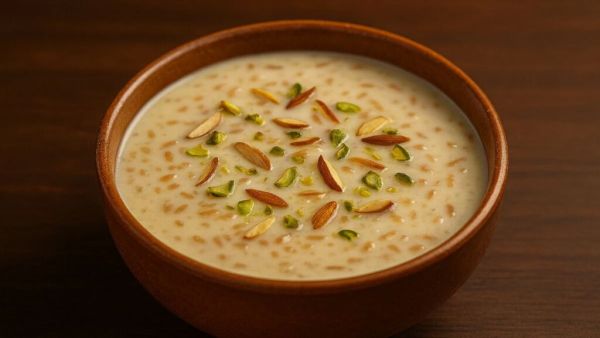
India marks Buddha Purnima as a day of prayer and quiet celebration. Observed on the full moon day of Vaishakh, the festival commemorates the birth, enlightenment and passing of Gautama Buddha. In 2026, Buddha Purnima will be observed on 1st May. Temples, monasteries and homes take on a peaceful atmosphere as devotees gather to meditate and offer prayers. Food, too, carries deep meaning during the celebrations, and among all offerings, kheer holds a special place and is prepared with devotion across many regions.
Buddha Purnima, also known as Vesak, is one of the most important festivals in Buddhism. It is believed that Lord Buddha was born, attained enlightenment and achieved Mahaparinirvana on this very day. Many people visit Buddhist sites, light lamps and listen to teachings that encourage a simple and thoughtful way of life. Food offerings made on this day reflect these values of purity and balance.
Food offered on Buddha Purnima is not meant for indulgence or celebration in the usual sense. It symbolizes humility, gratitude and sharing. Devotees often choose dishes that are simple to prepare and easy to digest, avoiding excess spices or rich flavours. The act of preparing food becomes a form of meditation, done with patience and awareness. Meals are often shared with monks, the needy or neighbors as a reminder of selflessness. This is why dishes like kheer are preferred for the occasion.
Kheer is closely linked to an important moment in Lord Buddha’s life. According to Buddhist tradition, before attaining enlightenment, Prince Siddhartha accepted a bowl of milk and rice offered by Sujata, a village woman. This nourishment gave him the strength to meditate under the Bodhi tree, where he eventually found enlightenment. The dish is believed to be similar in spirit to what we know today as kheer.
Kheer represents simplicity, purity and contentment. Made with milk, rice and a touch of sweetness, it reflects the middle path that Buddha taught, one that avoids excess and denial alike. The white color of the dish is often associated with peace and clarity of mind. Its gentle taste aligns with the idea of calm living and mindful consumption.
On Buddha Purnima, kheer is often prepared early in the day and offered at temples or prayer spaces at home. It may be placed before a statue or image of Lord Buddha as part of a simple offering ritual. After prayers, the kheer is shared among family members, visitors or distributed as prasad. In some places, community kitchens prepare large quantities to serve monks and visitors.
Buddha Purnima reminds us that even the simplest bowl of food can carry deep meaning when prepared with patience and kindness.