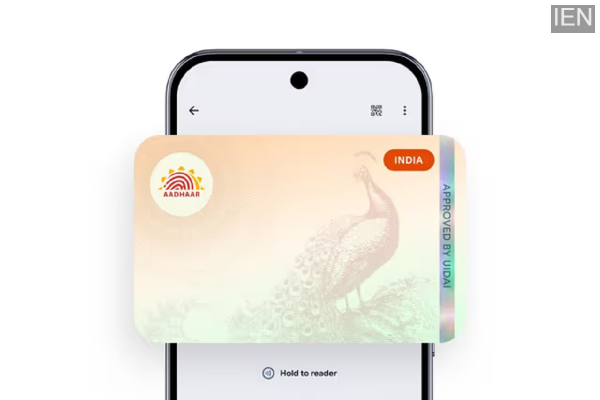
Google Wallet is now set to support digital Aadhaar IDs in India. This means you will be able to store a digital copy of your Aadhaar card directly on your phone. A key highlight of this feature is its utilization of 'Selective Disclosure' technology. Let's take a closer look at how it works.
Google Wallet is about to become even more useful in India. Google has announced that Indian users will now be able to directly save their Aadhaar Verifiable Credentials within their Google Wallet. This means your Aadhaar will no longer be limited to just a physical card; it will also exist in a secure digital format right on your smartphone.
The objective of this new feature is to simplify everyday tasks. Whether it involves verifying your age, filling out forms while traveling, or gaining entry into a gated community, proving your identity will now be easier than ever before. The most significant aspect of this feature is its focus on privacy. Google has incorporated technologies such as 'Selective Disclosure' into the system. This ensures that when verification is required, only the specific details necessary for that transaction are shared—rather than your entire personal profile.
Where Can You Use Aadhaar in Google Wallet?
Google has also announced the names of several initial partners for this feature in India. These include PVR INOX, BharatMatrimony, Atlys, Mygate, and Snabbit.
We’re expanding access to digital IDs in Google Wallet in select countries, all built with advanced privacy features like selective disclosure to keep your data secure.
— Google (@Google) April 28, 2026
Rolling out now:
🇮🇳 In India, you’ll be able to save Aadhaar Verifiable Credentials directly on your device… pic.twitter.com/oQqCrzF9Fu
Privacy: The Foremost Concern
Whenever the topic of digital IDs arises, the primary question that immediately comes to mind is: exactly how much of our data will be shared? This concern is entirely valid. Google asserts that it has integrated security, privacy, and interoperability into every layer of this entire system. The defining characteristic of this feature is its use of 'Selective Disclosure.' In other words, if a service merely needs to verify your age, it will not require access to your entire ID. This could significantly reduce the need to share personal details unnecessarily.
Google has also introduced passport-based digital ID passes in Singapore, Taiwan, and Brazil. However, the biggest news for India is the integration of Aadhaar with Google Wallet.