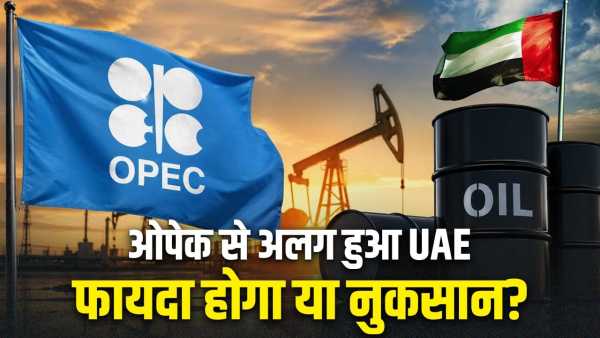
OPEC is a group of the world's major oil producing countries.
The United Arab Emirates (UAE) has decided to withdraw from OPEC. Its decision has come at a time when production in Gulf countries is being affected. There is a crisis in exports also. Amidst the ongoing tension between Iran and America, the economy of almost all the Gulf countries including UAE has been adversely affected. Now these countries are desperate to get their economies back on track. In this sequence, UAE has taken this latest decision. It still remains to be seen what positive or negative impact his decision will have.
Now the question is, what benefit do oil selling countries get from OPEC? When and how was this organization formed, how many countries joined and what is the goal?
Organization of the Petroleum Exporting Countries i.e. OPEC is a group of the world's major oil producing countries. Its main function is to keep oil production and prices balanced. This organization tries to maintain stability in the global oil market. At the time of any crisis, OPEC countries sit together and find a solution to the problem.
Crude oil.
The biggest advantage of OPEC is that the member countries can together control oil prices. When prices fall, these countries reduce production. Due to this the supply in the market decreases and prices start increasing. Similarly, when prices rise significantly, equilibrium is achieved by increasing production.
The second advantage is that small and medium countries also become stronger. By being in a group their voice becomes more effective at the international level. They are able to talk on equal terms with big countries. The third benefit is mutual cooperation. Member countries support each other in technology, investment and policies. This makes oil production more effective and cheaper.
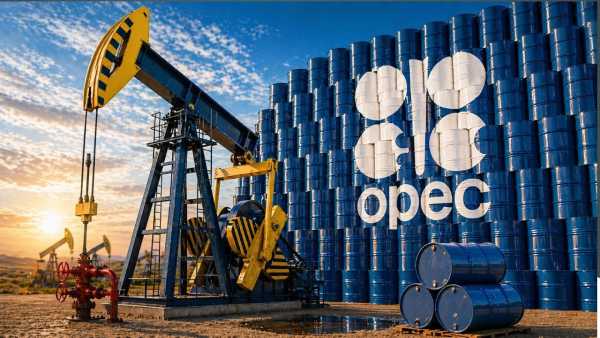
Currently OPEC has 13 member countries.
OPEC was established on 14 September 1960. Its first meeting was held in Baghdad, the capital of Iraq. The first five countries to create it were Iran, Iraq, Kuwait, Saudi Arabia and Venezuela. At that time, western companies had more control over the oil industry. Oil producing countries were not getting proper profits. Therefore, these countries together formed an organization so that they could control their own resources.
With time many countries joined OPEC. Currently there are about 13 member countries in OPEC. These include Saudi Arabia, Iran, Iraq, Kuwait, UAE, Venezuela, Nigeria, Algeria, Libya, Angola, Gabon, Equatorial Guinea and Congo. However, from time to time some countries left the organization and some new ones also joined. In such a situation the total number keeps changing. For example, recently UAE has announced to leave the membership of the organization.
The main objective of OPEC is to keep the income of the member countries stable. This organization tries to maintain balance in oil supply and prices. It also tries to ensure stable and fair prices for consumer countries. That means it takes care of the interests of both the producer and the consumer.
The United Arab Emirates (UAE) has been an important member of OPEC. It has large oil reserves and is among the world's leading exporters. UAE has increased or decreased production several times as per OPEC rules. This has helped in maintaining balance in the global market.
According to the announcement, if UAE separates from OPEC, it will get the freedom to decide its own oil policy. He will be able to increase or decrease production as per his need. This can increase his income. But it may also have some disadvantages. If it is out of OPEC, its global strength may be reduced. He will have to face the market alone. Apart from this, there will also be a risk of high fluctuations in oil prices. The group will stop getting security and support.
The United Arab Emirates announced today its decision to withdraw from the Organization of the Nations for Petroleum Exporting (NFT) for its investors and investors, with an initial decision valid from May 2026.
This decision is taken with a strategic and economic long-term vision for the state of Emirates and the development of its energy sector, including accelerating pic.twitter.com/Nmdg7VxeMi
— Ministry of Energy and Infrastructure (@MOEIUAE) April 28, 2026
If many countries start separating from OPEC, the organization may become weak. This may increase instability in the oil market. There may be sudden change in prices. Its impact falls on the economy of the entire world. Therefore the role of OPEC is still very important. OPEC is an important international organization. This has been affecting the oil market for decades. Through this, member countries get economic stability and global strength. The example of UAE shows that countries can change their strategy in changing times. The oil market may become more competitive and complex in the future.