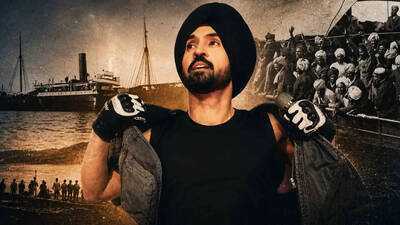
In a poignant moment, a century after the Komagata Maru incident, Diljit Dosanjh captivated an audience of 55,000 in Vancouver, just a few kilometers from where the historical event unfolded. During his appearance on The Tonight Show Starring Jimmy Fallon, he highlighted the significance of this event, which intertwines themes of migration, colonialism, and exclusion that began in 1914, in the very city now celebrating Punjabi culture.
On May 23, 1914, the Japanese steamship Komagata Maru embarked on its journey with 376 passengers, predominantly Sikhs from Punjab, alongside Muslims and Hindus. These individuals, including laborers and former soldiers, believed they were traveling within the same British Empire.
Upon reaching Vancouver, the ship was not allowed to dock normally; instead, it was detained in the harbor under scrutiny and hostility. For nearly two months, the passengers were barred from disembarking, as authorities claimed they had breached immigration laws. However, the passengers argued they were entitled to enter as British subjects. Local South Asian communities attempted to assist, and legal actions were initiated, while supplies were sent to the ship.
After two months at sea, the passengers began to suffer from illness, starvation, and dehydration, with no medical assistance available. Ultimately, only about 20 individuals who could prove prior residency were permitted entry into Canada, while the remaining 356 were forced to return. The Komagata Maru was sent back and arrived in Kolkata in September 1914, where they faced further suspicion from British colonial authorities, many of whom were linked to anti-colonial movements like the Ghadar Party.
For many years, the Komagata Maru incident was a largely overlooked chapter in both Canadian and Indian histories. However, it remained alive in the memories of the Punjabi and Sikh communities. What began as a migration issue evolved into a stark representation of imperial dominance. Over time, this incident came to symbolize the broader fight against colonial oppression and discrimination. In 2008, British Columbia's government issued an apology, followed by a formal acknowledgment from Canadian Prime Minister Justin Trudeau in 2016, recognizing the pain inflicted on the community.
Memorials have since been established, including one at Coal Harbour in Vancouver, close to where the ship was held. These symbolic gestures aim to confront a past marked by exclusion, making Diljit Dosanjh's performance in Vancouver deeply significant.
Today, a Punjabi artist fills a stadium in a country that once denied entry to individuals like those aboard the Komagata Maru. The distance between 1914 and 2026 is not merely temporal but also cultural, political, and emotional. Notably, BC Place, where Diljit performed, is located just two kilometers from the Komagata Maru memorial.
The past and present coexist, connected by geography yet separated by time. This narrative is not a straightforward tale of progress; rather, it serves as a reminder that the journey from exclusion to celebration is complex and ongoing.