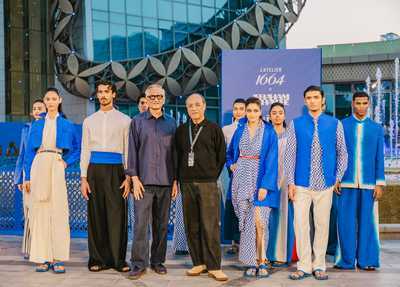
Lakme Fashion Week x FDCI 2026 kicked off with the usual controlled chaos. Back-to-back shows, overlapping schedules, the whole thing. But the 6 PM show on March 19 at Jio World Convention Centre was the one that had a certain kind of person quietly paying attention, even if nobody was saying it out loud. A French beer brand's cultural arm doing a full runway collaboration with Abraham & Thakore? On paper, it could have gone sideways very easily. It didn't.
L'Atelier 1664 sits under the 1664 Blanc umbrella and has been showing up at LFW for a few seasons. This time around, they had more to say. The collaboration with Abraham & Thakore produced a collection called Sari'torial, plus an experiential lounge that people actually stayed in rather than walking through for the Instagram story and leaving. Given how many brand spaces at fashion week feel like branded waiting rooms, that's worth mentioning.
 L'Atelier 1664/Abraham & Thakore
The premise of the collection is simple enough: the sari doesn't need a special occasion to show up. You'd think that wouldn't need to be said out loud in 2026, but here we are.
Abraham & Thakore have been making that argument through their work for years. Their whole brand is built around Indian women dressing for their actual lives, not just the moments that end up in a wedding album. Pairing that sensibility with a French brand that has always leaned into a sort of unforced ease made sense. The two references rhyme in a way that isn't immediately obvious but becomes evident once you see the clothes.
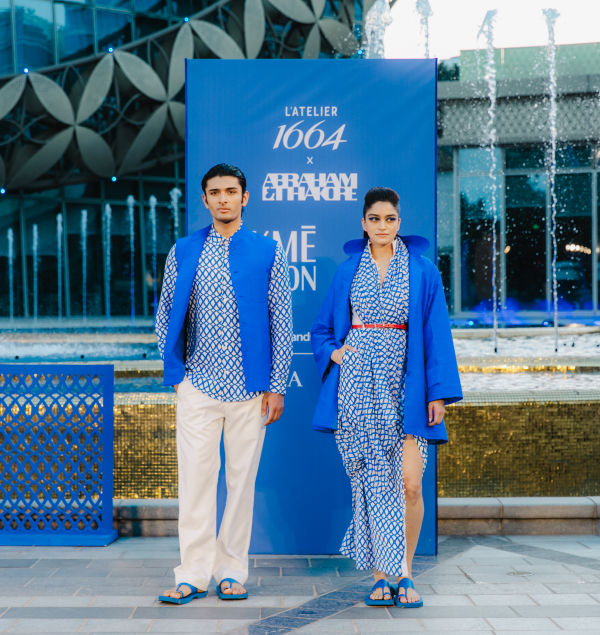
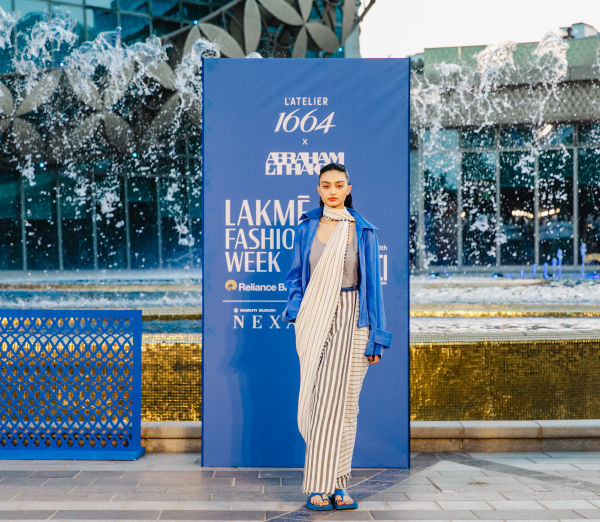
The runway looks ran with the idea hard. Saris layered over collared shirts, under trench coats, paired with waistcoats and crop jackets. The trench coat over a sari is the one that's been making the rounds on Instagram since the show, and understandably so. It should look like a costume, but it looked like an outfit. Menswear came in through bandhgalas and co-ord sets with a relaxed fit that felt vaguely Parisian and vaguely Rajasthani and fully neither, which is harder to pull off than it sounds. The layering made a solid argument without without anyone having to say it out loud: structure and drape, Indian and European, formal and not, all of it sitting in the same look without fighting.
 L'Atelier 1664/Abraham & Thakore
Fabrics were handwoven throughout, silk and handspun cotton, handled with a crispness that gave them almost a suiting quality without making them stiff. Bandhani and ikat were in there too but dialed way back, used more as texture than as recognizable print, which was the right call. The collection felt rooted without being costume-y about it.
The colour story was the quietest thing about it and somehow the most confident. Ivory, indigo, charcoal, a madder red that appeared once and then disappeared, all of it running alongside L'Atelier 1664's house blue like a thread you keep noticing and then losing track of. None of it read as seasonal. None of it is going to look wrong six months from now. That restraint is harder to pull off than a statement palette and it showed.
Sari'torial didn't try to make some large declaration about Indian fashion meeting the world. It was more specific and more useful than that. A collection of well-made clothes with a clear point of view that happened to prove something by just existing.
The sari has always been an everyday garment. It just needed the right show to remind everyone.
Lead Image Credit: L'Atelier 1664/Abraham & Thakore