Rare 180-million-year-old Jurassic fossil found in Germany shows how an injured marine reptile stayed alive
ET Online April 29, 2026 11:57 PM
Synopsis

A remarkable ichthyosaur fossil found in Germany is revealing secrets about ancient marine reptiles. This well-preserved specimen, belonging to the Temnodontosaurus genus, lived around 180 million years ago. It shows evidence of injuries and adaptations, suggesting survival despite physical challenges. Researchers are studying its anatomy and diet to understand Jurassic sea life better.

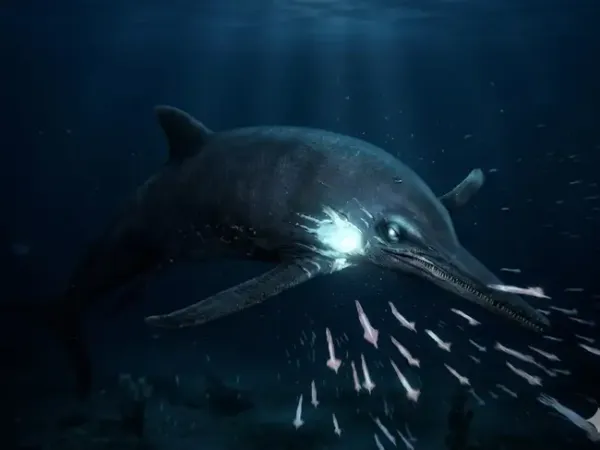
Ichthyosaurs were marine reptiles that closely resembled modern dolphins in their body shape and streamlined appearance.
A well-preserved ichthyosaur fossil discovered in the Mistelgau clay pit near Bayreuth, Germany, is offering new insights into the survival and anatomy of large marine reptiles from the Early Jurassic period, according to a study published by EurekAlert.

The fossil belongs to the genus Temnodontosaurus, a group of large marine reptiles that resembled modern dolphins and lived around 180 million years ago. Several parts of the skeleton have been preserved, including fragments of the skull and lower jaw, the shoulder girdle, forefins, spine and more than 100 teeth. Researchers noted that the exceptional three-dimensional preservation allows for detailed examination of anatomical structures that have rarely been documented, particularly in the palate, orbital region and fins.

Younger specimen than previously known

Researchers said the specimen is among the youngest known examples of its genus. Dr Ulrike Albert, a paleontologist with the Bavarian State Collections of Natural History, said such ichthyosaurs were previously known mainly from older geological layers like the Posidonia Shale of Holzmaden. The new find suggests that these marine reptiles survived longer in the Southwest German Basin than earlier evidence indicated. Based on a skull length of 1.5 metres, the animal is estimated to have measured about 6.6 metres in total length.


Evidence of injuries and survival

The fossil shows several skeletal modifications believed to have been caused by injuries, particularly in the shoulder and jaw joints. Stefan Eggmaier, preparator at the Urwelt-Museum Oberfranken and co-author of the study, said these injuries likely limited the animal’s ability to catch prey. Despite this, the reptile survived, as indicated by heavily worn teeth and the presence of gastroliths in the abdominal region.

Unusual dietary adaptation

Gastroliths, which are rarely found in ichthyosaurs like Temnodontosaurus, suggest that the animal may have altered its diet to cope with its injuries. Researchers believe this adaptation could have helped it survive despite physical limitations.

Ongoing research in Jurassic ecology

The discovery is part of ongoing research into the ecology of the Jurassic Sea in Upper Franconia. The team from the Urwelt-Museum Oberfranken, which has been conducting excavations in Mistelgau since 1998, plans further analysis of teeth and bone structures to better understand the habitat and ecological role of these marine reptiles.
© Copyright @2026 LIDEA. All Rights Reserved.