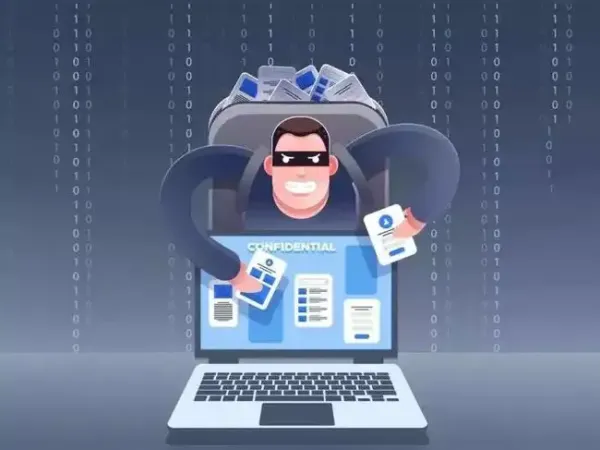
WhatsApp has told the Union government that it has deployed artificial intelligence (AI)-driven systems to detect and remove accounts impersonating law enforcement agencies, as part of efforts to tackle digital arrest scams.
The move comes after the platform banned 9,400 accounts linked to such offences over a 12-week period beginning January.
Details of the action were submitted to the Supreme Court through a status report filed by Attorney General R Venkataramani on behalf of the Indian Cyber Crime Coordination Centre (I4C), under the Ministry of Home Affairs, ET reported.
According to a government document, authorities have managed to prevent Rs 7,647 crore from reaching cybercriminals between April 2021 and November 2025. However, of the Rs 52,969 crore reported stolen during this period, only Rs 167 crore, around 2.18%, has been restored to victims.
WhatsApp privacy policy mentions that personal messages and calls are end-to-end encrypted and ‘no one else, not even WhatsApp, can read or listen to them’. But its policy also states that it collects usage and interaction data, and can receive user reports, allowing it to detect suspicious behaviour without reading encrypted chat content.
What are ‘digital arrest’ scams?
Authorities have identified impersonation of law enforcement agencies as a key tactic in these scams.
Fraudsters typically pose as officials from agencies such as the police or central investigative bodies, using official names and insignia to create credibility. Victims are then contacted and threatened with legal consequences, often under the pretext of being under investigation.
How is WhatsApp responding?
As part of its response, WhatsApp said it has introduced systems that use AI to detect misuse of official logos and match suspicious media patterns linked to impersonation.
The platform has also deployed models to identify fraudulent behaviour and mechanisms to warn users when interactions appear suspicious.
According to the submission, the company is working to further strengthen its AI capabilities to better detect fake accounts posing as law enforcement officials, unauthorised use of government insignia, and patterns associated with scam networks.
Additional technical safeguards aimed at identifying and limiting extended scam calls are also being put in place. The company is expected to outline further measures within a month.
Engagement with authorities
These steps follow consultations involving multiple government bodies, including the Ministry of Home Affairs, Department of Telecommunications (DoT), Reserve Bank of India (RBI) and Ministry of Electronics and Information Technology (MeitY).
WhatsApp has said it will continue to cooperate with law enforcement agencies and the I4C, including acting on shared inputs related to scam networks and impersonation-based fraud.
Separately, the Central Bureau of Investigation (CBI) has set a threshold of Rs 10 crore for taking over digital arrest cases. It has re-registered three such cases so far, including two from Gujarat and one from Delhi involving a reported fraud of Rs 22.92 crore.
Telecom measures in parallel
The measures also include SIM binding, which requires a verified SIM card to remain active in a device for applications to function. This is intended to reduce misuse of inactive or swapped SIMs.
Telecom providers are required to carry out biometric verification before issuing SIM cards. A nationwide repository of SIM card holders is also being developed.
The Department of Telecommunications plans to introduce a system to track SIM issuance across networks within six months, with a biometric-based cross-operator monitoring mechanism expected to be fully operational within nine months, ahead of December 2026.
This will help authorities track how many SIM cards a person has across different telecom networks, making it harder for fraudsters to use multiple or fake identities.
Telecom companies have been asked to introduce measures to: curb misuse of multiple Point of Sale (PoS) identities by a single individual, strengthen identity verification processes and improve traceability in SIM distribution.
Bottom line
Technology company DataLEADS has estimated that cybercrime-related losses in India rose tomore than Rs 22,845 crore in 2024, up sharply from Rs 2,306 crore in 2022. In February, the Supreme Court said that more than Rs 54,000 crore had been siphoned off through digital fraud and described the scale of the crime as akin to ‘robbery or dacoity’, while directing the Centre to frame a standard operating procedure to tackle it.
Separately, the RBI has proposed a framework under which victims of small-value fraudulent digital transactions could be compensated up to 85% of the loss, capped at Rs 25,000, subject to conditions.
While government bodies are taking necessary actions, banks and insurers are also in early talks to design an insurance product that could cover victims of digital arrest scams, ET reported in February, making India the first country with fraud coverage for such cyber scams.
Also Read: Digital arrest victims may be going under cover
The move comes after the platform banned 9,400 accounts linked to such offences over a 12-week period beginning January.
Details of the action were submitted to the Supreme Court through a status report filed by Attorney General R Venkataramani on behalf of the Indian Cyber Crime Coordination Centre (I4C), under the Ministry of Home Affairs, ET reported.
According to a government document, authorities have managed to prevent Rs 7,647 crore from reaching cybercriminals between April 2021 and November 2025. However, of the Rs 52,969 crore reported stolen during this period, only Rs 167 crore, around 2.18%, has been restored to victims.
WhatsApp privacy policy mentions that personal messages and calls are end-to-end encrypted and ‘no one else, not even WhatsApp, can read or listen to them’. But its policy also states that it collects usage and interaction data, and can receive user reports, allowing it to detect suspicious behaviour without reading encrypted chat content.
What are ‘digital arrest’ scams?
Authorities have identified impersonation of law enforcement agencies as a key tactic in these scams.
Fraudsters typically pose as officials from agencies such as the police or central investigative bodies, using official names and insignia to create credibility. Victims are then contacted and threatened with legal consequences, often under the pretext of being under investigation.
How is WhatsApp responding?
As part of its response, WhatsApp said it has introduced systems that use AI to detect misuse of official logos and match suspicious media patterns linked to impersonation.
The platform has also deployed models to identify fraudulent behaviour and mechanisms to warn users when interactions appear suspicious.
According to the submission, the company is working to further strengthen its AI capabilities to better detect fake accounts posing as law enforcement officials, unauthorised use of government insignia, and patterns associated with scam networks.
Additional technical safeguards aimed at identifying and limiting extended scam calls are also being put in place. The company is expected to outline further measures within a month.
Engagement with authorities
These steps follow consultations involving multiple government bodies, including the Ministry of Home Affairs, Department of Telecommunications (DoT), Reserve Bank of India (RBI) and Ministry of Electronics and Information Technology (MeitY).
WhatsApp has said it will continue to cooperate with law enforcement agencies and the I4C, including acting on shared inputs related to scam networks and impersonation-based fraud.
Separately, the Central Bureau of Investigation (CBI) has set a threshold of Rs 10 crore for taking over digital arrest cases. It has re-registered three such cases so far, including two from Gujarat and one from Delhi involving a reported fraud of Rs 22.92 crore.
Telecom measures in parallel
The measures also include SIM binding, which requires a verified SIM card to remain active in a device for applications to function. This is intended to reduce misuse of inactive or swapped SIMs.
Telecom providers are required to carry out biometric verification before issuing SIM cards. A nationwide repository of SIM card holders is also being developed.
The Department of Telecommunications plans to introduce a system to track SIM issuance across networks within six months, with a biometric-based cross-operator monitoring mechanism expected to be fully operational within nine months, ahead of December 2026.
This will help authorities track how many SIM cards a person has across different telecom networks, making it harder for fraudsters to use multiple or fake identities.
Telecom companies have been asked to introduce measures to: curb misuse of multiple Point of Sale (PoS) identities by a single individual, strengthen identity verification processes and improve traceability in SIM distribution.
Bottom line
Technology company DataLEADS has estimated that cybercrime-related losses in India rose tomore than Rs 22,845 crore in 2024, up sharply from Rs 2,306 crore in 2022. In February, the Supreme Court said that more than Rs 54,000 crore had been siphoned off through digital fraud and described the scale of the crime as akin to ‘robbery or dacoity’, while directing the Centre to frame a standard operating procedure to tackle it.
Separately, the RBI has proposed a framework under which victims of small-value fraudulent digital transactions could be compensated up to 85% of the loss, capped at Rs 25,000, subject to conditions.
While government bodies are taking necessary actions, banks and insurers are also in early talks to design an insurance product that could cover victims of digital arrest scams, ET reported in February, making India the first country with fraud coverage for such cyber scams.
Also Read: Digital arrest victims may be going under cover