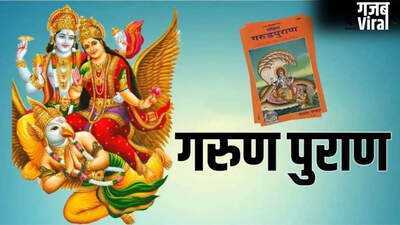
Garun Puran: In Hinduism, marriage is not merely a social contract but a significant spiritual rite. Scriptures describe it as the initiation of the 'Grihastha Ashram,' which guides individuals towards Dharma, Artha, Kama, and Moksha. Let's explore why the Grihastha life is considered superior to renunciation and why marriage is deemed essential, as highlighted in the Garun Puran.
Marriage: A Key Sacrament in Hinduism
Among the 16 sacraments in Hinduism, marriage holds a prominent position. It is viewed as the first step into the Grihastha life. While marriage is often associated with starting a family or lineage, scriptures indicate that its purpose is far more profound and spiritual.
The Path of Renunciation by Ruchi Prajapati
In ancient tales, Ruchi Prajapati is depicted as a wise and ascetic figure. He chose the path of renunciation, abandoning marriage and family life. He would eat once a day and engage in deep self-reflection, believing that worldly attachments lead to suffering.
Balancing Asceticism and Domestic Life
According to the Markandeya Purana, Ruchi's ancestors appeared before him and questioned his choice to remain unmarried. They explained that what he perceived as bondage was, in fact, a pathway to heaven and liberation. This dialogue clarifies the balance between asceticism and domestic life.
The Path to Liberation from Debts
The Garun Puran states that every individual is born with three significant debts: to the gods, ancestors, and sages. Liberation from these debts is believed to be achievable only through the Grihastha Ashram. It is only after marriage that one can fully fulfill these responsibilities.
Essential Duties of the Grihastha
Scriptures indicate that performing rituals for the gods, offering Tarpan to ancestors, and providing hospitality to guests are duties that can only be fulfilled in domestic life. The Garun Puran and Markandeya Purana emphasize that without 'Swadha,' offerings do not reach the ancestors.
Consequences of Neglecting Duties
The ancestors warned Ruchi Prajapati that anyone wishing for liberation without fulfilling duties like procreation, worship, and ancestor offerings would face suffering. According to the Garun Puran, liberation after death is not possible without settling these debts.
The Connection Between Actions and Liberation
When Ruchi Prajapati described marriage as a source of suffering, the ancestors clarified that actions themselves are not bondage; rather, it is the renunciation of duties that creates problems. The Markandeya Purana states that actions performed according to scriptures purify the soul and lead towards liberation. The ancestors also clarified that while the Vedas refer to actions as 'Avidya,' they ultimately pave the way for 'Vidya,' or supreme knowledge.
Thus, in Hindu scriptures, the Grihastha Ashram is not merely a worldly existence; it is considered the most crucial foundation for attaining liberation. Those who adopt renunciation to escape responsibilities may find themselves distanced from spiritual advancement.