
Listen to this article in summarized format
Loading...
××
Subscribe to

Unlock AI Briefing and Premium Content
New Year Offer 24 Hours Left
Subscribe NowAlready a member? Sign In
What's Included
- Exclusive Stories
- Daily ePaper Access
- Smart Market Tools
- Curated Investment Ideas
- Ad-lite Experience
Subscription

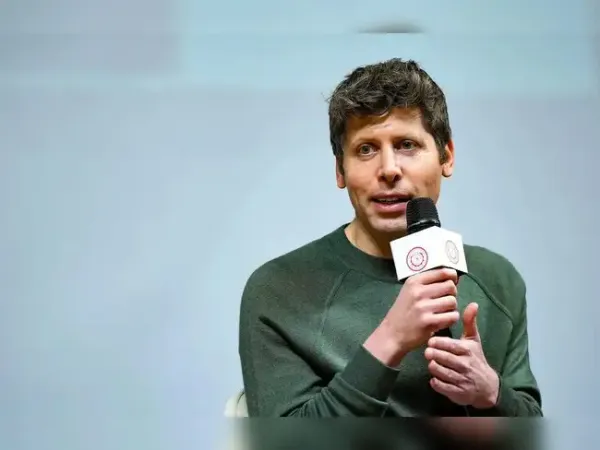
OpenAI chief executive Sam Altman said the company’s next focus areas are accelerating scientific research, boosting economic productivity and building what he described as “personal AGI”, according to remarks made in a recent interview.
Speaking on the Nothing But Tech podcast on Saturday, Altman said OpenAI is looking at three broad directions where society could “really feel value”.
He also pointed to robotics and automated manufacturing as key areas, saying a future where computers can perform advanced intellectual tasks but humans still have to act as the physical “actuators” of AI would be undesirable.
On research, Altman said he expects progress in mathematics to be “astonishing”, adding that new mathematical discoveries could point to advances in physics, cryptography and other real-world applications. He also said AI could accelerate work on diseases such as Alzheimer’s, with outcomes expected next year.
The comments echo Altman’s January 2025 blog post, where he said superintelligent tools could “massively accelerate scientific discovery and innovation” and increase prosperity. In another post in February 2025, Altman wrote that scientific progress may be one of AGI’s biggest impacts.
Also Read: Sam Altman outlines five principles for OpenAI's AGI development
Altman’s second focus area was economic acceleration. He said AI could enable “automated startups” and help large companies become more productive. He added that the technology is already changing the startup model by allowing small teams, and eventually one-person startups, to build products and companies with far greater leverage.
“One of the most important things about this technology is the entrepreneurship it’s enabling,” Altman said, adding that he wants to be “in the trenches” with founders building companies with “two founders and 10,000 GPUs.”
“Startups thrive when there is newness and there's change in the technological landscape. And that happened when the iPhone App Store launched around 2008. And then it didn't happen for a very long time until AI came along,” he said.
“There were still successful startups but not as many as there can be when there's a real technological shift.”
The remarks build on Altman’s earlier prediction that AI agents could “join the workforce” and materially change company output. In his February 2025 post, he also described AI as economically comparable to the transistor, saying it could spread across many parts of the economy.
The third area Altman identified was “personal AGI”, which he said ChatGPT had provided an early preview of. He framed it as a future in which individuals use AI systems to build, explore, create companies, and produce new forms of art and experiences.
OpenAI has also linked these ambitions to a major compute expansion.
OpenAI has been investing in compute lately. In January 2025, OpenAI and SoftBank announced Stargate, a project intended to invest $500 billion over four years in AI infrastructure for OpenAI in the US.
OpenAI said in April 2026 that Stargate had surpassed its original target of securing 10 gigawatts (GW) of US AI infrastructure by 2029, adding that compute remains the “critical input” for training and serving advanced AI systems.
Altman said in the interview that building more compute is the most certain path forward because it requires capital and supply-chain execution, while algorithmic breakthroughs are potentially higher payoff but harder to predict.
Also Read: OpenAI CEO Sam Altman issues 'ring of power' warning on AGI
Speaking on the Nothing But Tech podcast on Saturday, Altman said OpenAI is looking at three broad directions where society could “really feel value”.
He also pointed to robotics and automated manufacturing as key areas, saying a future where computers can perform advanced intellectual tasks but humans still have to act as the physical “actuators” of AI would be undesirable.
On research, Altman said he expects progress in mathematics to be “astonishing”, adding that new mathematical discoveries could point to advances in physics, cryptography and other real-world applications. He also said AI could accelerate work on diseases such as Alzheimer’s, with outcomes expected next year.
The comments echo Altman’s January 2025 blog post, where he said superintelligent tools could “massively accelerate scientific discovery and innovation” and increase prosperity. In another post in February 2025, Altman wrote that scientific progress may be one of AGI’s biggest impacts.
Also Read: Sam Altman outlines five principles for OpenAI's AGI development
Altman’s second focus area was economic acceleration. He said AI could enable “automated startups” and help large companies become more productive. He added that the technology is already changing the startup model by allowing small teams, and eventually one-person startups, to build products and companies with far greater leverage.
“One of the most important things about this technology is the entrepreneurship it’s enabling,” Altman said, adding that he wants to be “in the trenches” with founders building companies with “two founders and 10,000 GPUs.”
“Startups thrive when there is newness and there's change in the technological landscape. And that happened when the iPhone App Store launched around 2008. And then it didn't happen for a very long time until AI came along,” he said.
“There were still successful startups but not as many as there can be when there's a real technological shift.”
The remarks build on Altman’s earlier prediction that AI agents could “join the workforce” and materially change company output. In his February 2025 post, he also described AI as economically comparable to the transistor, saying it could spread across many parts of the economy.
The third area Altman identified was “personal AGI”, which he said ChatGPT had provided an early preview of. He framed it as a future in which individuals use AI systems to build, explore, create companies, and produce new forms of art and experiences.
OpenAI has also linked these ambitions to a major compute expansion.
OpenAI has been investing in compute lately. In January 2025, OpenAI and SoftBank announced Stargate, a project intended to invest $500 billion over four years in AI infrastructure for OpenAI in the US.
OpenAI said in April 2026 that Stargate had surpassed its original target of securing 10 gigawatts (GW) of US AI infrastructure by 2029, adding that compute remains the “critical input” for training and serving advanced AI systems.
Altman said in the interview that building more compute is the most certain path forward because it requires capital and supply-chain execution, while algorithmic breakthroughs are potentially higher payoff but harder to predict.
Also Read: OpenAI CEO Sam Altman issues 'ring of power' warning on AGI