The slow decline of Mexico City is no longer only a matter of history or a technical issue that is buried in archives. The city is being monitored with incredible clarity through space. A new dataset published on the 29th of April, researchers from the NASA Jet Propulsion Laboratory revealed that parts of this city are sinking nearly one-half inch each month. The data comes from studies that were made through NASA's NISAR satellite, which is a conjoint earth-monitoring satellite developed by NASA along with the Indian Space Research Organisation.
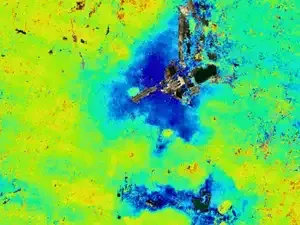
The image, which was taken between the months of October 2025 to January 2026, during the dry season in cities illustrates the patterns of subsidence across the dense urban areas. The areas that are sinking the fastest are highlighted in deep blue and some areas show ground shrinking of two centimeters or more per month. Places of worship like Benito Juarez International Airport and Lake Nabor Carrillo provide geographic anchors for the data to show how uneven and widespread sinking is becoming.
A Century-Old Problem Still Getting Worse
The demise of Mexico City is not a unexpected event. It's a continuation of an event that was first recorded in 1925. It was constructed on the ruins of an old lakebed, it is situated on water-rich and soft sediments which expand when groundwater is taken. The decades of adversity in water pumping and the enormous impact of the urbanization process have increased the rate of the process.
In the latter half of the 20th century, a few areas of the city had been sinking by about 35 centimeters a year. The results have been obvious and expensive. Metro tunnels are brittle and roads have warped and pipelines for water have frequently been damaged by stress. Contrary to many natural systems the clay under the city isn't able to rebound creating damage that is lasting.
The most striking representation of the transformation could be that of the Angel of Independence. It was built in 1910 and initially stood in a straight line with the level of the street. The current structure has 14 steps leading upwards to the base of the monument and not due to the fact that the monument rose however, the ground surrounding it began to sink.
Why the NISAR Mission Changes Everything
The thing that can make the NISAR mission unique is not only its capability to sense the movement of objects, but also how effectively it can do so even in difficult situations. The traditional satellites struggle to track subsidence in locations such as Mexico City due to cloud overgrowth, urban denseness, as well as vegetation. NISAR can overcome these issues by with a dual-frequency radar.
Its L-band radar operating at 24 centimeters of wavelength it can penetrate clouds and vegetation and maintain signals' strength. Additionally, there is the S-band radar, which measures 9.4 centimeters. This makes NISAR its first satellite with dual-frequency radar with a synthetic aperture. The combination enables researchers to discern genuine ground movements from noise in the atmosphere with higher precision.
In orbit around Earth around 464 miles, it recirculates the exact location each 12 days. The consistent monitoring schedule allows scientists to study changes in the land up to the millimeter level and create a precise time-line of how land shifts with the course of.
Built Through Global Collaboration
The NISAR mission is a significant international collaboration. It first launched on the 30th of July 2025, at the Satish Dhawan Space Centre in India. NASA was the main force behind the creation of the L-band radar as well as the massive antenna of the mission, as ISRO supplied the spacecraft as well as the S-band systems.
One of the most well-known highlights is its 12 meter-wide reflector of the radar antenna, the largest reflector of its type that has ever been deployed on orbit. The vishaal design permits the satellite to collect the more signals that return, and translate into more detailed data over huge geographic zones. Cities like Mexico City, where even millimeter-scale variations are crucial that much, the level of precision is crucial.
It also shows the commitment of NISAR to open science. Information gathered by NISAR is freely accessible via the Alaska Satellite Facility, enabling urban planners, researchers and other policy makers around the world to gain access to and utilize the data.
What the Data Reveals and What Lies Ahead
The initial results may be stunning, researchers warn that the data is developing. There are some color differences of the image, specifically the red and yellow patches could be a sign of noise, which will decrease as more data are taken. But, areas with constant subsidence are in line with years of prior research, which confirms the credibility of the results.
Specialists with the mission view Mexico City as a test of global monitoring. Similar technology could be applied to coastal areas or earthquake zones as well as other cities that are prone to land erosion. Climate change is causing more threats like floods and sea-level rise, understanding the way the land is shifting is becoming more important.
While the satellite is on its mission, each dry season will give an updated dataset to compare. Scientists will be able to evaluate whether their actions, like changes in the management of groundwater that are having an impact on groundwater management, have a tangible influence.
A City's Future Written in Millimeters
The gradual decline of Mexico City serves as a reminder of how certain of the most significant environmental impacts happen nearly invisible, until their consequences become difficult to avoid. Thanks to advanced instruments such as NISAR this invisibility disappears.
For those that live in and work in urban areas The question isn't anymore if the ground is sinking, but more importantly how rapid, how fast is it, and what should be done to stop the effects from continuing to get worse.
The image, which was taken between the months of October 2025 to January 2026, during the dry season in cities illustrates the patterns of subsidence across the dense urban areas. The areas that are sinking the fastest are highlighted in deep blue and some areas show ground shrinking of two centimeters or more per month. Places of worship like Benito Juarez International Airport and Lake Nabor Carrillo provide geographic anchors for the data to show how uneven and widespread sinking is becoming.
A Century-Old Problem Still Getting Worse
The demise of Mexico City is not a unexpected event. It's a continuation of an event that was first recorded in 1925. It was constructed on the ruins of an old lakebed, it is situated on water-rich and soft sediments which expand when groundwater is taken. The decades of adversity in water pumping and the enormous impact of the urbanization process have increased the rate of the process.
In the latter half of the 20th century, a few areas of the city had been sinking by about 35 centimeters a year. The results have been obvious and expensive. Metro tunnels are brittle and roads have warped and pipelines for water have frequently been damaged by stress. Contrary to many natural systems the clay under the city isn't able to rebound creating damage that is lasting.
The most striking representation of the transformation could be that of the Angel of Independence. It was built in 1910 and initially stood in a straight line with the level of the street. The current structure has 14 steps leading upwards to the base of the monument and not due to the fact that the monument rose however, the ground surrounding it began to sink.
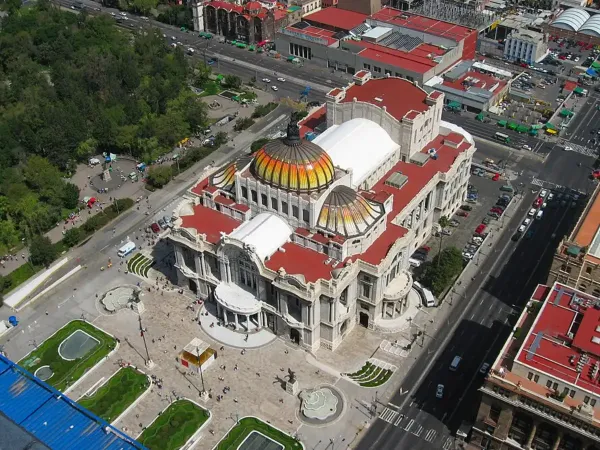
Image Credit: Wikimedia Commons/Jeses | Satellite data reveals Mexico City sinking rapidly over time
Why the NISAR Mission Changes Everything
The thing that can make the NISAR mission unique is not only its capability to sense the movement of objects, but also how effectively it can do so even in difficult situations. The traditional satellites struggle to track subsidence in locations such as Mexico City due to cloud overgrowth, urban denseness, as well as vegetation. NISAR can overcome these issues by with a dual-frequency radar.
Its L-band radar operating at 24 centimeters of wavelength it can penetrate clouds and vegetation and maintain signals' strength. Additionally, there is the S-band radar, which measures 9.4 centimeters. This makes NISAR its first satellite with dual-frequency radar with a synthetic aperture. The combination enables researchers to discern genuine ground movements from noise in the atmosphere with higher precision.
In orbit around Earth around 464 miles, it recirculates the exact location each 12 days. The consistent monitoring schedule allows scientists to study changes in the land up to the millimeter level and create a precise time-line of how land shifts with the course of.
Built Through Global Collaboration
The NISAR mission is a significant international collaboration. It first launched on the 30th of July 2025, at the Satish Dhawan Space Centre in India. NASA was the main force behind the creation of the L-band radar as well as the massive antenna of the mission, as ISRO supplied the spacecraft as well as the S-band systems.
One of the most well-known highlights is its 12 meter-wide reflector of the radar antenna, the largest reflector of its type that has ever been deployed on orbit. The vishaal design permits the satellite to collect the more signals that return, and translate into more detailed data over huge geographic zones. Cities like Mexico City, where even millimeter-scale variations are crucial that much, the level of precision is crucial.
It also shows the commitment of NISAR to open science. Information gathered by NISAR is freely accessible via the Alaska Satellite Facility, enabling urban planners, researchers and other policy makers around the world to gain access to and utilize the data.
What the Data Reveals and What Lies Ahead
The initial results may be stunning, researchers warn that the data is developing. There are some color differences of the image, specifically the red and yellow patches could be a sign of noise, which will decrease as more data are taken. But, areas with constant subsidence are in line with years of prior research, which confirms the credibility of the results.
Specialists with the mission view Mexico City as a test of global monitoring. Similar technology could be applied to coastal areas or earthquake zones as well as other cities that are prone to land erosion. Climate change is causing more threats like floods and sea-level rise, understanding the way the land is shifting is becoming more important.
While the satellite is on its mission, each dry season will give an updated dataset to compare. Scientists will be able to evaluate whether their actions, like changes in the management of groundwater that are having an impact on groundwater management, have a tangible influence.
A City's Future Written in Millimeters
The gradual decline of Mexico City serves as a reminder of how certain of the most significant environmental impacts happen nearly invisible, until their consequences become difficult to avoid. Thanks to advanced instruments such as NISAR this invisibility disappears.
For those that live in and work in urban areas The question isn't anymore if the ground is sinking, but more importantly how rapid, how fast is it, and what should be done to stop the effects from continuing to get worse.