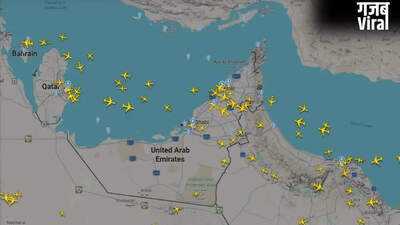
The ongoing huge tension in West Asia is now beginning to affect global trade. A very important sea route has remained closed since the attack on Iran by America and Israel on February 28. The situation is so serious that MSC, the world's largest container shipping company, has had to change its entire business model. The company has now decided to transport goods through trucks on land routes in Saudi Arabia instead of the risky Strait of Hormuz. This is a change that will slow down the supply chain, making freight transportation more expensive and may have a direct impact on the prices of everyday goods.
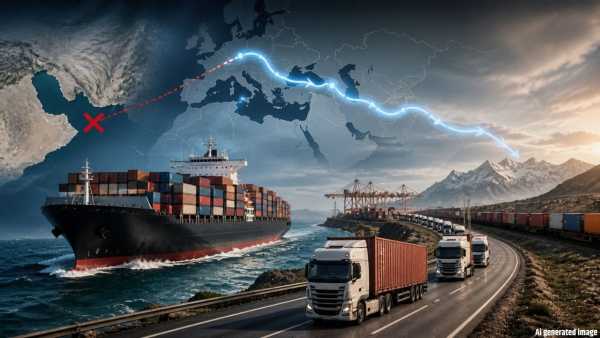
A new logistics service is going to be started from the city of Antwerp in Belgium from 10th May. Under this new route, large cargo ships will sail from Europe (Germany, Italy, Lithuania and Spain) and reach the Red Sea via the Suez Canal. But, instead of traveling further, these ships will unload all their cargo at Jeddah and King Abdullah ports located on the west coast of Saudi Arabia. From here the sea journey of these containers will end and the road journey will begin.
After the cargo is landed on the west coast of Saudi Arabia, a large fleet of trucks will take it via the capital Riyadh to Dammam on the east coast. This distance is approximately 1300 kilometers (800 miles). After reaching Dammam, the goods will again be loaded into smaller feeder vessels to be transported to major industrial centers such as Abu Dhabi and Jebel Ali in Dubai. Apart from this, these small ships will also go to Bahrain, Iraq and Kuwait. It will take more time to cover such a long distance by road. This will not only lead to a huge increase in the cost of transportation, but will also increase carbon emissions. When transportation expenses of companies increase, its direct economic burden falls on the final consumer i.e. the general public.
The root of this entire trade crisis is the incident of February 28 when America and Israel attacked Iran. Since then, there have been strict restrictions on the movement of ships through the Strait of Hormuz. This is such an important sea route through which a large part of the world conducts its trade. Hundreds of multinational companies operating in the industrial zones of Dubai and Abu Dhabi were dependent on this route. At present, there is no sign of its opening soon, due to which companies are having to look for alternative and expensive routes.
Not only MSC, but other big companies in the logistics industry have also geared up to deal with this crisis. Hamburg-based company Hapag-Lloyd and Copenhagen-based Maersk have also announced similar 'landbridges' or multi-modal land routes. These companies are moving goods through Oman and Saudi Arabia. Due to this, there is a huge rush of goods on the eastern coasts of Oman and the United Arab Emirates and the demand for trucks there is skyrocketing. This situation makes it clear that global trade is now going through a new phase of uncertainty.
Read this also- India's masterstroke: Supertanker carrying 45,000 tonnes of LPG leaves the Strait of Hormuz!