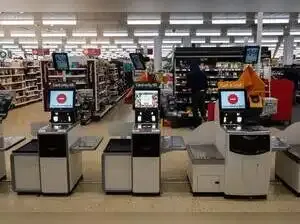
Walmart and a few major retailers have started ending the self check out process for customers. Walmart has started the process of reinstalling the traditional cash counters relacing the self checkouts, according to multiple media outlets. Walmart has stated that the decision was taken after taking feedback from customers and associates. The company has stated that move was aimed to improve the checkout experience. Costco has also installed AI-driven 'scan and go' technology in place of self-checkout.
The promise of self-checkout was alluring: Customers could avoid long lines by scanning and bagging their own items, workers could be freed of doing those monotonous tasks themselves and retailers could save on labor costs.
All that has happened since the rollout of self-checkout but so has this: Customers griping about clunky technology that spits out mysterious error codes, workers having to stand around and monitor both humans and machines, and retailers contending with theft.
Self-checkout, first tested in supermarkets in the late 1980s, gained momentum 20 years ago. But grocers ramped it up even more three years ago to address the pandemic-induced severe labor shortages.
Walmart has invested heavily in AI to close gaps with its largest rival, Amazon, which had a head start with its chatbot, Rufus, a Gen AI-powered shopping assistant that answers various shopping queries. Walmart partnered with OpenAI to let customers shop through tools like ChatGPT and is using AI to enhance delivery speeds, recommendation engines and overall customer experience, boosting online sales growth.
With a tougher economy prompting shoppers of all income brackets toward cheaper options, Walmart's value and growing delivery service has helped with not just its core low-income customers but a growing cohort of higher-income households.
Walmart has had additional success through its investments in AI to streamline operations and enhance the shopping experience.
Executives have said wealthier shoppers have powered much of the retailer's recent U.S. sales gain, even as its lower-income base feels the squeeze. Food makers from Kraft Heinz to General Mills have flagged similar softness in demand from financially strained consumers.
In the last five years, Walmart has expanded its online marketplace to over half a billion items, launched one-hour delivery, created Walmart+ to rival Amazon Prime and built a $4-billion advertising business that has boosted margins, which have risen year-over-year for the past 10 quarters.
Traffic to Walmart stores strengthened at the end of 2025, with visits up 2.3% in the fourth quarter from year ago. That momentum accelerated in January 2026, according to data from Placer.ai.
Since hitting $1 trillion in market value on February 3, at least nine Wall Street brokerages have raised their target price on the stock while six have lifted their fourth-quarter profit estimate.
The promise of self-checkout was alluring: Customers could avoid long lines by scanning and bagging their own items, workers could be freed of doing those monotonous tasks themselves and retailers could save on labor costs.
All that has happened since the rollout of self-checkout but so has this: Customers griping about clunky technology that spits out mysterious error codes, workers having to stand around and monitor both humans and machines, and retailers contending with theft.
Self-checkout, first tested in supermarkets in the late 1980s, gained momentum 20 years ago. But grocers ramped it up even more three years ago to address the pandemic-induced severe labor shortages.
Walmart has invested heavily in AI to close gaps with its largest rival, Amazon, which had a head start with its chatbot, Rufus, a Gen AI-powered shopping assistant that answers various shopping queries. Walmart partnered with OpenAI to let customers shop through tools like ChatGPT and is using AI to enhance delivery speeds, recommendation engines and overall customer experience, boosting online sales growth.
With a tougher economy prompting shoppers of all income brackets toward cheaper options, Walmart's value and growing delivery service has helped with not just its core low-income customers but a growing cohort of higher-income households.
Walmart has had additional success through its investments in AI to streamline operations and enhance the shopping experience.
Executives have said wealthier shoppers have powered much of the retailer's recent U.S. sales gain, even as its lower-income base feels the squeeze. Food makers from Kraft Heinz to General Mills have flagged similar softness in demand from financially strained consumers.
In the last five years, Walmart has expanded its online marketplace to over half a billion items, launched one-hour delivery, created Walmart+ to rival Amazon Prime and built a $4-billion advertising business that has boosted margins, which have risen year-over-year for the past 10 quarters.
Traffic to Walmart stores strengthened at the end of 2025, with visits up 2.3% in the fourth quarter from year ago. That momentum accelerated in January 2026, according to data from Placer.ai.
Since hitting $1 trillion in market value on February 3, at least nine Wall Street brokerages have raised their target price on the stock while six have lifted their fourth-quarter profit estimate.