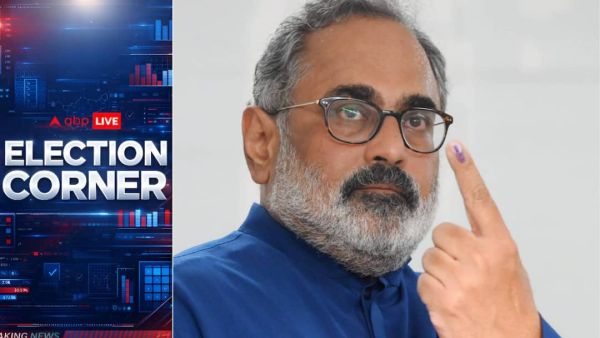
The 2026 Kerala Assembly elections have delivered a landmark moment for the Bharatiya Janata Party (BJP), which secured three constituencies, Nemom, Kazhakkoottam, and Chathannoor, marking its strongest-ever performance in the state. This comes even as the United Democratic Front (UDF), led by the Congress, swept to power across Kerala.
While the BJP remains far from forming a government, its gains signal a notable shift in a state long dominated by bipolar politics between the UDF and the Left Democratic Front (LDF).
In Nemom, senior BJP leader Rajeev Chandrasekhar secured a crucial victory, defeating CPI(M) veteran V. Sivankutty by 3,590 votes. Congress candidate K. S. Sabarinathan finished third.
Nemom has historically been the BJP’s strongest base in Kerala, gaining prominence after O. Rajagopal won the seat in 2016—the party’s first-ever Assembly victory in the state. After losing it in 2021, the BJP had focused heavily on reclaiming the constituency, making Chandrasekhar’s win particularly significant.
In a closely fought battle in Kazhakkoottam, V. Muraleedharan edged past CPI(M)’s Kadakampally Surendran by a slender margin of 428 votes.
The seat had been held by Surendran since 2021, but the 2026 contest saw renewed political scrutiny and a sharp campaign, culminating in a narrow victory for the BJP. The result underscores the party’s ability to compete even in tightly contested urban constituencies.
The BJP also registered a surprise win in Chathannoor, where B. B. Gopakumar defeated CPI’s R. Rajendran by 4,398 votes.
The constituency, held by the CPI for 15 years, witnessed a shift despite a candidate change by the LDF. Gopakumar, who had previously come close in earlier elections, managed to convert his persistence into a decisive victory this time.
The BJP’s tally of three seats marks its best-ever performance in Kerala Assembly elections, improving on its previous high of one seat in 2016. Although the party’s footprint remains limited, these victories provide it with a stronger base in key regions like Thiruvananthapuram and Kollam.
For the Congress-led UDF, the election result represents a sweeping mandate and a return to power. However, the BJP’s gains highlight subtle shifts in voter behaviour, suggesting an evolving political undercurrent in the state.
Analysts believe that while Kerala’s bipolar structure remains intact, the BJP’s incremental progress could gradually reshape electoral dynamics in the years ahead.