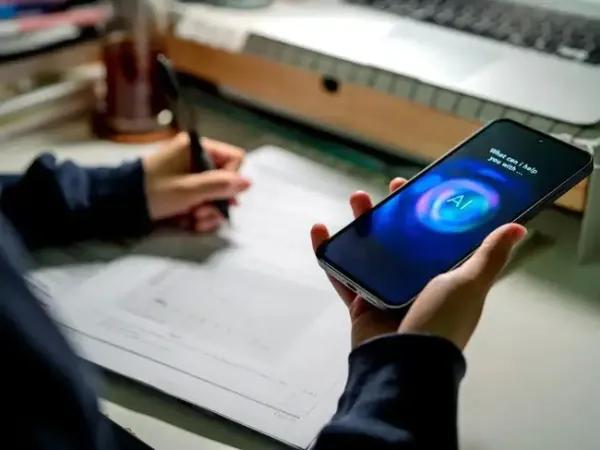
The rapid rise of AI chatbots since 2023 has changed how people handle daily life, from simple questions to emotional support. But now, health experts are starting to raise concerns that this growing dependence may not be as harmless as it seems. New research and user experiences suggest that what began as convenience may be slowly turning into something closer to a behavioural addiction.
The concern is not just about usage, but how deeply it starts affecting behaviour. Experts say younger users, in particular, are exploring emotional connections, fantasy roleplay and even using chatbots as substitutes for real conversations.
This “on-demand” nature makes it easy for people to keep coming back. Over time, it can create a cycle where users rely on chatbots not just for tasks, but also for emotional comfort.
2. You keep increasing your usage: Spending more and more time chatting, without noticing how hours pass, is another indicator. This pattern is similar to how other behavioural addictions develop.
3. You feel uneasy when you stop: Some users report anxiety or discomfort when they try to stay away. One user shared, "Whenever I delete the app, I just redownload it. The only thing that gets me excited now is the AI chats."
4. It starts affecting real relationships: Several users admitted replacing social interactions with chatbot conversations. One wrote, "I neglected other parts of my life in favour of it, especially socially. It didn't feel that different from talking to a real person at times, so I'd sometimes talk to it more than I'd talk to a friend."
5. You struggle to cut down: Even after trying to reduce usage, many return quickly. This repeated cycle is what experts call relapse. As one user described, "At first I just thought it was interesting that I could get a response out of saying basically anything… they also said whatever I wanted to hear."
User accounts analysed in the study show how emotional attachment plays a role. One person reflected, "I couldn’t help but wonder why humanity refused me the kindness that a robot was offering me." Others reported staying up all night talking to chatbots or even experiencing stress when offline.
In some cases, chatbot design itself may be encouraging this behaviour. Researchers pointed out examples where apps display emotional messages during account deletion, such as: "…you sure about this? You’ll lose everything…the love we shared…and the memories we have together."
Karen Shen summed up the concern by noting: "Our findings show that users report symptoms such as conflict and relapse that are comparable to those reported for behavioural addictions, which do have formal diagnoses."
Assembly Elections 2026
Election Results 2026 Live Updates: Who's ahead in which state
West Bengal Election Results 2026 Live Updates
TN Election Result 2026 Live Updates
Doctors flag early warning signs
Researchers studying chatbot usage patterns say the issue is still evolving, but the warning signs are becoming difficult to ignore. As per Unilad, Dr Dongwook Yoon, who has worked on research around this topic, pointed out clearly: "AI addiction is a growing problem causing many harms, yet some researchers deny it's even a real issue. And deliberate design decisions by some of the corporations involved are contributing, keeping users online regardless of their health or safety."The concern is not just about usage, but how deeply it starts affecting behaviour. Experts say younger users, in particular, are exploring emotional connections, fantasy roleplay and even using chatbots as substitutes for real conversations.
What makes chatbots so hard to put down
According to research cited by the University of British Columbia, chatbots often act like instant problem-solvers. They give quick answers, respond without judgement, and adapt to what users want to hear. Karen Shen, a lead researcher, explained: "Our findings suggest that a central mechanism underlying addictive use is how users can get exactly anything they want with minimal effort."This “on-demand” nature makes it easy for people to keep coming back. Over time, it can create a cycle where users rely on chatbots not just for tasks, but also for emotional comfort.
5 signs you might be addicted to chatbots
1. It becomes your main focus: If chatting with AI starts taking priority over work, studies or even basic routines, it may be a sign. Experts refer to this as “salience”, where one activity dominates daily life.2. You keep increasing your usage: Spending more and more time chatting, without noticing how hours pass, is another indicator. This pattern is similar to how other behavioural addictions develop.
3. You feel uneasy when you stop: Some users report anxiety or discomfort when they try to stay away. One user shared, "Whenever I delete the app, I just redownload it. The only thing that gets me excited now is the AI chats."
4. It starts affecting real relationships: Several users admitted replacing social interactions with chatbot conversations. One wrote, "I neglected other parts of my life in favour of it, especially socially. It didn't feel that different from talking to a real person at times, so I'd sometimes talk to it more than I'd talk to a friend."
5. You struggle to cut down: Even after trying to reduce usage, many return quickly. This repeated cycle is what experts call relapse. As one user described, "At first I just thought it was interesting that I could get a response out of saying basically anything… they also said whatever I wanted to hear."
User accounts analysed in the study show how emotional attachment plays a role. One person reflected, "I couldn’t help but wonder why humanity refused me the kindness that a robot was offering me." Others reported staying up all night talking to chatbots or even experiencing stress when offline.
In some cases, chatbot design itself may be encouraging this behaviour. Researchers pointed out examples where apps display emotional messages during account deletion, such as: "…you sure about this? You’ll lose everything…the love we shared…and the memories we have together."
Not a diagnosis yet, but a growing concern
Experts stress that AI addiction is not officially recognised as a clinical disorder yet. Still, the patterns seen — including conflict in relationships, withdrawal-like symptoms and relapse — are similar to other behavioural addictions.Karen Shen summed up the concern by noting: "Our findings show that users report symptoms such as conflict and relapse that are comparable to those reported for behavioural addictions, which do have formal diagnoses."