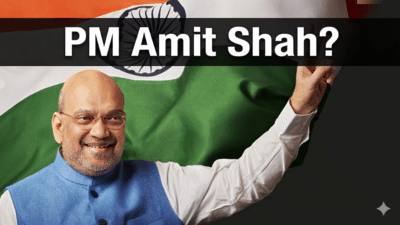
Has the BJP’s sweeping victory in the West Bengal Assembly elections further boosted the political stature of Union Home Minister Amit Shah? With the party securing a historic win in the state for the first time, speculation is growing over whether Shah has now emerged as the most natural successor to Narendra Modi for the Prime Minister’s post.
Widely regarded as the BJP’s master strategist, Shah is being credited for engineering this landmark triumph. The big question now is—has this decisive victory made his path to the top job easier? Such debates are gaining momentum across political circles following the BJP’s dominant performance in West Bengal.
The BJP’s historic win in West Bengal—its first time forming a government in the state with a commanding tally of over 200 seats—has been widely seen as a turning point in Indian politics. Much of the credit for this breakthrough is being attributed to Amit Shah, often described as the party’s chief strategist. His meticulous planning, booth-level micro-management, targeted campaigning, and aggressive outreach—through more than 50 rallies and roadshows—played a central role in the party’s success.
With this victory, the BJP and its alliance, the National Democratic Alliance (NDA), have further expanded their footprint, now holding power in 22 states. This not only strengthens the party’s national standing but also enhances Amit Shah’s political stature within both the government and the organization.
A Rising Political Profile
Amit Shah’s greatest strength lies in his organizational acumen and electoral strategy. Since 2014, the BJP has steadily expanded into new regions, forming governments in states where it previously had limited presence. His role in strengthening the party’s grassroots network and converting it into electoral success has solidified his reputation as a key architect of BJP’s growth.
As Home Minister, Shah has also been associated with major policy decisions aligned with the ideological framework of the Rashtriya Swayamsevak Sangh (RSS), including the abolition of triple talaq and the removal of Article 370 in Jammu and Kashmir. These moves have further strengthened his standing within the party and among its core support base.
Is He the Natural Successor?
Within the current government, Amit Shah is widely regarded as the second most powerful leader after PM Modi. This positioning, combined with his growing influence and electoral track record, places him among the strongest potential successors.
However, the path to the Prime Minister’s office is not automatic. It would require broad consensus within the party, as well as continued electoral success leading up to the 2029 general elections. The party’s renewed emphasis on ideological consolidation after the Bengal victory may further bolster Shah’s image as a decisive leader.
What Lies Ahead?
The BJP’s decisive win in a politically challenging state like West Bengal has undeniably elevated Amit Shah’s stature and expanded the party’s political reach. Whether this momentum translates into future leadership at the national level remains to be seen.
For now, Shah stands as one of the most influential figures in Indian politics—both as an organizational force and a potential contender for the country’s top post in the years to come.