A new oil spill in the Philippines threatens what may be the smallest pod of the critically-endangered Irrawaddy dolphins in the world amid a slow government response in identifying those responsible.
With roughly six to 15 remaining individuals in Guimaras-Iloilo Strait in central Philippines, the new oil spill is threatening one of only three isolated populations of Irrawaddy dolphins remaining in the country, prompting environmental groups to raise the alarm.
While the small, coastal and freshwater dolphin are found from Papua New Guinea to the Bay of Bengal, Irrawaddy dolphins are vanishing in the Philippines. Only small and isolated populations are remaining, primarily totaling less than 100 individuals across three key areas.
Recognised by its blunt, rounded head, lack of a prominent beak, and high forehead, the Irriwaddy is similar in appearance to a young beluga whale. It has slate-blue or gray skin, small flippers, and a small, triangular dorsal fin.
Known for their social behavior and habit of spitting water, they were named after the Irriwaddy River of Myanmar where they also reside.
The most threatened population in the Philippines is in the Iloilo-Guimaras Strait while about 35 remain in Malampaya Sound of Palawan province.
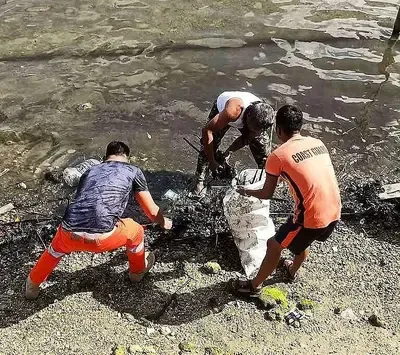
Dugong also threatenedAn oil spill was reported as early as April 25 in Jordan, capital town of Guimaras province from unknown origins and parties, a situation condemned by international environmental groups.
Earth Island Institute-Asia Pacific (EII-AP) called on authorities to investigate and identify those responsible for the spill in a village called Barangay Hoskyn, warning that delays in doing so may worsen risks to marine species and affected communities.
Oil slicks prompted the closure of affected areas and raising concerns over potential environmental and health risks to residents. Fishing activities in the area had also been affected.
The source of the spill remains unidentified, fueling concerns on the extent and duration of ecological damage. The Philippine Department of Environment and Natural Resources (DENR) said it is already investigating the incident. No report has yet been made public more than a week after the reported spill.
The affected waters are part of the Iloilo-Guimaras Strait, a critical marine corridor and one of the few remaining habitats for critically endangered dugongs and Irrawaddy dolphins.
Guimaras is home to thousands of fisher folk whose livelihoods depend on healthy marine ecosystems. With fishing grounds contaminated and access restricted, families face immediate income loss, food insecurity, and prolonged economic hardship.
While irrawaddy dolphins number less than 100 throughout the archipelago, there are less than 500 dugongs left in the Philippines. Both species are already on the brink of extinction in the Philippines.
“Oil contamination in these waters threatens to disrupt feeding grounds, degrade coastal habitats such as mangroves and seagrass beds, and expose marine mammals to toxic substances that can impair reproduction and survival,” EII-AP said.
Pressure on communitiesBeyond biodiversity loss, the spill places immense pressure on coastal communities. "This is not just an environmental crisis. It is a crisis of livelihood, food security, and justice," EII regional director Trixie Concepcion said.
“Authorities must immediately investigate and identify the perpetrator behind this spill, ensure full transparency in the findings, and hold all responsible parties liable for the environmental and socio-economic damages caused,” she added.
EII-AP said the failure to promptly determine the source of the spill reflects persistent gaps in maritime enforcement and environmental governance, particularly in high-traffic and ecologically sensitive marine corridors.
Environmental group Greenpeace echoed the demand, calling on state agencies to expedite fact-finding efforts to ensure that responsible actors are identified and held accountable.
Greenpeace Climate Campaigner Patrice Valero said: “We demand the swift containment of the oil spill, with the government leading efforts to protect communities highly vulnerable to environmental incidents such as this. Affected residents and fisher folk must be compensated both for immediate and long-term damages to health, livelihood, and biodiversity after those responsible are identified.”
Coastal photo in Guimaras
Earth Day: Philippines must do more than beach clean-up to reduce marine plastic pollution Overfishing in Philippines wipes out 45 million kilos of fish annually, new study reveals Filipino farmers, environmentalists score victory against British mining firm