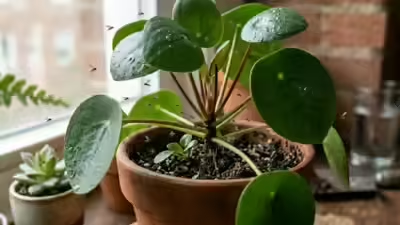
If you’ve ever noticed tiny black flies hovering around your indoor plants, you’re not alone. These insects, commonly known as fungus gnats, are a frequent nuisance for plant owners. While they may seem harmless at first, their repeated return can quickly become frustrating.
The key thing most people misunderstand is this: the real problem isn’t the flying insects you see—it’s what’s happening inside the soil.
Fungus gnats are small, dark flies that resemble tiny mosquitoes. They don’t bite or harm humans, but their presence signals an imbalance in your plant’s growing environment.
The adult gnats you see flying are only a small part of the issue. The real damage comes from their larvae, which live in the top layer of soil. These larvae feed on:
Their presence is strongly linked to excess moisture, making overwatered soil the perfect breeding ground.
Many plant owners think the problem is solved when the flies disappear for a few days. However, fungus gnats have a continuous life cycle.
If the soil remains damp, this cycle continues silently. So even if the visible gnats reduce, the next generation is already developing beneath the surface.
In simple terms, you may be reducing the symptoms, not solving the root cause.
Fungus gnats thrive in:
These conditions create an ideal environment for fungi, which in turn supports gnat larvae.
That’s why focusing only on killing the flying insects doesn’t work. The solution lies in changing the soil environment itself.
Check each plant carefully. Gnats usually gather near the most affected pots.
This is the most effective step.
Dry conditions disrupt the gnat life cycle and prevent eggs from surviving.
Recheck your plants.
If gnats persist, it means the soil is still too moist somewhere.
In homes with multiple plants, fungus gnats rarely stay in just one pot.
That’s why treating just one plant often fails. You need to check all plants together.
Once the infestation is under control, prevention becomes the priority.
These small adjustments make your plants far less attractive to gnats.
Fungus gnats are not just random pests—they are a sign of excess moisture and soil imbalance. Instead of focusing on the flying insects, the real solution lies in fixing the environment they depend on.
With a simple shift in watering habits and a little patience, you can break their life cycle and keep your plants healthy.
Sometimes, the smartest fix isn’t killing the problem—it’s making sure it can’t survive in the first place.