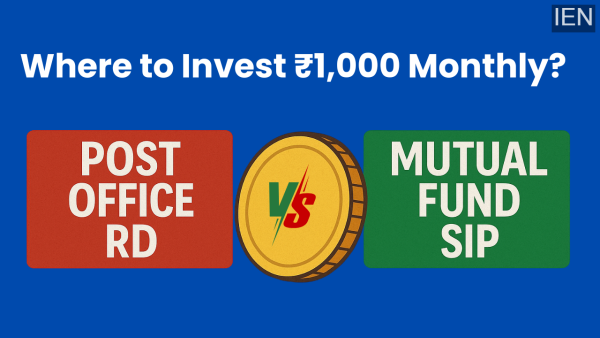
SIP or Post Office: Are you exploring investment options but unsure where to put your money? Let us help you decide: is investing in a Post Office scheme or a SIP the better choice?
Investment Tips: Are you currently planning your investments? As you think about the future, do you realize the need to build a nest egg for your retirement years? If so, there are numerous avenues available through which you can invest. Here, we will discuss two primary options: the SIP (Systematic Investment Plan) and investing through the Post Office. Let's determine which of the two makes for a superior choice.
Investing in a SIP
A SIP—or Systematic Investment Plan—is one of the most preferred options for investment. It requires you to deposit a fixed installment into the SIP scheme every month, on which you earn returns based on prevailing market rates. This capital grows steadily year after year. A SIP is a long-term investment vehicle, making it an accessible and convenient option for just about anyone.
Investing in the Post Office
Post Office schemes are investment instruments backed by the guarantee of the Government of India, and are therefore considered extremely secure. Consequently, investing in them is both simple and safe. This investment avenue can, in fact, prove to be even more advantageous than a Fixed Deposit (FD). The Post Office offers a variety of schemes, each serving as an excellent option for securing your financial future.
Which Is Better?
SIP or Post Office? Which of the two constitutes the better investment choice? Here is a point-by-point comparison to help you decide:
If you are looking for a secure investment option, you should invest in the Post Office. While the interest rate offered here is slightly lower, it remains stable—neither fluctuating up nor down. In contrast, a SIP is entirely market-driven; consequently, while it offers higher returns, the stock market is inherently unpredictable—there is no guarantee as to when prices might fall, potentially causing the value of your funds to decline as well.