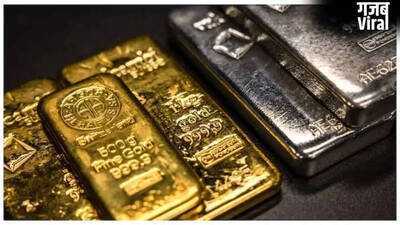
On Wednesday, the price of gold in the national capital saw a significant increase of ₹2,900, reaching ₹1.55 lakh per 10 grams, while silver surged to ₹2.54 lakh per kilogram. This rise is attributed to a decrease in geopolitical tensions, which led to a softening of oil prices and subsequently increased demand for precious metals.
According to the All India Sarafa Association, the price of gold with 99.9% purity rose by ₹2,900, marking an increase of approximately 2%. This brought the price up from ₹1,52,500 per 10 grams to ₹1,55,400 per 10 grams.
Silver prices also experienced a rise for the third consecutive session, increasing by ₹3,500 or 1.4%, reaching ₹2,54,500 per kilogram. The previous session had closed at ₹2,51,000 per kilogram.
Traders attribute this spike in bullion prices to reports indicating that Washington and Tehran are nearing a framework agreement to resolve their ongoing conflict. This development raises the likelihood of smoother transit through the Strait of Hormuz and alleviates inflation concerns related to energy markets.
Soumil Gandhi, a senior analyst at HDFC Securities, noted that the significant rise in gold prices on Wednesday was due to a shift in key macroeconomic factors that had recently pressured precious metals, driven by reduced geopolitical tensions. He mentioned that the potential for diplomatic success has led to a sharp decline in oil prices and the US dollar, easing inflation worries and boosting demand for precious metals.
Globally, spot gold increased by $106.15, or 2.33%, reaching $4,663.70 per ounce, while silver rose by $3.40, or 4.68%, to $76.24 per ounce. Jatin Trivedi, VP of research for commodities and currency at LKP Securities, stated that the strong surge in gold prices was a positive market reaction to reports suggesting that the US and Iran are close to finalizing a one-page agreement aimed at resolving their conflict.
Despite the robust gains in the international market, the strength of the rupee has limited the rise in domestic gold prices. Trivedi added that the market is now fully focused on the final confirmation and implementation of the proposed deal. He cautioned that any negative surprises or disruptions in negotiations could trigger a sharp sell-off in gold, while a successful agreement and sustained ceasefire could push gold prices higher in the near future.