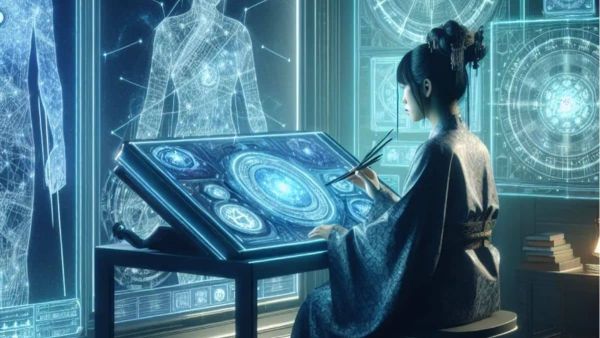
Technology may accelerate access to knowledge, but true wisdom still requires discipline, reflection, and inner awakening. At Academy of Vedic Vidya, we believe the future of spirituality lies not in replacing tradition with technology, but in using technology to deepen understanding of timeless Vedic truths,” says As Nirpeksh Kumbhat, CEO, Academy of Vedic Vidya.
Astrology, one of humanity’s oldest spiritual systems, has always evolved alongside culture. From royal court astrologers and handwritten birth charts to newspaper horoscopes and late-night television psychics, the medium has shifted with the times. Today, it is undergoing its most dramatic transformation yet, a digital revolution powered by artificial intelligence, mobile technology, and data analytics.
What once required a scheduled consultation with a seasoned astrologer can now be accessed within seconds. A smartphone notification replaces the morning horoscope column. An AI-generated compatibility report substitutes for an in-person chart reading. Spiritual guidance has moved from temple courtyards and printed almanacks to cloud servers and app stores. This shift is not merely technological; it is cultural.
For decades, mainstream astrology functioned through broad sun-sign predictions. Newspapers grouped millions of readers into twelve zodiac categories, offering general advice on careers, relationships, or health. While popular, such content lacked precision.
Digital platforms have changed that equation. Modern astrology apps now ask for exact birth details such as date, time, and place to generate highly detailed natal charts. Algorithms process planetary positions, house placements, transits, and aspects within seconds, delivering interpretations once reserved for trained practitioners.
Artificial intelligence has taken this further. By combining traditional astrological rules with machine learning models, platforms can produce tailored insights based not only on celestial data but also on user behaviour. Engagement patterns, frequently asked questions, and emotional trends feed into systems that refine predictions and recommendations. The result is hyper-personalised spirituality, a far cry from generic horoscopes.
The digital revolution in astrology mirrors broader shifts in consumer behaviour. Streaming replaced scheduled television. E-commerce disrupted brick-and-mortar stores. Food delivery apps eliminated waiting in line. Convenience and immediacy have become default expectations.
Spirituality has followed the same path. Users now expect real-time cosmic updates. Push notifications alert them to Mercury retrograde or an approaching full moon. Daily affirmations arrive alongside calendar reminders. Tarot readings can be accessed via chat interfaces at any hour.
This on-demand model transforms astrology from an occasional consultation into a continuous digital companion. Instead of seeking guidance only during life crises, users interact with spiritual tools daily, sometimes multiple times a day. Astrology becomes integrated into lifestyle rather than remaining an external advisory service.
Technology has undeniably expanded access. Individuals who once lacked geographical proximity to experienced astrologers can now receive chart interpretations instantly. Language barriers are reduced through translation tools. Young users, comfortable with digital ecosystems, engage with ancient systems in formats that feel native to them.
In this sense, technology democratises astrology. Knowledge once confined to niche communities becomes globally accessible.
Yet this accessibility raises important questions. When algorithms interpret planetary placements, what happens to the human intuition traditionally central to astrological practice? Can AI truly grasp symbolic nuance, or does it standardise interpretations into predictable templates? The tension between wisdom and convenience defines this moment.
Astrology has always relied on precise data. The exact time of birth determines rising signs and house placements. In the digital era, data has expanded beyond planetary coordinates.
Apps now collect behavioural insights, interaction frequency, preferred reading categories, and emotional check-ins. This creates a feedback loop: users seek guidance, platforms learn patterns, and recommendations become increasingly personalised.
Some systems integrate AI chatbots capable of answering follow-up questions in conversational formats. These bots synthesise traditional astrological frameworks with predictive modelling, offering responses that feel responsive and interactive.
This blend of symbolic tradition and data science creates a new form of divination, one where celestial movements intersect with behavioural analytics. The stars may guide the narrative, but algorithms shape the delivery.
As technology handles calculations and basic interpretations, the role of the human astrologer is evolving. Rather than spending hours constructing charts manually, practitioners can focus on synthesis, counselling, and contextual nuance.
For practitioners, digital tools expand reach. Virtual consultations, online workshops, and subscription-based guidance platforms allow astrologers to build global audiences. Social media has transformed many into educators and content creators, further blending tradition with technology.
The next frontier lies in immersive experiences. Augmented reality star maps, interactive cosmic dashboards, and AI-driven spiritual mentors are no longer speculative ideas. As generative AI advances, personalised spiritual curricula may become common, guiding users through planetary cycles with tailored lessons and reflective exercises.
However, sustainability will depend on balance. If astrology becomes purely algorithmic, it risks losing symbolic depth. If it rejects technology entirely, it risks irrelevance in a digital-first world.
Digital divination is not replacing tradition; it is reframing it. Technology is not rewriting the stars, but it is reshaping how we read them. In this convergence of faith and innovation, astrology finds itself at a crossroads, where belief meets bandwidth, and ancient wisdom travels at the speed of data.
The question is no longer whether tech will transform astrology. It already has. The real question is how thoughtfully this transformation will be guided and whether the digital cosmos can preserve the depth of the celestial one.