Google is the world's largest advertising company; yet, despite this, its own homepage remains completely uncluttered. Have you ever wondered why this is? If the company wished to do so, it could earn billions of rupees every single day simply by displaying advertisements on this page. But why doesn't the company do this? Today, we reveal the truth behind this mystery. We can say with certainty that you will be astonished once you learn the full story.
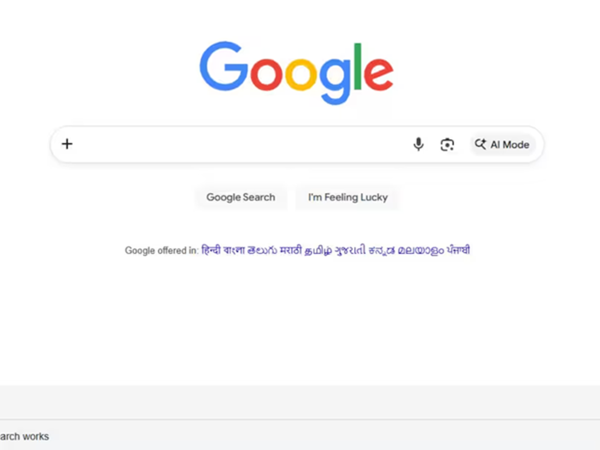
Until the advent of AI tools like ChatGPT, if there was one thing humans utilized most on the internet, it was Google's search engine. For many, it had become a deeply ingrained habit: first, search on Google, and then open the Google homepage. Upon opening the homepage, the very first thing one sees is Google's clean, uncluttered interface—featuring a colorful logo in the center and a small search box positioned below it. There is nothing else—absolutely no advertisements. Why has Google chosen to leave this page—which is visited by billions of people worldwide every single day—so conspicuously empty? Hidden behind this very "space" lies a multi-billion-dollar game.
The story begins most intriguingly. In 1998, two Stanford University students—Larry Page and Sergey Brin—were in the process of building a search engine they named Google. At that time, the decision to keep the homepage uncluttered was not the result of a calculated strategy, but rather a matter of necessity. The reality was that, at that stage, neither of them possessed a proficient command of HTML coding. They simply created a basic search box and launched their project. However, when they observed that users were highly appreciative of this clean, minimalist design, what began as a mere necessity gradually evolved into one of the world's most successful business strategies.
In that era, Google chose to chart a course opposed to that of industry giants such as Yahoo! and MSN. While other web portals cluttered their homepages with a chaotic mix of news headlines, shopping links, and advertisements, Google chose to make "speed" its defining characteristic. Even today, the size of Google's homepage remains a mere 14 KB, allowing it to load in the blink of an eye—in less than a second. At that same time, Yahoo's page weighed in at 200 to 500 KB, taking anywhere from 3 to 8 seconds to load. In an era when internet speeds were notoriously slow, this velocity was a significant asset for Google—one that users truly appreciated. Today, even in the age of 5G, this speed continues to serve as one of Google's "silent brand promises."
In the late 1990s and early 2000s, internet users had grown weary of navigating pages cluttered with advertisements. Pop-ups, banners, and Flash ads were severely degrading the user experience. What Google did next proved to be an instant hit. With its minimalist and uncluttered homepage, Google effectively conveyed a crystal-clear message: "We are a search engine, not an entertainment portal." Rather than focusing on selling, Google centered its efforts on helping people. As users realized that this company would not pester them with intrusive pop-ups or advertisements, their trust in Google grew steadily. It is precisely this trust that has elevated "Googling" to the status of a common idiom today. This user loyalty proved to be far more valuable than any advertisement could ever be. You might also be surprised to learn that Yahoo has now adopted Google's policy of keeping its homepage ad-free; its search homepage, too, now appears without any advertisements.
One of Google's masterstrokes lay in recognizing that the real revenue potential did not reside on the homepage itself, but rather within the search results. Not everyone visiting the homepage arrives with the intent to make a purchase; however, an individual searching for "best smartphone under 20000" is, by definition, a potential buyer. Advertisers are willing to pay a premium to showcase their products to such individuals. Google enhanced its brand value by keeping its homepage uncluttered and began generating billions through targeted advertisements delivered via search results.
If we were to calculate how much Google *could* have earned from its homepage, the figures are mind-boggling. Google receives approximately 8.5 billion visits daily. Had Google placed banner advertisements there, it could have potentially earned anywhere between ₹50 billion and ₹150 billion in a single day. On an annual basis, this revenue could have amounted to roughly ₹20 trillion to ₹50 trillion. However, the reality is that had advertisements been present there, perhaps that many people wouldn't have visited Google in the first place!
This model of Google operates much like a 'Trojan Horse.' You are drawn to Google by its simplicity, you build trust in the platform, and when you search for something you need, Google analyzes your behavior to display the most precisely targeted advertisements. It is for this very reason that, in 2024, Google's actual revenue stood at approximately ₹19.67 trillion.
Disclaimer: This content has been sourced and edited from News18 Hindi. While we have made modifications for clarity and presentation, the original content belongs to its respective authors and website. We do not claim ownership of the content.