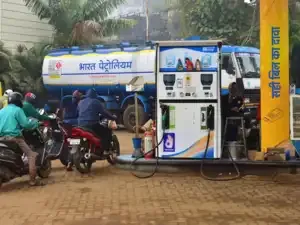
With elections now out of the way, the government is staring at some hard economic decisions. And the most sensitive is that of increasing fuel prices at the pump. India is the only major oil importing country to have not raised prices through the West Asia crisis but that now appears economically unsustainable.
Why? Because the government was relying so far on geopolitical calls over the length of the conflict. A fair assumption was that with ceasefires announced, some sort of deal will be worked out, the Straits of Hormuz will open and the prices will fall. But the script hasn't worked out that way.
Brent crude prices are still over $100 a barrel. Which means the focus for an importing nation like India ought to start shifting from taking geopolitical bets to addressing the burgeoning operational problems that have accumulated over the last 70 days.
Some number truths. By government's own estimates, it's taking a hit of ₹1000 cr a day owing to high crude and gas prices. At a brent price peak of $126 a barrel, the government absorbed ₹24 per litre petrol and ₹30 per litre diesel - and it's still about the same -- because it did not want to raise the cost at the pump, hoping the conflict will resolve soon. The government took a further ₹170,000 crore hit by cutting down excise duty of petrol and diesel to give relief to oil companies.
Still, the losses for these companies was ₹30,000 cr in April-end and is estimated at over ₹50,000 crore by the end of the on going quarter. Loss on account of gas is estimated over ₹20,000 cr. India's strategic petroleum reserve currently hold 5.33 million tonnes, which can cover for 15 days while plans are afoot to build a 30-day strategic gas reserve in India, like in Japan and South Korea.
On LPG, the government is absorbing ₹600 on every 14 kg cylinder and an additional ₹300 for Ujjwala beneficiaries. However, India has reduced its overall requirement by issuing gas control orders at the cost of adversely affecting gas-based industries.
Still, India has an import requirement of 20,000 tonnes a day, for which it has secured 800,000 tonnes cargo at high prices to cover for 40 days. Also, as of now, fertilizer plants are getting 70% of their daily gas requirements.
The problem is also unprecedented because the Straits of Hormuz have never been fully shut this long in history, not even through the five-month-long Arab oil embargo in the 1970s. The 1980-88 Iran-Iraq conflict witnessed reduced traffic but not complete closure. The 2019 drone attack on Saudi Arabia's Abqaiq facility led to 15-day disruption in output, then normalised.
But today, besides crude prices, India is paying higher on rising marine insurance premium. Plus, vessel diversions via Cape of Good Hope have added 2-3 weeks to delivery schedules and roughly 15-20% in freight cost. The world's largest LNG export terminal Ras Laffan in Qatar has been shut since March 2 and the country says it may take over three years to repair.
As for pump prices, the government is faced with a difficult choice now because on the one hand there's the debilitating financial impact of absorbing soaring crude costs while paying higher for imports to ensure longer term availability and security to consumers and industry. And on the other hand, any effort to pass this down to the consumer is a political risk as any fuel cost hike will also have a cascading effect of rising prices across other different sensitive baskets.
The global trend among importing countries is, however, clear. In China, Netherlands, Norway, Germany and UK, the petrol prices have been raised by upwards of 20 to 27%, while in Japan, Italy, Spain and Korea, the increase is 30% and beyond. Some economies have opted for rationing fuel, work from home and four-day week schedules, measures which India has, thus far, resisted.
It's time, perhaps, to realise that the Straits of Hormuz, which is India's energy lifeline, has fallen victim to a vicious cycle of ceasefire, blockade and counterblockade. While Donald Trump cannot politically afford a long war, the inability to close any conversation towards a point from where some predictability can come to oil prices, points to one clear fact - no credible diplomatic timeline is on offer.
In this backdrop, the question on the table for the past two to three weeks has been on whether the tipping point has arrived on absorbing operational costs or should the government drag on with the risks. And if there's an increase, what will be the range? A 20-30% model may be a tough sell to the public.
This is undoubtedly a tough political call for the government but an even more urgent economic situation, with options to keep matters under check thinning out rather fast.
Why? Because the government was relying so far on geopolitical calls over the length of the conflict. A fair assumption was that with ceasefires announced, some sort of deal will be worked out, the Straits of Hormuz will open and the prices will fall. But the script hasn't worked out that way.
Brent crude prices are still over $100 a barrel. Which means the focus for an importing nation like India ought to start shifting from taking geopolitical bets to addressing the burgeoning operational problems that have accumulated over the last 70 days.
Some number truths. By government's own estimates, it's taking a hit of ₹1000 cr a day owing to high crude and gas prices. At a brent price peak of $126 a barrel, the government absorbed ₹24 per litre petrol and ₹30 per litre diesel - and it's still about the same -- because it did not want to raise the cost at the pump, hoping the conflict will resolve soon. The government took a further ₹170,000 crore hit by cutting down excise duty of petrol and diesel to give relief to oil companies.
Still, the losses for these companies was ₹30,000 cr in April-end and is estimated at over ₹50,000 crore by the end of the on going quarter. Loss on account of gas is estimated over ₹20,000 cr. India's strategic petroleum reserve currently hold 5.33 million tonnes, which can cover for 15 days while plans are afoot to build a 30-day strategic gas reserve in India, like in Japan and South Korea.
On LPG, the government is absorbing ₹600 on every 14 kg cylinder and an additional ₹300 for Ujjwala beneficiaries. However, India has reduced its overall requirement by issuing gas control orders at the cost of adversely affecting gas-based industries.
Still, India has an import requirement of 20,000 tonnes a day, for which it has secured 800,000 tonnes cargo at high prices to cover for 40 days. Also, as of now, fertilizer plants are getting 70% of their daily gas requirements.
The problem is also unprecedented because the Straits of Hormuz have never been fully shut this long in history, not even through the five-month-long Arab oil embargo in the 1970s. The 1980-88 Iran-Iraq conflict witnessed reduced traffic but not complete closure. The 2019 drone attack on Saudi Arabia's Abqaiq facility led to 15-day disruption in output, then normalised.
But today, besides crude prices, India is paying higher on rising marine insurance premium. Plus, vessel diversions via Cape of Good Hope have added 2-3 weeks to delivery schedules and roughly 15-20% in freight cost. The world's largest LNG export terminal Ras Laffan in Qatar has been shut since March 2 and the country says it may take over three years to repair.
As for pump prices, the government is faced with a difficult choice now because on the one hand there's the debilitating financial impact of absorbing soaring crude costs while paying higher for imports to ensure longer term availability and security to consumers and industry. And on the other hand, any effort to pass this down to the consumer is a political risk as any fuel cost hike will also have a cascading effect of rising prices across other different sensitive baskets.
The global trend among importing countries is, however, clear. In China, Netherlands, Norway, Germany and UK, the petrol prices have been raised by upwards of 20 to 27%, while in Japan, Italy, Spain and Korea, the increase is 30% and beyond. Some economies have opted for rationing fuel, work from home and four-day week schedules, measures which India has, thus far, resisted.
It's time, perhaps, to realise that the Straits of Hormuz, which is India's energy lifeline, has fallen victim to a vicious cycle of ceasefire, blockade and counterblockade. While Donald Trump cannot politically afford a long war, the inability to close any conversation towards a point from where some predictability can come to oil prices, points to one clear fact - no credible diplomatic timeline is on offer.
In this backdrop, the question on the table for the past two to three weeks has been on whether the tipping point has arrived on absorbing operational costs or should the government drag on with the risks. And if there's an increase, what will be the range? A 20-30% model may be a tough sell to the public.
This is undoubtedly a tough political call for the government but an even more urgent economic situation, with options to keep matters under check thinning out rather fast.